- By JeffkomStory Team
- Published on
Nvidia’s AI Empire: The Biggest Startup Bets of 2026 and the Game Behind the Game
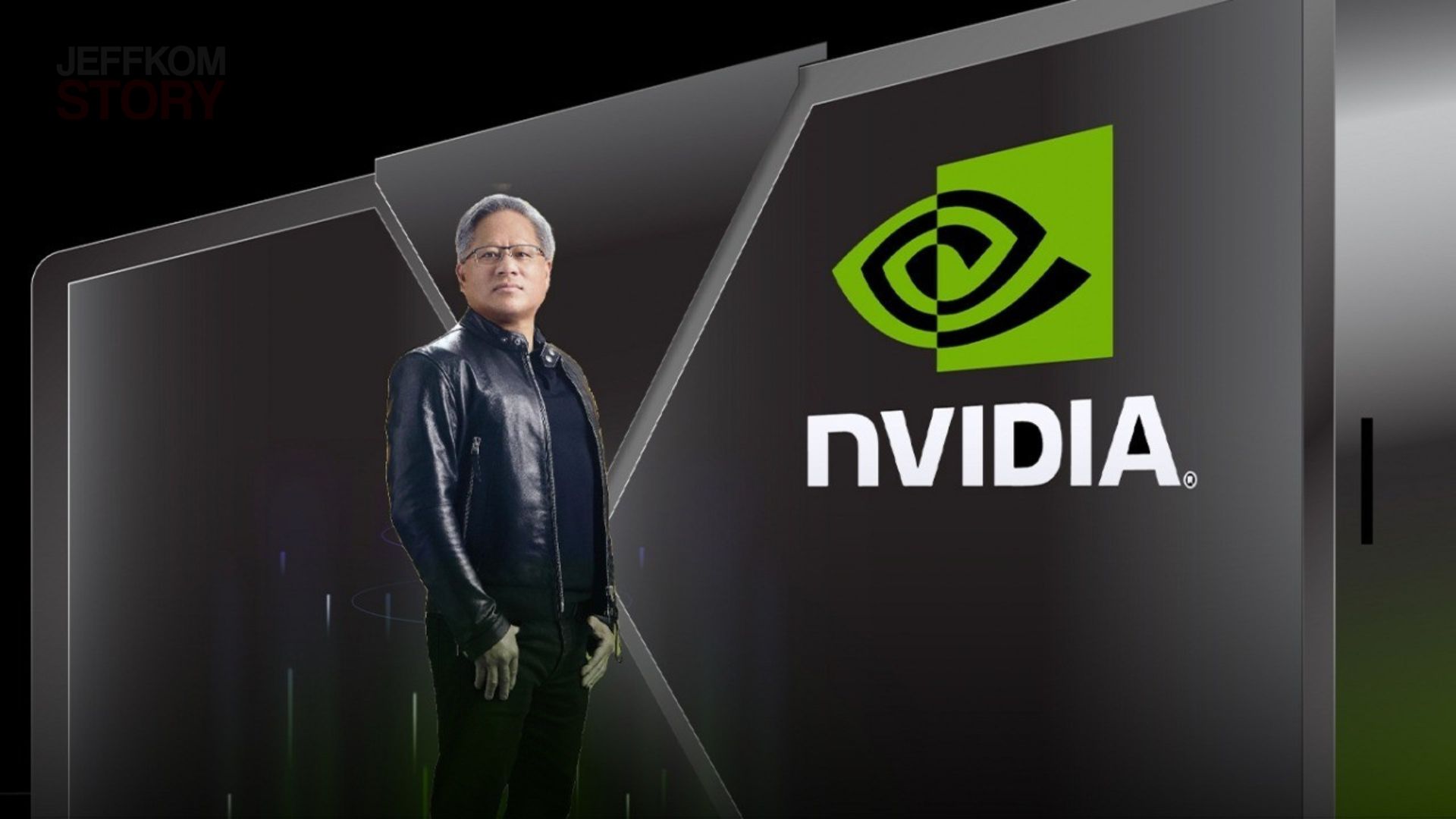
Nvidia is no longer just a chip company. In 2026, it is rapidly becoming the backbone of the global AI economy.
The simplest way to understand Nvidia’s strategy is this: it sells the shovels and buys the gold mine. While the world sees Nvidia as the face of the AI revolution, behind the scenes it is quietly embedding itself into nearly every serious AI startup shaping the future.
As of January 2026, Nvidia’s market capitalization is hovering around $4.6 trillion, briefly touching even higher levels in 2025. That valuation isn’t driven by GPU sales alone—it’s powered by a massive, calculated startup investment strategy.
Nvidia’s Startup Investment Strategy Explained
This isn’t casual venture investing. According to PitchBook, Nvidia closed around 67 venture deals in 2025, up from 54 in 2024. On top of that, NVentures, Nvidia’s dedicated venture arm, reportedly completed 30 additional deals.
Officially, Nvidia frames this as “growing the AI ecosystem.” In practice, it’s a much sharper play.
Why Nvidia Is Pouring Money Into AI Startups
1. Demand Insurance
Bigger AI startups mean more model training, more inference, and ultimately more GPU demand.
2. Ecosystem Control
The more companies build on Nvidia frameworks, the harder it becomes to switch away.
3. Insider Intelligence
Equity stakes provide early signals on which models, tools, and infrastructure are scaling.
4. Friendly Lock-In
Investment plus guaranteed hardware access is appealing—until competitors can’t get in.
With Nvidia’s capital strength, buying into the ecosystem is cheaper than competing against it.
Nvidia’s Investment Map: Where the Money Is Going
Nvidia’s bets span far beyond large language models. The company is backing the entire AI stack.
Model Labs: “No Matter Who Wins, I Win”
Nvidia has invested across rival AI labs, ensuring it benefits regardless of which model dominates.
- OpenAI – Reportedly joined a $6.6B round with a $100M investment, with long-term infrastructure ties.
- Anthropic – First direct investment in late 2025, with rumored multi-billion commitments tied to Azure infrastructure.
- xAI – Nvidia backed Elon Musk’s AI venture despite competitive tensions.
- Mistral AI – Participated again in a massive $2B Series C.
- Thinking Machines Lab – Backed Mira Murati’s record-breaking $2B seed round.
The takeaway is simple: Nvidia owns the compute layer beneath every major model race.
Infrastructure and GPU Cloud: The Circular Money Loop
AI model labs burn cash. That cash largely turns into compute spending—and much of it flows straight back to Nvidia.
Key infrastructure bets include:
- Crusoe – Next-generation AI data centers
- CoreWeave – A fast-rising GPU cloud provider
- Lambda – Raised $480M in 2025 with Nvidia participation
- Together AI / Nscale – On-demand AI infrastructure for startups
This creates a powerful feedback loop: Nvidia invests, startups scale, and Nvidia hardware demand explodes.
Productized AI Applications: From Research to Real Workflows
Nvidia is also backing startups that turn AI into usable products.
- Cursor – AI coding assistant with a multi-billion-dollar raise
- Perplexity – AI-powered search and discovery
- Runway / Black Forest Labs – Generative video and media platforms
- Scale AI – Data labeling and training infrastructure
Every successful application increases compute usage and strengthens Nvidia’s position.
Robotics and Autonomous Systems: Physical AI
AI isn’t staying on screens. Nvidia is betting heavily on machines that move.
- Figure AI – Humanoid robots
- Wayve, Nuro, Waabi – Autonomous driving and logistics
More sensors, more simulation, and more inference all translate into higher GPU demand.
Deep Tech Bets Beyond Language Models
Nvidia’s ambition goes even further:
- Ayar Labs – Optical interconnects
- Weka – AI-optimized data management
- Commonwealth Fusion – Fusion energy research
The message is clear: Nvidia wants to power not just AI, but the infrastructure of the future.
The Circular Money Debate: Risk or Reality?
Critics argue Nvidia is effectively paying itself:
Invest → Startup Scales → Buys Nvidia Hardware → Nvidia Profits Again
Supporters say this is simply how AI works at scale. Critics warn it blurs the line between supplier and market controller an issue regulators may scrutinize more closely.
Acquisitions on the Horizon?
Reports suggest Nvidia is exploring acquisitions, including talks to acquire AI21 Labs for $2–3B. If true, this signals a shift from funding the ecosystem to absorbing parts of it.
What Nvidia’s AI Strategy Means for Startups and Enterprises
Startups
- Compute costs must be a core business decision
- Having an alternative infrastructure plan is becoming essential
For Enterprises
- AI adoption is moving toward deeper vendor integrations
- Vendor lock-in risks matter as much as pricing
For Investors
- Infrastructure often outlasts individual model hype
- Compute remains the most durable layer of the AI stack
Final Thoughts: Nvidia Wants the Deed, Not the Ride
Nvidia’s AI startup bets are not random. They form a deliberate, tightly connected strategy across models, infrastructure, applications, and physical AI.
If one company builds the market and owns the cash register, the rules of competition change.
The AI revolution isn’t just about intelligence, it’s about who controls the foundation beneath it. And right now, that foundation belongs to Nvidia.
Here are some related articles you may find interesting:
Google Trends Explore Gets Gemini AI Upgrade: Smarter Trend Discovery for Creators
Google has introduced a major upgrade to its Trends Explore page, adding powerful Gemini AI capabilities...
Robotaxis Get Green Light in New York, Except in New York City
New York is taking a major step toward the future of transportation. Governor Kathy Hochul has announced...
Hands-On With Bee: Amazon’s New AI Wearable That Records, Remembers, and Reflects Your Day
Amazon is stepping into the AI wearable space with Bee, a compact device designed to record conversations,...
Nuclear Startups Are Back in Vogue: Small Reactors, Big Ambitions, Bigger Challenges
The nuclear industry is quietly entering a new renaissance. After decades of stagnation, aging plants...
Anthropic Expands Enterprise AI Footprint With Allianz Partnership
Anthropic is rapidly strengthening its position in the enterprise AI market. The latest proof is a new...
Where VCs Think AI Startups Can Win Even With OpenAI in the Game
In recent years, AI startups have lived under a looming question: How do you compete when OpenAI, Meta,...
Meta’s $2B Manus Acquisition Sparks Regulatory Divide Between Washington and Beijing
Meta’s $2 billion acquisition of AI assistant platform Manus has quickly turned into a geopolitical case...
Narwal Adds AI to Robot Vacuums to Monitor Pets, Find Jewelry, and Clean Smarter
At CES 2026, robot vacuum maker Narwal introduced a new generation of smart vacuum cleaners powered by...
Nvidia’s AI Empire: The Biggest Startup Bets of 2026 and the Game Behind the Game
Nvidia is no longer just a chip company. In 2026, it is rapidly becoming the backbone of the global AI...
A Beginner’s Guide to Mastodon: The Open-Source Twitter Alternative
When Elon Musk acquired Twitter and rebranded it as X, many users began looking for alternatives. One...
Popular Posts

Google Trends Explore Gets Gemini AI Upgrade: Smarter Trend Discovery for Creators
JeffkomStory Team
Google has introduced a major

Robotaxis Get Green Light in New York, Except in New York City
JeffkomStory Team
New York is taking a

Hands-On With Bee: Amazon’s New AI Wearable That Records, Remembers, and Reflects Your Day
JeffkomStory Team
Amazon is stepping into the

Nuclear Startups Are Back in Vogue: Small Reactors, Big Ambitions, Bigger Challenges
JeffkomStory Team
The nuclear industry is quietly
Join Our Newsletter
Start your day with impactful startup stories and concise news! All delivered in a quick five-minute read in your inbox.