- By JeffkomStory Team
- Published on
Malware Data Archives Are Bigger Than You Think: Comparing Cyber Threat Databases to the Eiffel Tower
The world of cybersecurity is growing faster than ever, and so are the massive databases used to track malware threats. Recently, malware research group vx-underground revealed that its malware source code archive contains around 30 terabytes of data. At the same time, VirusTotal founder Bernardo Quintero shared that VirusTotal has collected approximately 31 petabytes of malware samples contributed by users worldwide.
That may sound like just another tech statistic, but when visualized physically, the scale becomes truly shocking.
How Big Is 30 Terabytes of Malware Data?
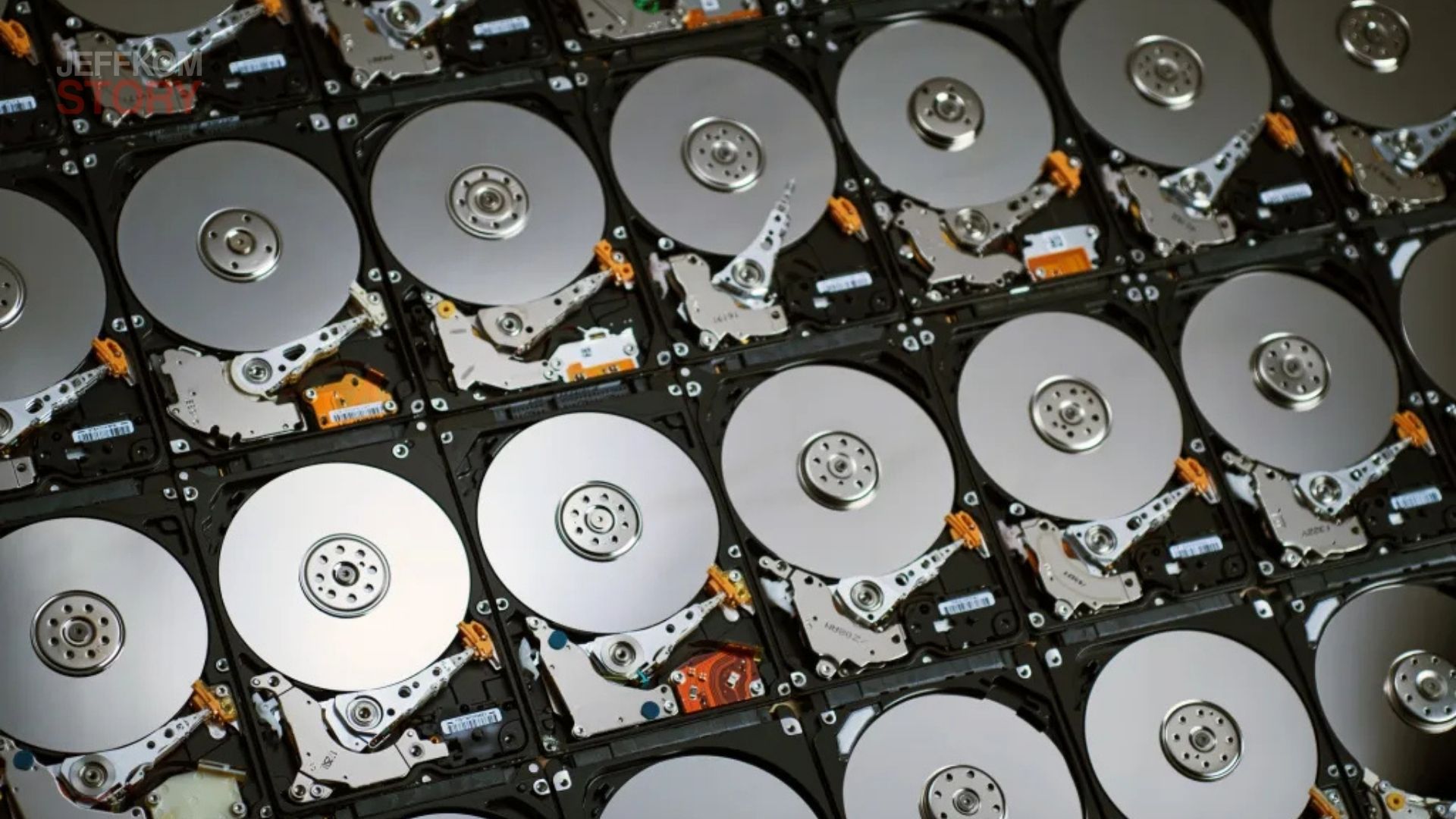
According to vx-underground, their malware archive totals about 30 terabytes. To understand what that means, imagine storing the data on standard 1-terabyte internal hard drives.
A typical 3.5-inch hard drive is about 1 inch tall. If you stacked 30 of these hard drives on top of each other, the total height would be around 30 inches, or approximately 2.5 feet tall.
While that may not sound enormous, it still represents one of the largest publicly discussed malware code collections in cybersecurity research.
VirusTotal’s Malware Database Is on Another Level
VirusTotal’s reported 31 petabytes of malware samples is where things become truly massive.
Since 1 petabyte equals roughly 1,024 terabytes, VirusTotal’s archive would require around 31,744 one-terabyte hard drives.
Now imagine stacking all those hard drives vertically.
The result? A tower reaching nearly 2,645 feet high.
To put that into perspective:
- The Eiffel Tower stands at about 1,083 feet
- The Burj Khalifa, the tallest building in the world, reaches 2,722 feet
That means VirusTotal’s malware archive would be taller than two Eiffel Towers stacked together and almost as tall as the Burj Khalifa.
Why Cybersecurity Companies Store Massive Malware Archives
These huge malware repositories are not just for storage purposes. Cybersecurity firms, AI researchers, and threat intelligence organizations rely on these datasets to:
- Train AI-powered malware detection systems
- Study evolving cyberattack techniques
- Improve antivirus software accuracy
- Detect ransomware and phishing campaigns faster
- Analyze emerging hacking trends worldwide
As cyber threats become more sophisticated in 2026, large-scale malware databases are becoming critical infrastructure for digital security.
AI Miscalculations Show Why Human Verification Matters
Interestingly, this comparison began after an AI chatbot reportedly gave an incorrect answer when asked how tall these malware archives would be if represented as stacked hard drives.
This highlights an important lesson in the AI era: while artificial intelligence can process information quickly, human verification and logical calculations still play a major role in ensuring accuracy.
The Growing Scale of Digital Threats in 2026
Cybercrime continues to expand globally, with ransomware attacks, data breaches, and malware campaigns targeting businesses, governments, and individuals every day.
The fact that cybersecurity organizations now manage malware collections comparable in size to skyscrapers shows just how rapidly digital threats are evolving.
As AI, cloud computing, and connected systems grow, cybersecurity data archives will likely become even larger in the years ahead.
Stay updated with latest news and startup success stories from JeffKom Story. Discover insightful and engaging content covering technology, cybersecurity, startups, innovation, business growth, and emerging digital trends.
Here are some related articles you may find interesting:
How AI Accounting Startup Rillet Raised $100M and Became a Unicorn in 48 Hours
The AI accounting industry is gaining momentum as businesses look for smarter ways to manage finance...

Every Fusion Startup That Has Raised Over $100 Million
Fusion energy is moving from a long-term scientific ambition toward a potentially transformative source...

Cognition Eyes $40 Billion Valuation as AI Coding Agent Devin Gains Enterprise Traction
Cognition Reportedly Targets $40 Billion Valuation
AI coding startup Cognition, the company behind AI...

Naïve Raises $28.5M to Automate Business Setup and AI Operations
Naïve, an AI infrastructure startup, has raised $28.5 million in Series A funding to help developers...

Trump DOJ to Oversee OpenAI Green Card Hiring Practices After $3.2 Million Settlement
OpenAI Agrees to DOJ Oversight Over PERM Hiring Process
OpenAI and its former subsidiary, Statsig, have...

AWS Partners with Superblocks to Bring Secure AI Vibe Coding to Enterprises
Artificial intelligence is transforming software development, and vibe coding is quickly becoming one...

MCP Startup Runlayer Sues Rippling Over Alleged AI Product Copying: What Happened?
MCP Startup Runlayer Sues Rippling Over Alleged AI Product Copying
The AI infrastructure industry is...

Build in Public, Fail in Public: The New Reality for Startup Founders Under 20
How Young Entrepreneurs Are Building Billion Dollar Startups in the AI Era
Starting a company has never...
Social Media Addiction Lawsuit Against Meta Dropped Before California Trial
A major social media addiction lawsuit against Meta has been dropped just days before a scheduled jury...

Databricks Reaches $188 Billion Valuation as AI Strategy Fuels Explosive Growth
Databricks Reaches $188 Billion Valuation, Strengthening Its Position in Enterprise AI
Databricks has...

Popular Posts

How AI Accounting Startup Rillet Raised $100M and Became a Unicorn in 48 Hours
JeffkomStory Team
The AI accounting industry is

Every Fusion Startup That Has Raised Over $100 Million
JeffkomStory Team
Fusion energy is moving from

Cognition Eyes $40 Billion Valuation as AI Coding Agent Devin Gains Enterprise Traction
JeffkomStory Team
Cognition Reportedly Targets $40 Billion

Naïve Raises $28.5M to Automate Business Setup and AI Operations
JeffkomStory Team
Naïve, an AI infrastructure startup,
Join Our Newsletter
Start your day with impactful startup stories and concise news! All delivered in a quick five-minute read in your inbox.