- By JeffkomStory Team
- Published on
Waymo Expands Robotaxi Service Pause Amid Flooding and Safety Concerns
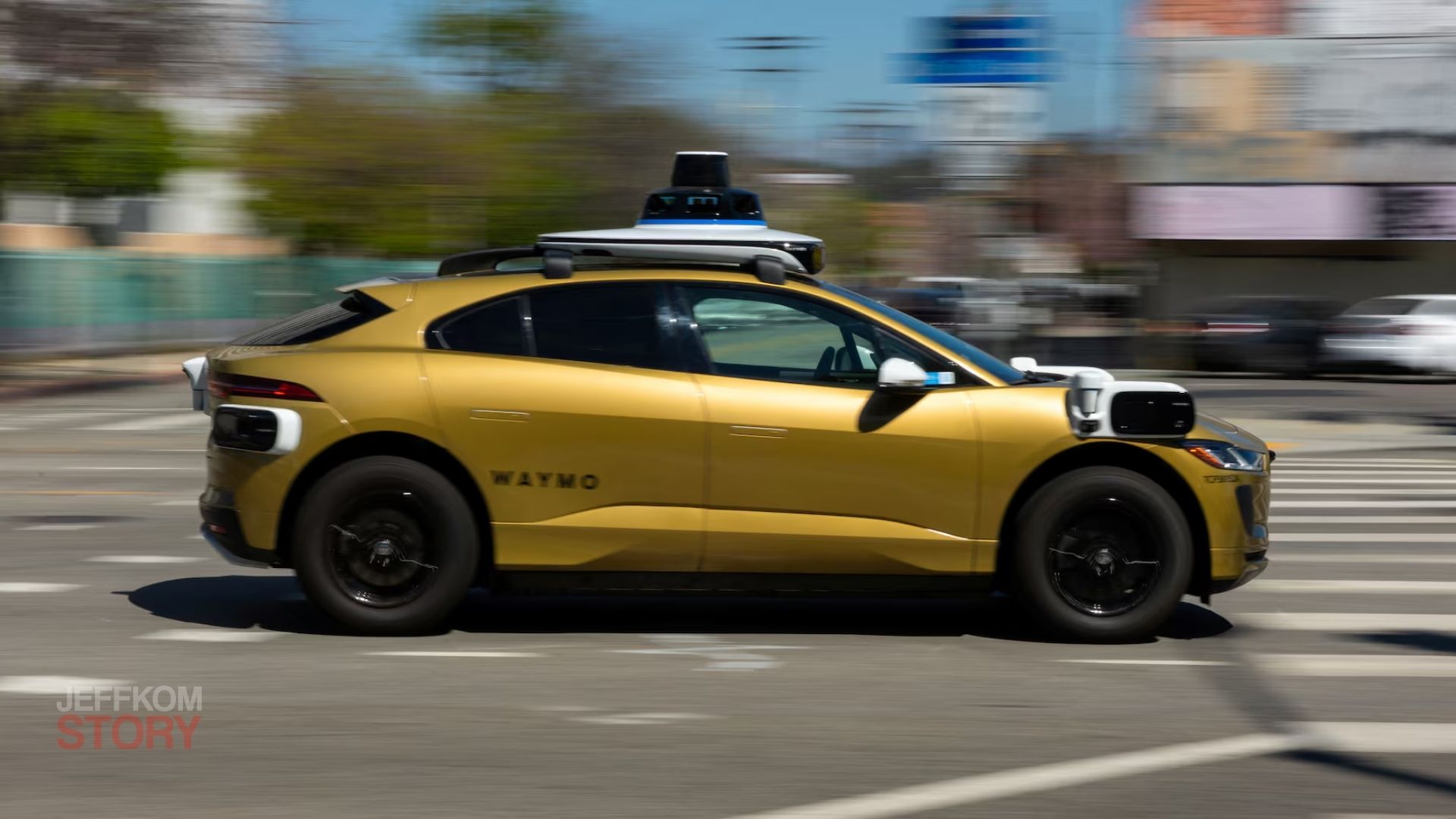
Waymo has expanded its robotaxi service pause to four major U.S. cities after several self-driving vehicles struggled to handle flooded roads and severe weather conditions. The latest incident in Atlanta has raised fresh questions about the reliability and safety of autonomous vehicles during extreme weather events.
Waymo Robotaxi Gets Stuck in Flooded Atlanta Street
A recent incident in Atlanta, Georgia, brought new attention to the challenges faced by autonomous driving systems. One of Waymo’s unoccupied robotaxis was seen driving through a flooded street before becoming stranded for nearly an hour. Local authorities later recovered the vehicle from the scene.
Following the incident, Waymo temporarily paused its robotaxi operations in Atlanta and San Antonio while engineers work on improving the system’s response to flooded road conditions.
Weather agencies issued official flash flood alerts before the company reported heavy rain in Atlanta. Waymo stated that its vehicles rely partly on National Weather Service alerts and other weather-related signals to manage driving risks during severe conditions.
Service Suspended in Dallas and Houston
Waymo also confirmed temporary service suspensions in Dallas and Houston due to dangerous weather forecasts across Texas. According to the company, the decision was made “out of an abundance of caution” in the aftermath of storms and flash flooding.
The expansion of service pauses highlights the growing challenge autonomous vehicle companies face when operating in unpredictable weather environments.
Waymo Previously Issued Software Recall
The latest flooding incident comes shortly after Waymo announced a software recall related to flooded roadway detection. The company admitted it had not yet finalized a permanent solution for avoiding flooded streets.
Instead, Waymo rolled out temporary software restrictions designed to reduce robotaxi operations in areas with an elevated flooding risk. However, the Atlanta incident suggests those early fixes may not be fully effective yet.
DOT documents reveal Waymo’s updated software aims to limit exposure to flooded, high-speed roads while engineers develop a long-term solution.
Federal Safety Agencies Continue Investigations
The flooding issue adds to a growing list of regulatory concerns surrounding Waymo’s autonomous vehicle technology.
Both the National Highway Traffic Safety Administration and the National Transportation Safety Board are actively investigating multiple incidents involving Waymo robotaxis.
One ongoing investigation focuses on reports that Waymo vehicles illegally passed stopped school buses. Although the company released a software update to address the issue, reports indicated that some robotaxis continued making unsafe maneuvers.
Another investigation involves a January incident in Santa Monica, California, where a Waymo robotaxi collided with a child. According to the company, the vehicle slowed to approximately six miles per hour before impact, and the child suffered minor injuries.
Regulators have since requested additional information from Waymo as they continue evaluating the safety performance of the company’s autonomous driving system.
The Bigger Challenge for Autonomous Vehicles
The recent service pauses show that self-driving technology still faces major obstacles when dealing with real-world weather conditions such as flooding, heavy rain, and low visibility.
While autonomous vehicles continue to advance rapidly, severe weather remains one of the toughest challenges for AI-powered transportation systems. Companies like Waymo are investing heavily in improving weather detection, road condition analysis, and emergency response capabilities to make robotaxis safer for public use.
The incidents also demonstrate how regulators are placing increased scrutiny on autonomous driving companies as the technology becomes more widely available across U.S. cities.
Final Thoughts
Waymo’s decision to suspend robotaxi services in Atlanta, Dallas, Houston, and San Antonio reflects the growing importance of safety in the autonomous vehicle industry. As self-driving technology evolves, companies must prove their systems can safely handle unpredictable real-world situations, especially during extreme weather conditions.
The coming months will likely play a critical role in determining how quickly autonomous transportation can gain broader public trust and regulatory approval.
Stay updated with the latest technology news, AI innovations, and startup success stories at JeffKom Story
Here are some related articles you may find interesting:
Waymo Expands Robotaxi Service Pause Amid Flooding and Safety Concerns
Waymo has expanded its robotaxi service pause to four major U.S. cities after several self-driving vehicles...
Quartermaster Raises $43M to Build a “Hive Mind” for Ships
Oceans are vast, and tracking activity on them has always been a challenge for governments, shipping...
How Google’s New AI Agents Are Transforming Search in 2026
Google is redefining the future of online search with the launch of its new AI agents, announced during...
Why Trust Is Becoming the Biggest Question in the Elon Musk vs OpenAI Trial
The ongoing legal battle between Elon Musk and Sam Altman has become more than just a courtroom dispute....
Malware Data Archives Are Bigger Than You Think: Comparing Cyber Threat Databases to the Eiffel Tower
The world of cybersecurity is growing faster than ever, and so are the massive databases used to track...
Parker Startup Files for Bankruptcy: What Went Wrong for the Fintech Company?
The fintech startup world continues to face major challenges in 2026, and one of the latest names making...
Tesla Model Y Becomes First Vehicle to Meet New US Driver Assistance Safety Benchmark
The 2026 Tesla Model Y has achieved a major milestone in automotive safety by becoming the first vehicle...
Nuro Secures Driverless Permit for Lucid Robotaxis Ahead of Uber’s 2026 Launch
The race toward fully autonomous transportation is accelerating. Nuro has taken a major step forward...
Meta Acquires ARI to Accelerate Humanoid AI and Robotics Vision
Meta Strengthens Its AI Future with ARI Acquisition
Meta is making a bold move in the world of artificial...
Neurable’s Brain-Computer Interface Startup Aims to Revolutionize Consumer Wearables in 2026
Brain-computer interface (BCI) technology is rapidly moving from futuristic concept to real-world innovation,...
Popular Posts

Quartermaster Raises $43M to Build a “Hive Mind” for Ships
JeffkomStory Team
Oceans are vast, and tracking
How Google’s New AI Agents Are Transforming Search in 2026
JeffkomStory Team
Google is redefining the future

Why Trust Is Becoming the Biggest Question in the Elon Musk vs OpenAI Trial
JeffkomStory Team
The ongoing legal battle between

Malware Data Archives Are Bigger Than You Think: Comparing Cyber Threat Databases to the Eiffel Tower
JeffkomStory Team
The world of cybersecurity is
Join Our Newsletter
Start your day with impactful startup stories and concise news! All delivered in a quick five-minute read in your inbox.