- By JeffkomStory Team
- Published on
XCENA Raises $135M to Solve AI’s Biggest Challenge: The Memory Bottleneck
Artificial Intelligence is evolving at an incredible pace, but one major challenge continues to limit its efficiency: memory. While most discussions focus on powerful GPUs and advanced processors, a new startup believes the future of AI infrastructure depends on solving a different problem altogether.
XCENA, a semiconductor startup with operations in South Korea and the United States, has secured $135 million in a Series B funding round, reaching a valuation of $570 million. The company is developing innovative memory-centric chip technology designed to improve AI performance while reducing infrastructure costs.
Why Memory Is Becoming the Biggest AI Challenge
Every AI interaction involves a complex flow of data. When a user submits a query to an AI model, information constantly moves between memory, CPUs, and GPUs. This process repeats multiple times as the model generates responses.
Although modern GPUs have become incredibly powerful, the constant movement of data creates delays, increases energy consumption, and raises operational costs. As AI models continue to grow larger, this bottleneck becomes even more significant.
XCENA believes the next generation of AI infrastructure will focus less on raw computing power and more on efficient memory management.
XCENA’s Innovative Approach
Founded in 2022 by industry veterans Jin Kim, Dohun Kim, and Harry Juhyun Kim, XCENA aims to transform traditional memory systems by bringing processing capabilities closer to memory itself.
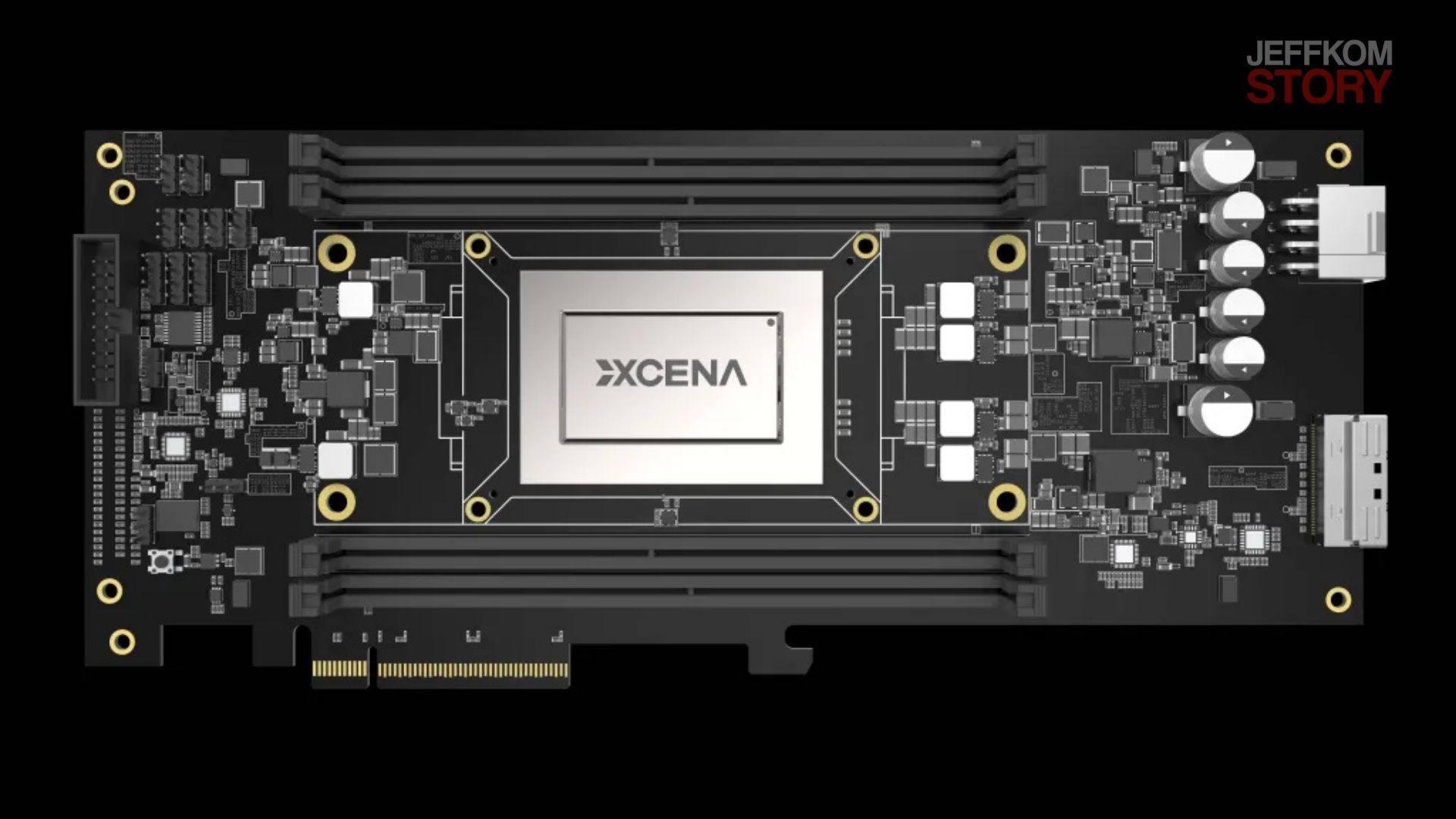
The company’s flagship product, the MX1 chip, connects directly to memory modules using Compute Express Link (CXL) technology. Instead of sending data back and forth between CPUs, GPUs, and memory, the MX1 processes many tasks directly within the memory environment.
This architecture significantly reduces unnecessary data movement, leading to faster performance and improved efficiency.
According to XCENA, workloads that previously required multiple servers could potentially be handled by a single server equipped with its technology.
How the MX1 Chip Works
The MX1 chip focuses on handling data-intensive operations that are traditionally managed by CPUs, including:
- Data preprocessing
- Data caching
- Memory management
- KV cache operations for AI inference
- Data orchestration tasks
While GPUs continue to handle complex mathematical computations used in AI training, XCENA’s technology streamlines the surrounding data operations that consume valuable resources.
By processing these tasks directly within memory modules, AI systems can operate more efficiently and at a lower cost.
The Growing Demand for Memory-Centric AI Infrastructure
As AI adoption accelerates across industries, companies are investing billions of dollars in data centers and AI infrastructure.
Major cloud providers and hyperscalers are constantly searching for ways to improve performance while reducing costs. Even small improvements in memory efficiency can translate into hundreds of millions of dollars in savings annually.
This trend has also boosted interest in memory technology companies worldwide. Industry giants such as Samsung, SK Hynix, and Micron continue to play a crucial role in supporting AI growth through advanced memory solutions.
XCENA’s strategy aligns with this broader industry shift toward memory-centric computing architectures.
Competing in a Fast-Growing Market
XCENA enters a competitive market that includes established companies such as Astera Labs and Marvell. However, the startup believes its technological advantages set it apart.
One of XCENA’s key differentiators is its extensive intellectual property portfolio and custom-designed architecture. The company has built thousands of specialized RISC-V-based processing cores optimized specifically for data processing tasks.
In addition to designing its own cores, XCENA also develops:
- Memory hierarchy systems
- Interconnect buses
- DRAM controllers
This level of vertical integration allows the company to optimize performance across the entire memory-processing ecosystem.
Strong Investor Confidence Fuels Growth
The recent $135 million funding round was co-led by Atinum and IMM Investment, alongside Corstone Asia and existing investors SBI Investment and Mirae Asset Capital.
The investment reflects growing confidence in technologies that address AI infrastructure challenges beyond traditional GPU scaling.
With over 90 employees across its offices in Pangyo, South Korea, and Sunnyvale, California, XCENA is expanding its presence while exploring additional funding opportunities from international investors.
What’s Next for XCENA?
Although the MX1 remains in the prototype stage, the company plans to begin mass production through Samsung’s foundry facilities by the end of 2026.
Revenue generation is expected to begin in 2027 as enterprise customers and hyperscale cloud providers evaluate the technology for deployment in AI infrastructure environments.
If successful, XCENA’s memory-centric approach could help reshape how future AI systems are built and operated.
Final Thoughts
The AI industry has largely focused on increasing computing power, but XCENA is betting that memory efficiency will define the next wave of innovation. By moving compute capabilities closer to memory, the company aims to reduce costs, improve performance, and eliminate one of AI’s most significant infrastructure bottlenecks.
With $135 million in fresh funding and growing industry interest in memory-centric architectures, XCENA is positioning itself as a startup to watch in the rapidly evolving semiconductor and AI landscape.
For more startup news, AI innovations, technology insights, and business success stories, stay connected with Jeffkom Story, your trusted source for the latest developments shaping the future of technology and entrepreneurship.
Here are some related articles you may find interesting:
XCENA Raises $135M to Solve AI’s Biggest Challenge: The Memory Bottleneck
Artificial Intelligence is evolving at an incredible pace, but one major challenge continues to limit...
How Great Startup Partnerships Are Built: Lessons from Build Mode’s Best Founder Conversations
Building a successful startup is rarely a solo journey. Behind every thriving company are strong partnerships...

Lucra Raises $20M Without the AI Hype: A Startup Success Story Worth Watching
In today’s startup ecosystem, adding “AI” to a pitch deck often feels like a requirement for attracting...
Patina Startup Is Reinventing the Fragrance Industry With AI-Powered Scent Technology
The fragrance industry has remained largely unchanged for decades. Traditional perfume and scent creation...
Waymo Expands Robotaxi Service Pause Amid Flooding and Safety Concerns
Waymo has expanded its robotaxi service pause to four major U.S. cities after several self-driving vehicles...
Quartermaster Raises $43M to Build a “Hive Mind” for Ships
Oceans are vast, and tracking activity on them has always been a challenge for governments, shipping...
How Google’s New AI Agents Are Transforming Search in 2026
Google is redefining the future of online search with the launch of its new AI agents, announced during...
Why Trust Is Becoming the Biggest Question in the Elon Musk vs OpenAI Trial
The ongoing legal battle between Elon Musk and Sam Altman has become more than just a courtroom dispute....
Malware Data Archives Are Bigger Than You Think: Comparing Cyber Threat Databases to the Eiffel Tower
The world of cybersecurity is growing faster than ever, and so are the massive databases used to track...
Parker Startup Files for Bankruptcy: What Went Wrong for the Fintech Company?
The fintech startup world continues to face major challenges in 2026, and one of the latest names making...

Popular Posts

How Great Startup Partnerships Are Built: Lessons from Build Mode’s Best Founder Conversations
JeffkomStory Team
Building a successful startup is
Lucra Raises $20M Without the AI Hype: A Startup Success Story Worth Watching
JeffkomStory Team
In today’s startup ecosystem, adding

Patina Startup Is Reinventing the Fragrance Industry With AI-Powered Scent Technology
JeffkomStory Team
The fragrance industry has remained

Waymo Expands Robotaxi Service Pause Amid Flooding and Safety Concerns
JeffkomStory Team
Waymo has expanded its robotaxi
Join Our Newsletter
Start your day with impactful startup stories and concise news! All delivered in a quick five-minute read in your inbox.