- By JeffkomStory Team
- Published on
How Chef Robotics Said No to Millions in Revenue and Won
In the crowded world of food tech robotics where companies like Chowbotics, Zume and Karakuri have failed, Chef Robotics is a rare success story. But its path to a thriving business wasn’t easy decisions – in fact it was built on a bold and risky move: walking away from its original customers and millions in signed revenue.
The Startup That Almost Didn’t Make It
Founded by Raj Bhageria, a robotics graduate from the University of Pennsylvania’s GRASP Lab, Chef Robotics was born out of a dream to make sci-fi culinary automation a reality. Initially the goal was to automate fast-casual restaurant kitchens – an industry plagued by labor shortages and operational inefficiencies.
Chef Robotics even signed multi-million dollar contracts to deploy robotic kitchen lines in these restaurants. But the technical challenges quickly became insurmountable. The core issue? Robotic grasping – the ability to pick up soft or irregular ingredients like blueberries, cheese or sauces without crushing or clumping them.
Bhageria pitched a more feasible, phased approach: install robots to handle one or two ingredients, gather data and build from there. But the restaurants wanted a complete solution from day one and they walked away.
Pivoting to High-Mix Food Manufacturing
Rather than folding, Bhageria made a game changing decision. He turned away from the fast-casual restaurant model and shifted focus to an underserved but ideal customer segment: high-mix food manufacturers.
These companies create thousands of pre-packaged meals – used by airlines, hospitals and frozen food retailers – on assembly lines where employees add specific ingredients in cold, repetitive environments. With massive labor shortages and monotonous work, this segment was ripe for automation.
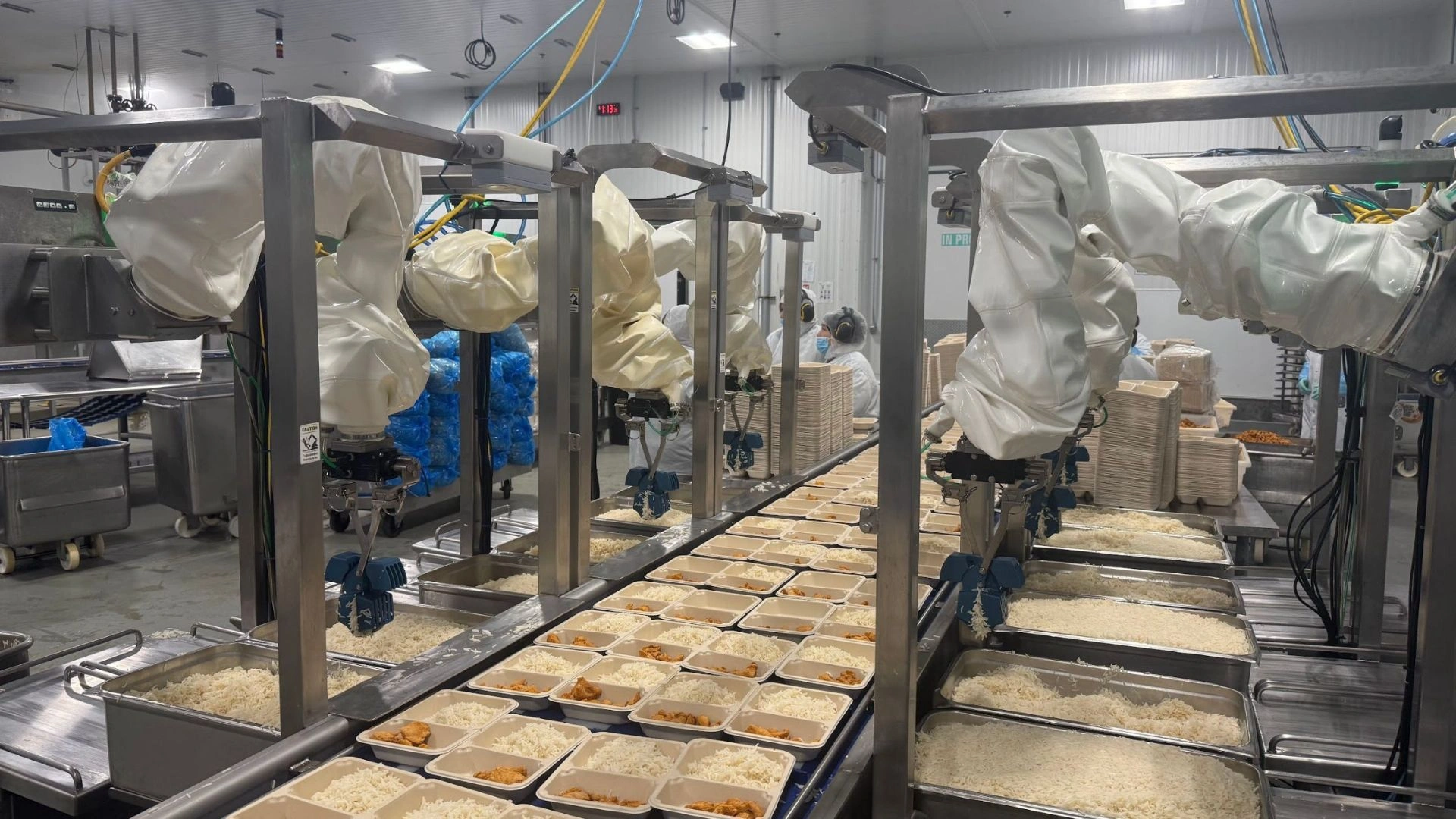
Chef Robotics customized flexible robots that work collaboratively in this high-mix environment. Better still, the variety of tasks provided the real-world data the robots needed to continuously improve and train their models.
The AI Advantage and Funding Boost
While 2021 and 2022 were brutal for VC funding, Chef Robotics persisted. In March 2023 they raised an $11.2 million seed round led by Construct Capital, with support from Promus Ventures, Kleiner Perkins and Gaingels.It paid off again in 2024 when VC interest in AI-powered physical solutions went through the roof. Avataar Venture Partners led a $23 million Series A, which closed in under a month. Chef Robotics also secured a $26.75 million equipment financing loan from Silicon Valley Bank, bringing their total raised to $38.8 million.
Today Chef Robotics has 40 employees, partnerships with brands like Amy’s Kitchen and Chef Bombay, and dozens of robots deployed across the U.S. that have assembled over 45 million meals.
The Future
What’s most compelling about Chef Robotics’ story isn’t their tech, it’s their willingness to pivot from their original vision, adapt to real world constraints and rethink who their ideal customer really was.
Key Takeaways for Startups:
-
Don’t fear the pivot—sometimes saying no opens the door to bigger opportunities.
-
Identify markets with urgent needs and willingness to collaborate.
-
Real-world training data is key to building effective AI-powered robotics.
-
Resilient fundraising and targeted customer focus can fuel long-term success.
Chef Robotics is a textbook example of how strategic focus, technical flexibility, and perseverance can turn near-failure into industry leadership.
Here are some related articles you may find interesting:
AI Inference Startup Modal Labs in Talks to Raise at $2.5B Valuation
Modal Labs, an AI inference infrastructure startup, is reportedly in discussions with venture capital...
Amazon May Launch AI Content Marketplace for Media Publishers
Amazon may soon launch a new content marketplace. This platform would allow media companies to sell their...
Waymo Begins Driverless Robotaxi Testing in Nashville Ahead of 2026 Launch
Waymo has officially removed human safety drivers from its autonomous test vehicles in Nashville, marking...
a16z Warns Founders: Don’t Chase Hype-Driven ARR, Build Durable Growth Instead
The AI startup boom has reignited a familiar Silicon Valley pattern: massive venture capital flowing...
Google’s Gemini App Crosses 750 Million Monthly Users as AI Adoption Accelerates
Google’s AI chatbot Gemini has reached a major milestone, surpassing 750 million monthly active users...
Y Combinator Allows Startups to Receive Seed Funding in Stablecoins
Y Combinator is taking a big leap towards incorporating blockchain into the way they fund startups. And...
Apple Acquires Israeli AI Startup Q.ai to Strengthen Audio and Hardware Intelligence
Apple is one step further along in the high-stakes AI game. Tech giants like Apple, Meta, and Google...
Where’s My State Tax Refund? How to Check Your Status and Avoid Delays
Waiting for a tax refund can be frustrating, especially when it’s unclear who’s responsible for issuing...
Trump Administration Loosens Nuclear Safety Rules, Accelerating Reactor Development
US nuclear energy is charging into a new era of rapid growth, but controversy is in tow. With nuclear...
Everything You Need to Know About Viral Personal AI Assistant Clawdbot (Now Moltbot)
The latest wave of AI innovation has produced an unexpected breakout star: a lobster-themed personal...
Popular Posts

AI Inference Startup Modal Labs in Talks to Raise at $2.5B Valuation
JeffkomStory Team
Modal Labs, an AI inference

Amazon May Launch AI Content Marketplace for Media Publishers
JeffkomStory Team
Amazon may soon launch a

Waymo Begins Driverless Robotaxi Testing in Nashville Ahead of 2026 Launch
JeffkomStory Team
Waymo has officially removed human

a16z Warns Founders: Don’t Chase Hype-Driven ARR, Build Durable Growth Instead
JeffkomStory Team
The AI startup boom has
Join Our Newsletter
Start your day with impactful startup stories and concise news! All delivered in a quick five-minute read in your inbox.