- By JeffkomStory Team
- Published on
Amazon Enters the AI Chip Race: Can AWS Challenge Nvidia’s Dominance?
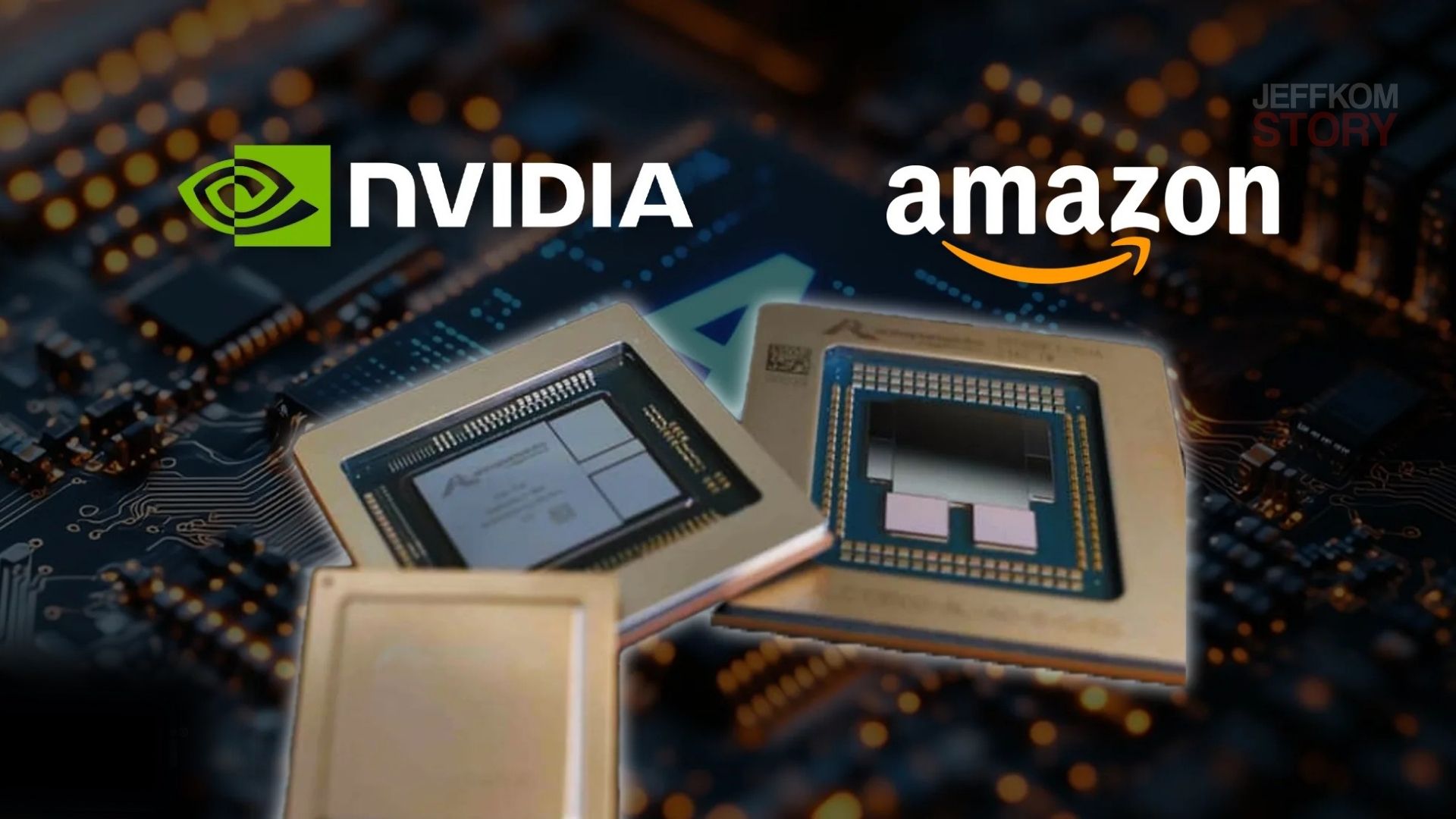
The artificial intelligence industry is evolving rapidly, and Amazon is preparing to make one of its boldest moves yet. Through Amazon Web Services (AWS), the company is looking beyond cloud computing and aiming to compete directly with Nvidia in the growing AI chip market.
AWS is exploring the possibility of selling its in-house AI chips, called Trainium, to other companies for use in their data centers. If this strategy moves forward, it could significantly reshape the competitive landscape of AI infrastructure.
Amazon’s Big AI Ambition
Amazon has invested heavily in developing its own AI hardware to reduce dependency on third-party suppliers and strengthen its position in the AI ecosystem.
According to AWS AI chief Peter DeSantis, the company is discussing potential opportunities to sell Trainium chips to external businesses. While specific customers have not been disclosed, the announcement signals Amazon’s intention to expand beyond its traditional cloud services business.
Amazon CEO Andy Jassy also highlighted the massive demand for these chips in his annual shareholder letter. He stated that if Amazon’s chip business operated independently and sold chips to AWS and external customers, it could potentially reach an annual revenue run rate of approximately $50 billion.
What Is Trainium?
Trainium is Amazon’s custom-built AI chip designed specifically for training large artificial intelligence models.
These chips help organizations develop generative AI applications more efficiently while lowering infrastructure costs compared to traditional solutions.
AWS currently uses Trainium within its cloud platform to support AI workloads for customers around the world.
Key advantages include:
- High performance for AI model training
- Lower operational costs
- Better integration with AWS services
- Optimized infrastructure for large-scale AI applications
Why Is Amazon Challenging Nvidia?
For years, Nvidia has dominated the AI hardware market. Its GPUs power many of today’s leading AI models and data centers.
However, Amazon sees an opportunity to become a major competitor by offering businesses an alternative AI infrastructure solution.
Even though a potential $50 billion chip business would still be smaller than Nvidia’s enormous revenue, it would immediately establish Amazon as a serious player in the market.
This move also aligns with Amazon’s long-term strategy of controlling more of its technology stack rather than relying heavily on external suppliers.
AWS Has a Bigger Advantage Than Selling Chips Alone
Unlike traditional chip manufacturers, AWS benefits from an entire ecosystem of cloud services.
When customers build AI applications on AWS, they often purchase additional services such as:
- Cloud storage
- Security solutions
- Networking infrastructure
- Data management tools
- Monitoring and analytics services
This creates multiple revenue streams for Amazon beyond simply selling hardware.
Its AI chip strategy is not just about competing with Nvidia. It is about creating a complete AI platform that businesses can rely on from development to deployment.
The Biggest Challenge: Chip Supply
Despite the excitement, Amazon faces a major obstacle.
Demand for Trainium chips already exceeds supply.
Andy Jassy previously revealed that current Trainium capacity sold out quickly. Even Trainium4, the next generation chip expected in the future, has already generated strong demand.
If Amazon begins selling chips externally, it could create shortages for existing AWS customers unless production capacity significantly increases.
To manufacture these chips, Amazon depends on partners like TSMC, one of the world’s leading semiconductor manufacturers.
However, Nvidia remains one of TSMC’s biggest customers, making production competition increasingly intense.
The Growing AI Infrastructure Battle
The AI market is entering a new phase where major technology companies are competing across every layer of the ecosystem.
Nvidia is expanding beyond GPUs and entering AI CPU markets, traditionally dominated by Intel and AMD.
At the same time, Amazon is moving deeper into AI hardware.
This competition will likely accelerate innovation, lower costs, and provide businesses with more choices when building AI-powered products.
What This Means for Businesses and Startups
For startups, developers, and enterprises, increased competition in AI infrastructure is positive news.
Potential benefits include:
- More affordable AI computing options
- Reduced dependency on a single provider
- Faster AI innovation
- Improved cloud service integrations
- Greater flexibility when choosing AI platforms
Businesses adopting AI technologies will have more opportunities to optimize performance while controlling costs.
Final Thoughts
Amazon’s potential decision to sell Trainium AI chips marks an important moment in the technology industry.
While Nvidia remains the dominant force, AWS is positioning itself as a powerful alternative by combining AI hardware with its massive cloud ecosystem.
The battle for AI infrastructure leadership is only beginning, and the outcome could redefine how companies build and scale artificial intelligence applications in the coming years.
At Jeffkom Story, we continue to follow these transformative developments shaping the future of startups, artificial intelligence, and global technology innovation.
Here are some related articles you may find interesting:
AI Startup Lyzr Uses Its Own AI Agent to Help Raise $100 Million Series B
Artificial intelligence is transforming every part of business, including fundraising. In a move that...
Norm Raises $120M to Build an AI-Powered Law Firm, Reaches $1.2B Unicorn Valuation
Artificial intelligence is reshaping industries across the globe, and the legal sector is no exception....
Bending Spoons Defies SaaS Slowdown with 40% IPO Surge: Startup Redefining Software Growth
The Software-as-a-Service (SaaS) industry has faced increasing pressure in 2025. As artificial intelligence...
Autonomous Vehicle Hype Returns: How Humble Robotics Is Transforming the Future of Freight
The autonomous vehicle (AV) industry is once again capturing global attention. After years of slowing...
Vinton Cerf Retires: The Father of the Internet Leaves Google After Two Decades
After more than five decades of shaping modern technology, Vinton Cerf, widely known as the Father of...
Asian AI Startups Challenge US AI Dominance Amid Export Restrictions
New AI Models from Asia Signal a Shift in the Global AI Landscape
The global artificial intelligence...
How Kyber Is Building the Future of Robotics with Real-Time AI Infrastructure
Artificial Intelligence is no longer limited to software and chatbots. Today, AI is moving into the physical...
Every Fusion Startup That Has Raised Over $100M: The Race to Build Unlimited Clean Energy
Fusion energy is no longer a futuristic dream. Over the past few years, fusion startups have attracted...
Amazon Enters the AI Chip Race: Can AWS Challenge Nvidia’s Dominance?
The artificial intelligence industry is evolving rapidly, and Amazon is preparing to make one of its...
Android 17 Launches With Powerful AI Features, Smarter Multitasking, and Enhanced Pixel Experiences
The future of Android is becoming more intelligent. Google has officially released Android 17, introducing...
Popular Posts

AI Startup Lyzr Uses Its Own AI Agent to Help Raise $100 Million Series B
JeffkomStory Team
Artificial intelligence is transforming every

Norm Raises $120M to Build an AI-Powered Law Firm, Reaches $1.2B Unicorn Valuation
JeffkomStory Team
Artificial intelligence is reshaping industries

Bending Spoons Defies SaaS Slowdown with 40% IPO Surge: Startup Redefining Software Growth
JeffkomStory Team
The Software-as-a-Service (SaaS) industry has

Autonomous Vehicle Hype Returns: How Humble Robotics Is Transforming the Future of Freight
JeffkomStory Team
The autonomous vehicle (AV) industry
Join Our Newsletter
Start your day with impactful startup stories and concise news! All delivered in a quick five-minute read in your inbox.