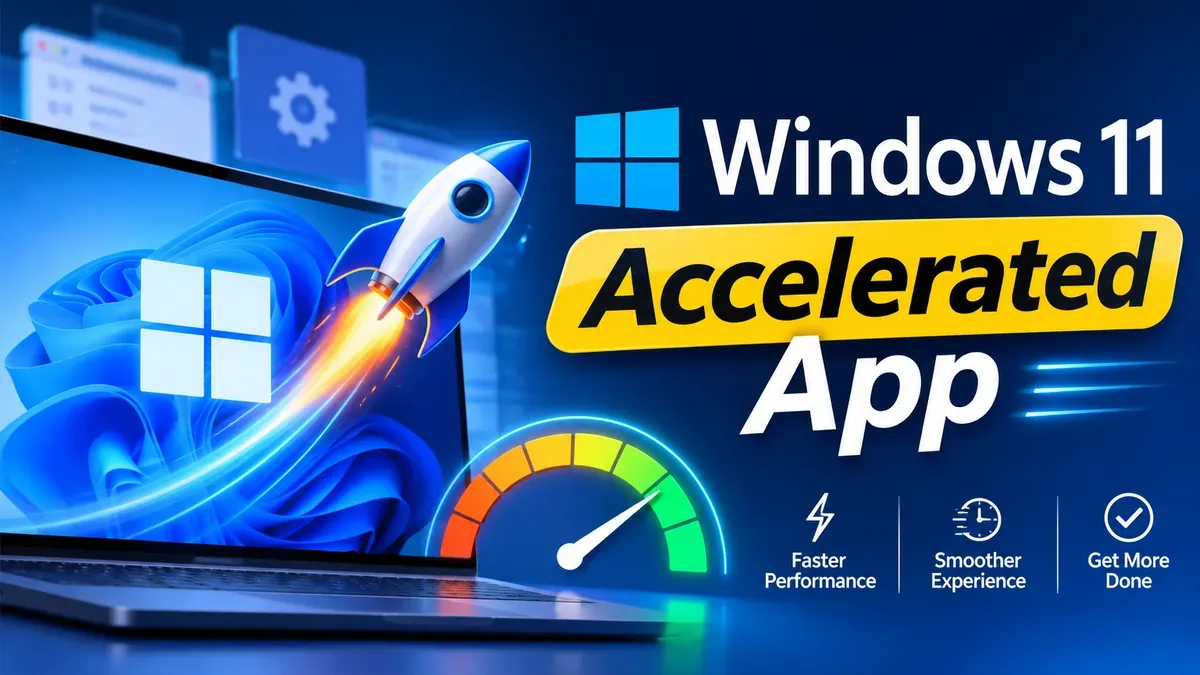
Microsoft has started using a new Windows 11 capability called Accelerated App Launch to make its Edge browser open faster. For now, Edge is the only app that takes advantage of it, and the requirements to get it working are fairly specific.
According to a report by DealNTech, Microsoft announced Edge support on October 29, saying most users should see the browser launch about 15% faster, with improvements reaching as high as 33% when a PC is juggling many tasks.
The feature requires Windows 11 version 25H2, 26H2 or 26H1 with the October 28 optional update installed, along with Edge version 150 or newer.
Cutting Out the Middle Step
Normally, when a user clicks a taskbar icon or a link for an app that is already open, Windows spins up a brief intermediary process. That process locates the running copy of the app and hands off the request.
Microsoft's Edge team says this extra hop can make the browser feel sluggish when the computer is busy. Accelerated App Launch removes it by letting the app register itself with Windows at startup, so Windows can notify the running process directly the next time it is opened.
Under the developer documentation, an app designates a window to receive launch messages and can register for two types of launch: its main tile in Start or the taskbar, and links using a web-style address scheme.
What the Feature Does Not Speed Up
The benefit only applies when Edge is already running. A cold start gains nothing, because Windows has no registered process to pass the launch to.
Edge counts as running if a window is open or if it is operating in the background through its Startup boost setting. The feature does not affect how fast pages load once the browser is open, and Microsoft acknowledges the difference may be barely noticeable on a freshly started PC.
Reading Microsoft's Performance Claims
Microsoft's comparison measures Edge launching with and without the feature, with the browser already running in both cases. The 15% figure is the typical result, while 33% represents the upper end under heavy multitasking rather than an average.
Microsoft provided only percentages, with no launch times in milliseconds, no details on test hardware and no description of the multitasking workload. That makes it hard to translate the claims into real time saved.
Windows Latest informally tested a Release Preview build in mid-October and reported Edge opened noticeably faster while Microsoft Store and Paint were running, though that was a single-machine check rather than a controlled test.
Updates and Settings Users Need
Both required Windows updates are optional, non-security preview releases from October 28. KB5127936 covers 25H2 and 26H2, while PCs on 26H1 receive the feature through KB5127653, despite Microsoft's Edge blog naming only the former for all three versions. Users can install them via the Optional updates section under Windows Update's Advanced options.
There is no toggle to switch the feature on or off. Release notes list it under normal rollout rather than a staged one, so it should work once the update and a qualifying Edge build are installed. Link launches are only accelerated when Edge is the default browser, and enabling Startup boost makes more launches eligible at the cost of keeping processes in memory.
PCs still on 24H2 must upgrade to 25H2 or 26H2 first, as Microsoft has stopped shipping non-security preview updates to that version. Windows Latest expects the feature to reach all eligible PCs with the November 10 Patch Tuesday release, though Microsoft has not confirmed that date.
A Gated Path for Other Developers
Other app makers can adopt the capability, but not freely. Microsoft's documentation classifies the accelerated-launch APIs as a Limited Access Feature, meaning developers must request an unlock token from Microsoft before shipping support, and the underlying interface is labeled experimental.
Microsoft has contributed code toward Chromium, but has not explained how the access process will apply to rival browsers built on that code. Firefox, which does not use Chromium, would not benefit from that contribution.
What It Means for Developers and Users
For users, the gains are modest and situational, mainly helping those who keep Edge open while multitasking. For developers, the approval requirement suggests the list of supported apps will grow slowly.
Several questions remain open, including support for PDF launches in Edge, the progress of the Chromium work, and whether the November Patch Tuesday release brings the feature to PCs that skip optional updates.
Source: DealNTech