FlutterFlow, the Mountain View, California-based app development platform, has introduced a new AI-native builder that lets users create native iOS and Android applications by describing what they want in plain language.
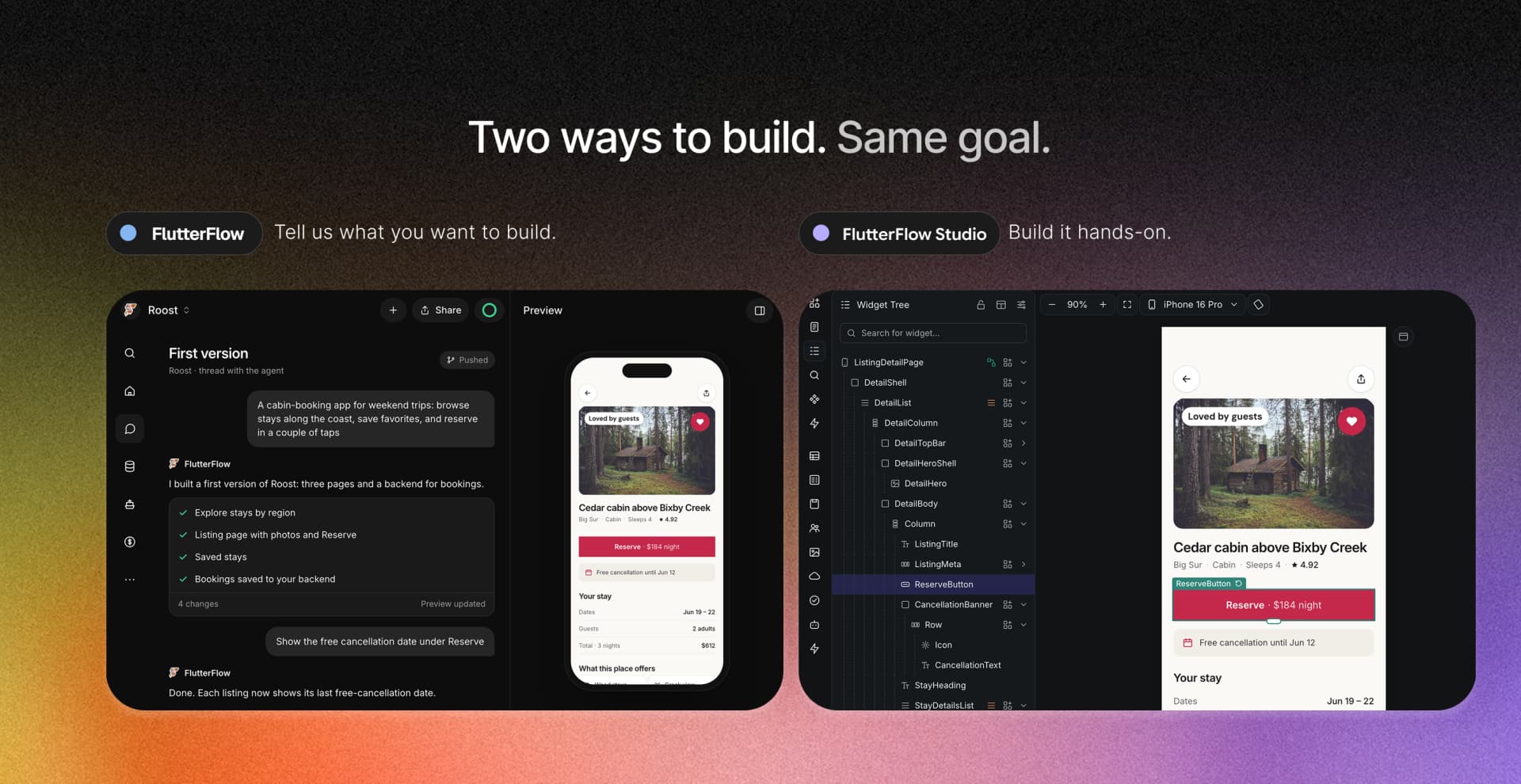
The launch, announced on November 4, 2026, splits the company's offering into two paths: an agent-led experience driven by conversation, and its established visual editor, which will now carry the name FlutterFlow Studio.
From Prompt to Published App
According to an announcement distributed via GlobeNewswire and published on Business Insider's markets site, the new product is designed to take a single prompt and turn it into a working native mobile app.
Builders describe their idea, then collaborate with an AI agent that develops the application, connects its backend, and readies it for submission to Apple's App Store and Google Play. Analytics are also included, and the entire process takes place inside the FlutterFlow platform.
The company says users can run several tasks with the agent at the same time, and it is positioning the output as apps that look intentionally designed rather than machine-generated.
Studio Remains for Hands-On Builders
FlutterFlow is not retiring its existing visual development tool. The drag-and-drop platform that built the company's reputation continues as FlutterFlow Studio, giving users direct control over every part of their applications.
Rather than framing one product as more advanced than the other, the company is presenting the choice as a matter of working style. The underlying question for users is simply how they prefer to build.
Why the Company Built a Second Product
Co-founder and CEO Abel Mengistu said the decision came from listening to users. "We learned that people wanted a conversational way of building," he said, explaining that people wanted to prompt both for their initial idea and for subsequent changes.
Mengistu acknowledged that Studio, while powerful, did not offer that kind of experience, so the team chose to build something new from the ground up for this audience. At the same time, he noted that FlutterFlow has a community of millions of builders, developed over five years, many of whom want to keep working in Studio.
How Access Works
Both experiences are available through the FlutterFlow website. New users will pick their preferred workflow when they sign up.
Existing customers can keep working in Studio and try the new AI-first builder under their current subscription, subject to usage limits.
What It Means for App Builders
The launch reflects a broader shift in software tools, where conversational AI agents are increasingly handling implementation while people focus on product direction and refinement. FlutterFlow, known for building on Google's Flutter framework, is betting that native mobile apps are a natural fit for that approach.
By keeping Studio alongside the new agent, the company is trying to attract newcomers who want to build by prompting without alienating the established users who value precise visual control. For founders and small teams, the result is another option for getting a native mobile product into app stores with less engineering overhead.
Source: markets.businessinsider.com