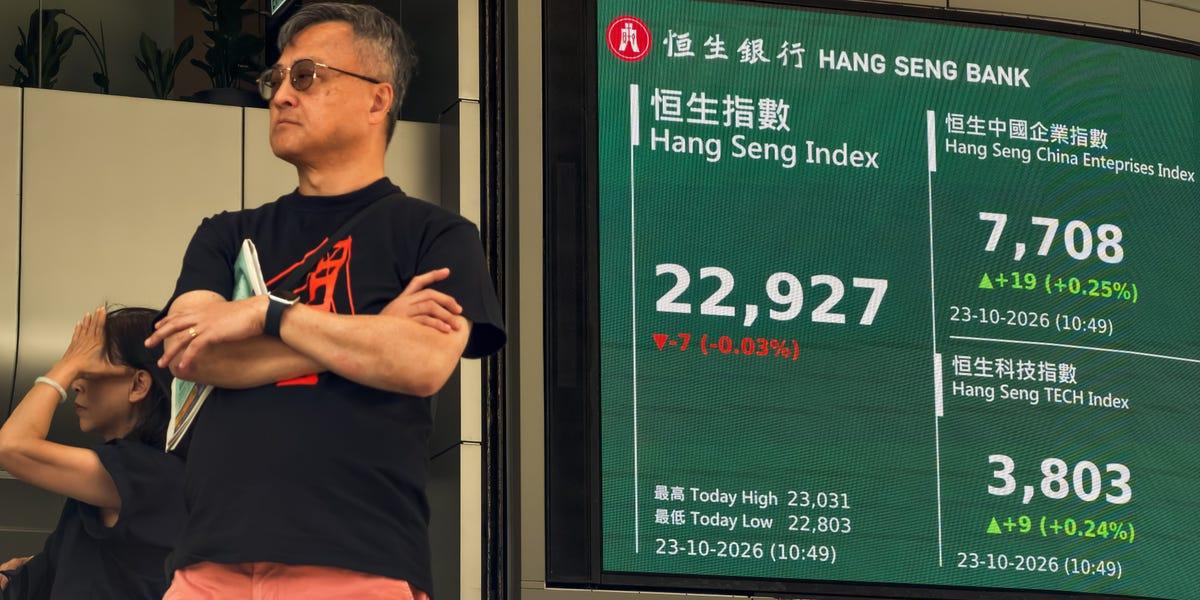
Technology shares across Asia fell on Tuesday after Washington moved to further restrict China's ability to use advanced AI chips, adding fresh strain to an AI trade that was already under pressure.
The selloff was not uniform, however. While Chinese AI developers and major internet platforms dropped sharply, China's homegrown chipmakers posted strong gains as investors wagered that tighter US controls would speed up Beijing's drive to build its own semiconductor supply chain.
Chinese AI Developers Take the Biggest Hit
Companies building and deploying AI models in China were among the worst performers. Hong Kong-listed Z.ai, the developer of the widely shared Ox Alpha model, dropped by as much as 6% during the session.
Alibaba also fell 6%, and Tencent slid 3%. Both companies are heavy users of computing power for their cloud and AI ambitions, making them sensitive to any limits on access to cutting-edge processors.
Domestic Chipmakers Move the Other Way
In contrast, shares of SMIC rose 9% and Hua Hong jumped 16%. Investors appeared to view the new restrictions as a tailwind for local manufacturers that could see stronger demand and more government backing.
Charu Chanana, chief investment strategist at Saxo, summed up the split in a note to clients. "What benefits China's domestic chipmakers may simultaneously hurt its AI developers," she wrote.
Chanana added that Beijing's push to reduce dependence on foreign technology could translate into policy support for firms like SMIC and Hua Hong.
What the New US Rules Target
According to a report by Business Insider, the latest measures are aimed at a workaround that let Chinese companies tap advanced chips without buying them, by renting computing capacity from data centers located outside China.
The rules introduce new licensing requirements for shipments of advanced AI chips to several countries, including Singapore, Malaysia and Brazil. Chanana described the move as a significant escalation, since controls now extend beyond chip purchases to remote access to computing power.
For Chinese AI developers, that could mean higher costs and slower progress. It could also weigh on future demand for advanced processors and the high-bandwidth memory used in AI data centers.
Losses Spread Across Korea and Japan
The pressure extended well beyond China. In South Korea, Samsung Electronics fell as much as 3% and SK Hynix as much as 2%, though both trimmed their losses later in the day.
In Japan, memory maker Kioxia lost 7% and chip-testing equipment supplier Advantest dropped 6%. The regional declines followed a rough Monday on Wall Street, where the Philadelphia Semiconductor Index fell more than 5%.
Nvidia Faces a Tense Earnings Day
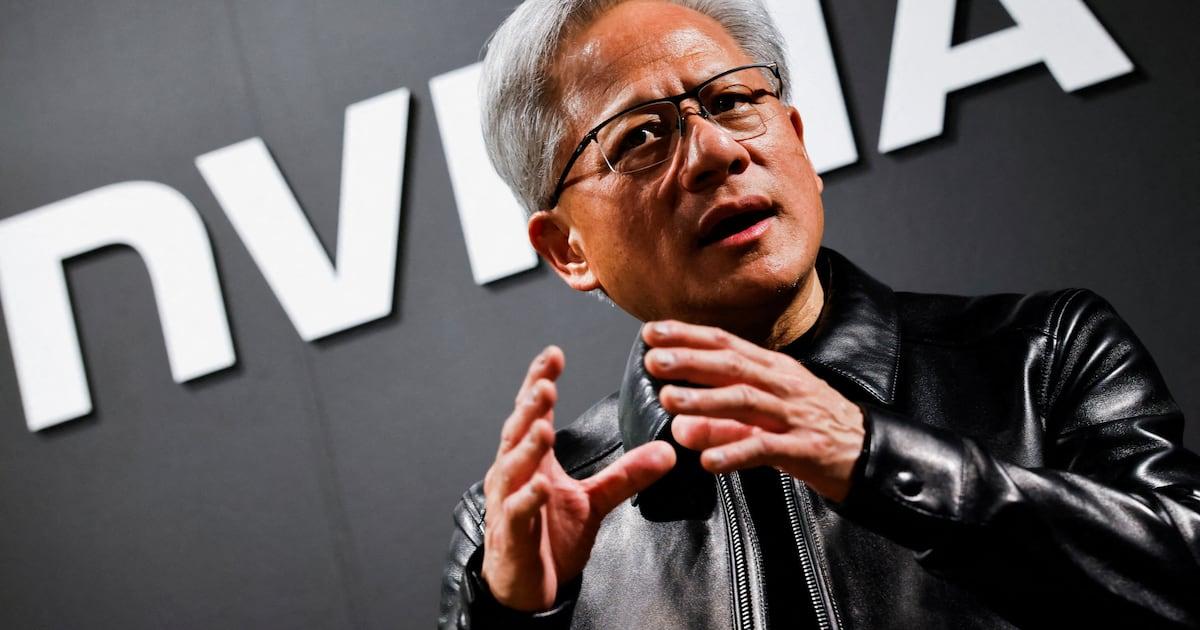
The timing is awkward for Nvidia. Its shares dropped 4% on Monday amid leadership turmoil after CEO Jensen Huang resigned last week, and the stock has shed roughly a third of its value since peaking in October.
The company is set to report quarterly results after the US market close on Tuesday, its first earnings release under interim CEO Colette Kress. Chanana suggested the larger concern for Nvidia is weaker demand down the line rather than an immediate hit to earnings.
Nvidia's performance matters a great deal in Asia, where TSMC in Taiwan manufactures its advanced processors and South Korean companies supply memory for AI servers.
A More Selective AI Trade Ahead
The week's moves come as investors increasingly question whether the enormous spending on AI infrastructure will deliver the returns many have been counting on. The new restrictions add policy risk to those doubts.
For founders, investors and industry watchers, the message is that the AI boom is no longer lifting every company equally. Export controls, supply chain position and access to computing power are now shaping who gains and who loses, and Chanana argued that the assumption of broad, even benefits across the value chain is becoming harder to justify.
Source: Business Insider