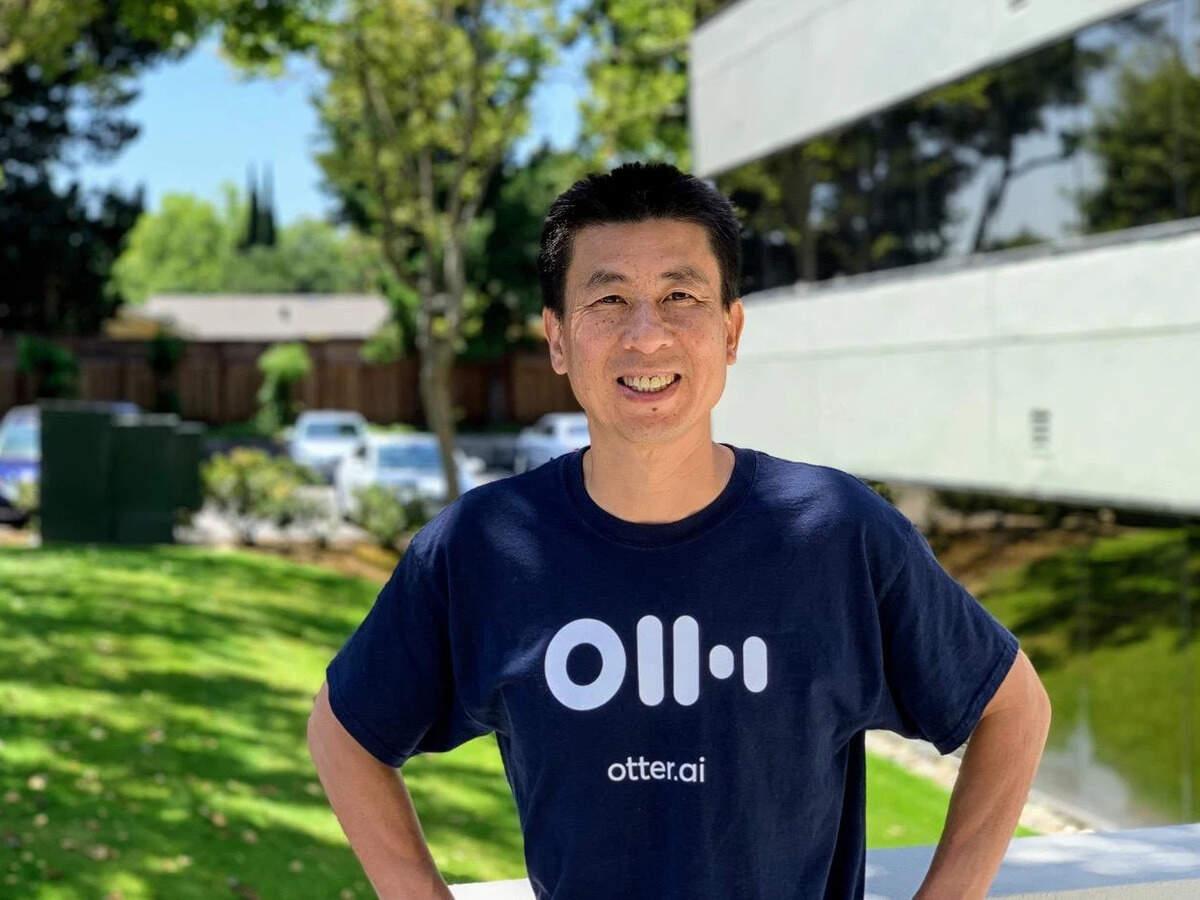
Long before Otter.ai became a familiar name in virtual meetings, its chief executive, Sam Liang, was a foreign student in the United States who struggled to follow what his professors were saying. His workaround was a Sony Walkman, which he used to tape lectures and replay them at home until the material made sense.
That habit later shaped the idea behind Otter.ai, an AI transcription and meeting assistant that, according to a profile by The Economic Times, has now transcribed more than 1 billion meetings for over 40 million users. The company employs more than 240 people and has raised $320 million in financing.
A Childhood Shaped by Scarcity
Liang grew up in China at a time when food was rationed and everyday resources were limited. He set his sights on studying in America and eventually enrolled at the University of Arizona.
He went on to Stanford University, where he earned his PhD. The language barrier was his biggest obstacle in those early years, and recording classes became his way of keeping up.
The experience left him with a question he would revisit later: could people record conversations and quickly locate the exact information they needed, without sitting through hours of audio?
Building a Career in Silicon Valley
At Stanford, Liang worked with faculty advisor David Cheriton, who had mentored Google founders Larry Page and Sergey Brin and provided a $100,000 cheque to support Google in its earliest days.
Liang then held roles at Cisco and Tropos Networks before joining Google in 2006 as a technical lead. His work on the blue dot that shows a user's position became part of the technology behind Google Maps.
In 2010 he left Google to co-found Alohar Mobile. Alibaba bought the startup in 2013 for millions of dollars, giving Liang his first significant exit and hands-on experience building a technology company.
A Slow and Skeptical Start for Otter
Liang co-founded Otter.ai with Yun Fu in 2016, originally under the name AISense. The team spent two years developing the technology, with a straightforward goal: turn spoken conversations into searchable text so people could engage in discussions rather than take notes.
Convincing investors proved difficult. Voice processing was costly, AI meeting assistants were an unfamiliar category, and several investors doubted that people would pay for such a tool.
Otter released a free version in February 2018 and introduced a paid subscription three months later. The product existed, but widespread adoption had not yet arrived.
How the Pandemic Changed the Trajectory
The shift to remote work during the pandemic gave Otter its breakthrough. As offices closed and meetings moved to Zoom, businesses needed reliable ways to record conversations, share notes and keep track of decisions.
Otter's revenue climbed 800% between 2019 and 2020. In February 2021 the company raised a $50 million Series B round, by which point it had transcribed more than 100 million meetings.
Growth has continued since. Otter now reports annual revenue of $100 million, a figure that reflects business sales rather than profit. Its backers include early investors in Google, Zoom and Tesla.
Expanding Beyond Transcripts
Otter is now aiming for a broader role in the AI-driven workplace. It is widening its integrations with OpenAI, Claude and Google, moving past simple transcription.
The company's stated goal is to help users capture conversations, retrieve information and handle the follow-up work that comes after a meeting, putting it in a crowded field of tools competing to become the default workplace assistant.
The Personal Cost and What Founders Can Take From It
Liang says the habits formed during his upbringing have stayed with him. He remains careful with money, keeps a simple lifestyle and follows a daily routine that includes a smoothie inspired by Arnold Schwarzenegger.
The journey also involved sacrifice. In Otter's early years, his wife was the family's only earner, and Liang has said he wishes he had spent more time with his children before they left for college.
For founders, his story highlights a familiar pattern: an idea rooted in a personal problem, years of investor doubt, and a market shift that suddenly made the product essential. Persistence mattered, but so did being ready when remote work turned meeting transcription from a niche tool into everyday infrastructure.
Source: The Economic Times