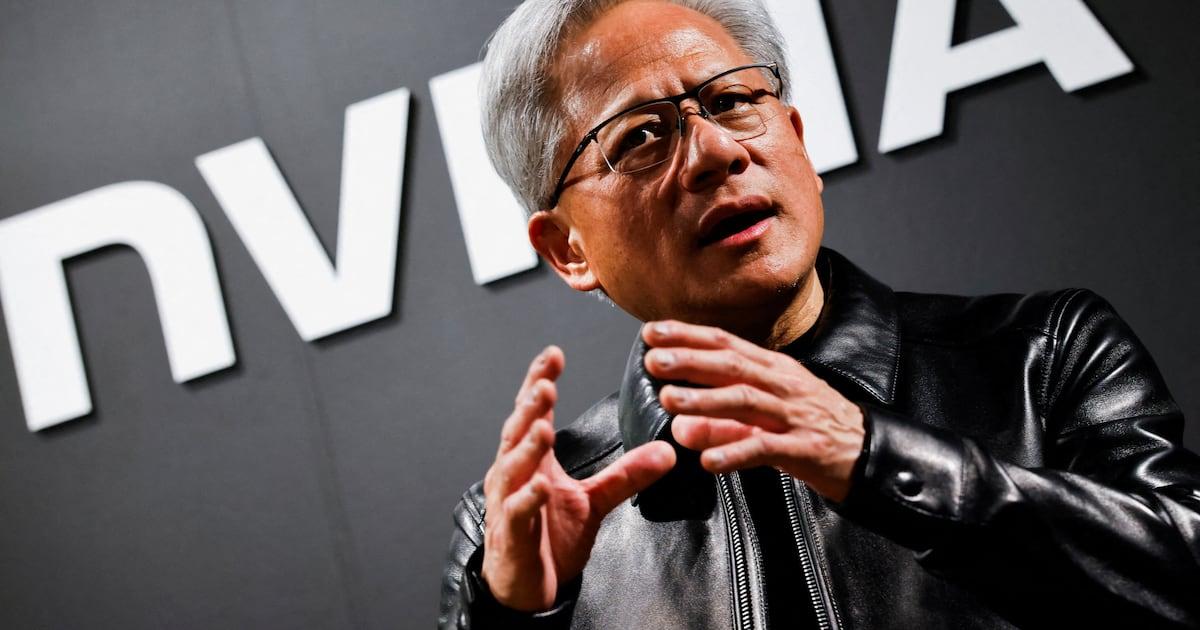
The departure of Jensen Huang as chief executive of Nvidia has put an old governance question back at the center of the technology industry: should founders hold extra voting power that shields them from shareholders and boards?
Nvidia has always operated with a single class of shares, meaning every share carries one vote. That fact is now being cited both as proof that board oversight works and as a warning about how exposed founders can be without special protections, according to a report by Chosunbiz.
What Dual-Class Shares Actually Do
Dual-class structures give certain holders, usually founders, stock that carries more votes than ordinary common shares. These are often described as supervoting shares.
The arrangement allows a founder to keep control of strategic decisions even after selling a large portion of the company to outside investors. Many of the best-known US tech companies have adopted it since going public.
Rules vary by country. In South Korea, for example, ordinary listed companies cannot use dual-class shares, though unlisted startups meeting certain conditions are allowed to.
Shareholder Advocates Point to Nvidia's Board
As You Sow, a well-known US shareholder-rights organization, said in a statement on November 14 that Nvidia's lack of dual-class shares is what allowed its board to supervise management effectively. The group is urging other companies to stick with one share, one vote.
Andrew Behar, the group's chief executive, said the board investigation that preceded Huang's resignation "showed what real oversight looks like." He argued that directors need the authority to hold a chief executive accountable when the executive acts recklessly.
Meta Cited as the Counterexample
As You Sow pointed to Meta as the clearest case of dual-class shares working against investors. Mark Zuckerberg holds roughly 13 percent of Meta's equity but controls about 60 percent of its voting power.
At Meta's 2020 annual meeting, shareholders voted on proposals covering real-name account verification, the removal of abusive images and an end to false political advertising. About 63.1 percent of independent shareholders supported them, yet once Zuckerberg's votes and other factors were counted, approval fell to just 19 percent.
The group argues that had those measures passed, Meta might have avoided as much as 17.1 billion dollars in potential settlement costs linked to lawsuits over teenage social media addiction. In its view, blocking shareholder demands ultimately hurt both the company and its investors.
Academics Weigh In on Accountability
Purnima Luthra, a professor at Imperial College Business School in the UK, wrote in an opinion piece for the Observer that sweeping founder authority at Nvidia could have made the situation worse. She noted that under Nvidia's single-class structure, Huang had only limited protection from board action and might have been removed had he not stepped down.
She contrasted Nvidia with Meta and SpaceX, where voting control is concentrated with founders, arguing that such setups can make it difficult for shareholders to hold powerful leaders responsible.
The Case That Founders Were Left Exposed
Not everyone sees Nvidia's structure as a success story. Critics argue that without supervoting stock, founders pursuing long-term strategies can be pushed out too easily by boards or outside pressure.
Barron's reported that Nvidia's single-class shares left Huang in a vulnerable position and that supervoting stock could have allowed him to remain chief executive. The publication noted dual-class shares were not common when Nvidia went public in 1999, and estimated that such a structure might have given Huang about 25 percent of the vote, enough to dominate or heavily influence the board.
Jeffrey Sonnenfeld of the Yale School of Management, a supporter of dual-class shares, told TechCrunch in a November 8 interview that Huang lacked supervoting rights to back his position. He described Huang as a rare leader who succeeded without such protections, but said the board would have struggled to fire him if he had held them.
What the Debate Means for Founders and Investors
Huang's exit gives both camps a high-profile example to rally around, which is likely to keep dual-class structures under scrutiny at upcoming shareholder meetings and IPOs.
For founders planning a public listing, the episode underlines a real trade-off between keeping long-term control and accepting meaningful board oversight. For investors, it sharpens the question of how much influence they are willing to give up in exchange for backing a visionary leader.
Source: Chosunbiz