Ulys, a New York-based investing app built around an AI assistant, has closed a $4 million funding round led by Streamlined Ventures. The raise brings the company's total funding to $17 million.
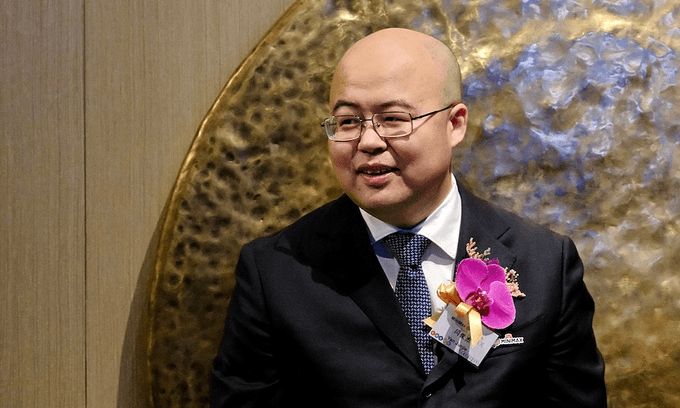
The startup is run by Hugo Renaudin, a French mathematician who has already sold two crypto companies. His argument is that AI will reshape personal investing in the way smartphones once reshaped brokerages, and that a new kind of company will capture that shift.
Other participants in the round include Fundstrat's Tom Lee, BitMine and XBTO Ventures, according to a report by Tech Funding News.
Where the New Money Is Going
Most of the capital is earmarked for marketing and for training the AI models behind the product. Ulys launched on Apple's App Store on 10 November.
The company currently employs 12 people. Renaudin attributed the successful raise to timing, noting that personal AI assistants have seen a surge of interest over the past six months.
A Founder With Two Exits Behind Him
Renaudin came to the US about a decade ago to study for a master's degree at Columbia University. There he founded LGO, which he describes as having become France's largest crypto exchange, before selling it to Voyager Digital in 2020 on undisclosed terms.
He went on to found Bender Labs, an early DeFi protocol on Tezos that open-sourced a decentralised bridge. In 2021 he launched P00LS, a creator token platform that grew to more than 1,000 creators and several million token holders.
Ulys bought P00LS roughly a year ago, and Renaudin took over as CEO in June. The company's CTO is Dylan Bourgeois, an AI and robotics founder with a background at Stanford and EPFL.
Built by the Team Behind Voyager
Renaudin says Ulys was founded by the same team that built Voyager, which at its height was valued at $5 billion, served 3 million users and produced $450 million in annual revenue. It ranked as the second-largest US crypto broker behind Coinbase.
After the collapses of Three Arrows Capital and FTX, the founders opted to build a decentralised, self-custodial wallet. The goal was to offer DeFi access while keeping the experience as simple as a conventional app.
How the AI Assistant Works
When Renaudin arrived, the wallet was the main product with an AI layer added on top. He now frames the company as AI-first, arguing that Robinhood won the mobile era rather than the incumbents, and that an AI-native challenger to Robinhood and Revolut could win the next one.
Users describe investment ideas in plain language, such as industries they expect to grow. The assistant researches those ideas, assembles a portfolio and explains the reasoning and sources behind each holding, but no trade goes through without the user's approval.
Under the hood, Renaudin compares the setup to Perplexity: models from leading AI labs combined with a custom set of tools, rules and guardrails tested against each model. A memory layer keeps track of each user's goals and financial situation, which he argues gives it an edge over general-purpose chatbots like ChatGPT.
Self-Custody and Tokenised Assets
According to Renaudin, all assets are held on-chain and users keep control of their own keys. The app supports Base, Bitcoin, Ethereum mainnet, Solana and Robinhood Chain.
Available assets include SOL, ETH, Bitcoin and meme coins, alongside tokenised stocks, ETFs and gold. Users can earn around 4% yield on USDC balances through Morpho and Aave, and the service is offered in just over 30 countries.
What the Raise Signals for AI-Driven Investing
Investor appetite for AI-native finance appears to be growing. Streamlined Ventures founder Ullas Naik said the Ulys team uses AI across its operations and that this shows in how quickly it ships.
Renaudin expects adoption to mirror other AI assistants, with users starting small before usage accelerates, and he anticipates heavy trading activity from investing agents by 2027. A 2026 Investing.com survey found 62% of US investors have already used AI tools in their decisions.
For founders, Ulys illustrates a broader bet: that combining self-custodial crypto infrastructure with conversational AI can turn sophisticated portfolio management into a mass-market product. Whether users trust agents with their savings will determine how far that bet goes.
Source: Tech Funding News