Getting introduced to the right people is one thing. Getting those people to commit engineers and mission resources to an outside startup's technology is another. For ArbaLabs, a foreign deep tech company building tools to independently verify AI execution, that second step came through Korean aerospace firm Space & Bean and its SD-1Sat satellite mission.
According to an interview published by KoreaTechDesk around the fifth launch of Korea's Nuri rocket, ArbaLabs founder and CEO Ashley Reeves traced the partnership's progress to a specific shift in tone: the moment discussions moved from whether the idea was interesting to how it could actually be integrated into the spacecraft.
From Promising Concept to Mission Payload
When Reeves started building relationships in South Korea, ArbaLabs had an engineering concept and early hardware but no opportunity to prove its technology aboard an operating spacecraft.
That changed as talks with Space & Bean, which was then preparing SD-1Sat, became more technical. Reeves described the turning point as the first serious engineering discussion, rather than the initial introduction, when both sides began examining how AI verification could serve the mission and what ArbaLabs would have to contribute.
In his account, the clearest signal of commitment was a partner's willingness to dedicate engineering time and mission resources to testing the technology, not simply to express enthusiasm about it.
A Satellite With Its Own Agenda
SD-1Sat was not built around ArbaLabs. A Yonsei University mission report dated October 8, 2026, describes the satellite's goals as studying radiation conditions in low Earth orbit, comparing shielding materials, and observing how commercial electronics perform in space.
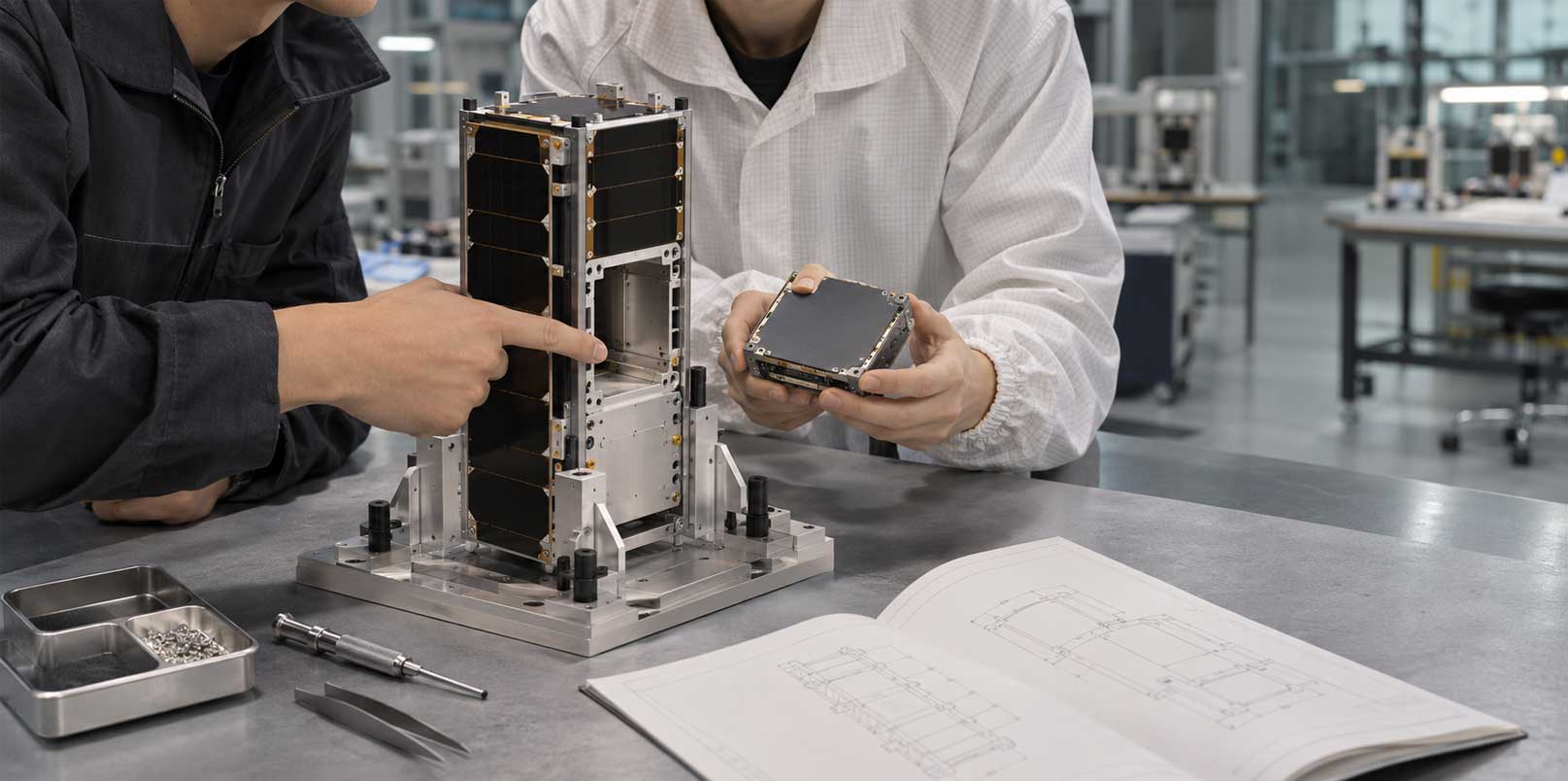
Yonsei's researchers developed the spacecraft platform and handled payload integration, environmental testing and post-launch operations. Space & Bean supplied a payload tied to its radiation-protection research, and ArbaLabs' AI verification experiment was folded into that wider program.
Space & Bean builds protective enclosures meant to help commercial off-the-shelf electronic components, known as COTS, survive harsh environments. Korean outlet IT Donga reported in September 2026 that the company planned to use SD-1Sat to gather real orbital data on protected commercial electronics.
Fitting Into an Existing Arrangement
Because the mission already had defined objectives and a clear division of labor, ArbaLabs had to find a practical place for its technology without disrupting work underway. Reeves said progress came when his team showed it understood those requirements and took ownership of its share of the integration.
The two companies had different roles, but their goals lined up. Space & Bean wanted operating data for its shielding products, while ArbaLabs needed an operational system in which to test its verification approach.
A Collaboration Visible Before Launch
The partnership was public well before Nuri's fifth launch. At COMEUP 2025 in Seoul in December 2025, the companies showed a model pairing ArbaLabs' edge AI camera module with Space & Bean's radiation-shielded enclosure, as IT Donga later documented.
That demonstration linked ArbaLabs' AI hardware with Space & Bean's expertise in protecting electronics. Space & Bean also said at the event that it had been discussing possible expansion into European markets, giving the relationship an international angle in both directions.
What Korea's Startup Programs Can and Cannot Do
ArbaLabs took part in the 2025 K-Startup Grand Challenge, a government-backed program for international startups entering South Korea. Reeves has credited it with helping the company build connections and understand the country's industrial landscape, including access to corporations, investors, institutions and engineering firms.
He was equally clear about its limits, saying that "the ecosystem can open the door; it cannot build the company for you." ArbaLabs still had to develop its technology, set up a Korean entity, hire staff, protect its intellectual property and earn trust through execution on the ground.
Lessons for Founders Entering Korea
For foreign deep tech founders, the ArbaLabs story offers a practical yardstick. A meeting that ends with goodwill is less meaningful than one that brings in the engineers responsible for a real problem, identifies a specific project, and starts assigning responsibilities.
Those signals can help startups decide which Korean relationships deserve sustained investment of time. In ArbaLabs' case, a defined role on an active satellite mission came only after both sides committed people and resources to shared work, a reminder that market entry programs are a starting point rather than a finish line.
Source: KoreaTechDesk