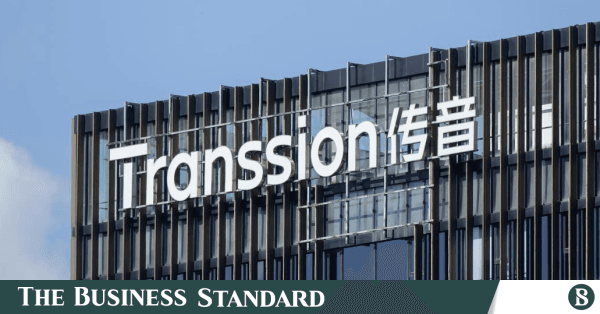
Transsion Holdings, the Shenzhen-based company behind the Tecno, Infinix and itel smartphone brands, wants to expand its manufacturing footprint in Bangladesh beyond phones and into electric vehicles and batteries.
The company has asked the Bangladeshi government for 50 acres of land to set up facilities producing electric three-wheelers, lithium and other battery types, and mobile phones and accessories, according to a report by The Business Standard.
A Jute Mill Site on the Table
In response to the request, the government has put forward land owned by the state-run Karim Jute Mills Limited in Demra, Dhaka. Officials have invited Transsion to invest either through a long-term lease or a joint partnership arrangement.
The proposed site falls short of what the company asked for. Officials said the jute mill property covers roughly 25 acres, about half the area Transsion is seeking, and the visiting delegation has already toured the location.
High-Level Talks in Dhaka
A delegation headed by Transsion founder and chairman George Zhu is in Dhaka to advance the proposal. Zhu met Commerce Minister Khandakar Abdul Muktadir on 8 November, and the group presented its plans to Prime Minister Tarique Rahman the following day.
Officials at the Prime Minister's Office and the Ministry of Commerce, speaking anonymously, said the company has also asked for cash incentives tied to exports. No decision has been made on that request so far.
The government has told Transsion it would be eligible for tax holidays and other benefits already available to foreign investors under current policy.
Bangladesh Courts EV and Battery Makers
The proposal arrives as Bangladesh actively encourages local production of electric vehicles and batteries. Under the FY27 budget, makers of electric three- and four-wheelers with higher local value addition are exempt from all duties and taxes on imported raw materials and components, apart from a 3% customs duty.
The government has also extended duty exemptions through 30 June 2030 on raw materials used to produce lithium-ion batteries, sodium-ion batteries and battery packs locally. It is additionally promoting domestic manufacturing of batteries and energy storage systems to support the country's solar power expansion.
Electric three-wheelers are a common form of short-distance transport across South Asia, which makes them a natural entry point for a company aiming to serve price-sensitive markets.
Building on an Existing Foothold
Transsion is not new to Bangladesh. Its phone brands are strong in the affordable and mid-range segments, and Counterpoint Research data from 2023 showed Tecno at 15.8% of the smartphone market, Infinix at 13.3% and itel at 11.8%, a combined 40.9%. Those shares may have shifted since.
In May 2023, the company opened a factory operated by Ismartu Technology BD Limited in the Meghna Industrial Economic Zone in Narayanganj. The plant, built with an initial investment of around $22 million, spans more than 22,000 square metres and reportedly can produce one million smartphones and feature phones per month. Transsion said at the time it planned to create more than 2,000 jobs.
A Company Focused on Emerging Markets
Founded in 2006, Transsion sells across Africa, South Asia, Southeast Asia and Latin America. Itel targets budget buyers, Infinix appeals to younger users with gaming and fast-charging features, and Tecno emphasises cameras and design.
The group also sells accessories under Oraimo, household appliances under Syinix and after-sales services through Carlcare, and has already moved into electric vehicles and energy storage products.
What the Proposal Signals
For Bangladesh, the talks test whether its new duty breaks can draw large manufacturers into local EV and battery production. The land gap and the unresolved export incentive request remain open questions.
For the wider industry, the move shows how consumer electronics brands with deep distribution in emerging markets are looking to apply that reach to low-cost electric mobility and energy storage, segments where affordability matters as much as technology.
Source: The Business Standard