Australia's two most prominent clean energy incentives for households are on the table as the federal government hunts for budget savings. Energy Minister Chris Bowen has confirmed that both the electric vehicle tax break and the home battery subsidy are being examined ahead of the mid-year budget update in December.
Bowen made the remarks to the Australian Financial Review on 13 November 2026 while attending the COP31 climate summit in Antalya, Turkey, according to a report by Zecar. While he acknowledged the review, he also signalled that neither program is about to disappear.
Bowen Defends Both Programs While Accepting Scrutiny
Bowen framed the review as routine, saying each budget and Mid-Year Economic and Fiscal Outlook (MYEFO) obliges the government to check whether every policy is delivering as intended. That process, he said, extends to both subsidies.
On the EV tax break, he said it is not yet time to abolish it. He noted that all support measures are time-limited and that the exemption is already tapering following decisions made last year, but argued the wind-down should be gradual.
He was more emphatic about batteries, saying the government is very proud of the policy and expects it to continue. According to Bowen, the subsidy has helped Australia install more home batteries than any other country.
Treasury Pressure and Rising Costs
Treasurer Jim Chalmers and Finance Minister Katy Gallagher face pressure to find substantial spending cuts in MYEFO, with the goal of supporting the Reserve Bank of Australia in its fight against inflation. The AFR has reported that Treasury wants both schemes overhauled and is drafting options to scale back the battery program, while the Sydney Morning Herald reported the EV tax break is also under examination.
Both programs have cost considerably more than originally forecast, and the government has already trimmed them to contain further overruns. The EV fringe benefits tax exemption alone has reached $1.4 billion in 2025-26.
Economists have argued the two subsidies should be first in line for cuts, saying they mostly benefit higher-income households. New ATO data shows nearly one in three people using EV novated leases earn more than $190,000 a year. Former prime minister Malcolm Turnbull, attending COP31 as president of the International Hydropower Association, said both should always have been means tested and warned that subsidies can end up paying people for choices they would have made anyway, though he described the case for EVs as overwhelming.
How the Two Incentives Work
The EV incentive exempts electric cars priced under $91,387 from fringe benefits tax when they are acquired through a novated lease, an arrangement in which an employer covers lease payments from an employee's pre-tax salary. The AFR estimated that someone leasing a $60,000 car would save close to $12,000 a year by choosing an EV over a petrol model.
That advantage has reshaped the leasing market. Novated Lease Australia told the AFR that EVs accounted for 80 per cent of its new leases over the past three months. The Cheaper Home Batteries Program, meanwhile, cuts the cost of home battery systems by roughly 30 per cent.
Electric Vehicle Sales Continue to Climb
Australians bought 24,845 battery electric vehicles in October, around 23 per cent of new vehicle sales. It marked the third consecutive month that BEVs outsold petrol-only cars, which recorded 23,605 sales, though diesel remained ahead at 25,649.
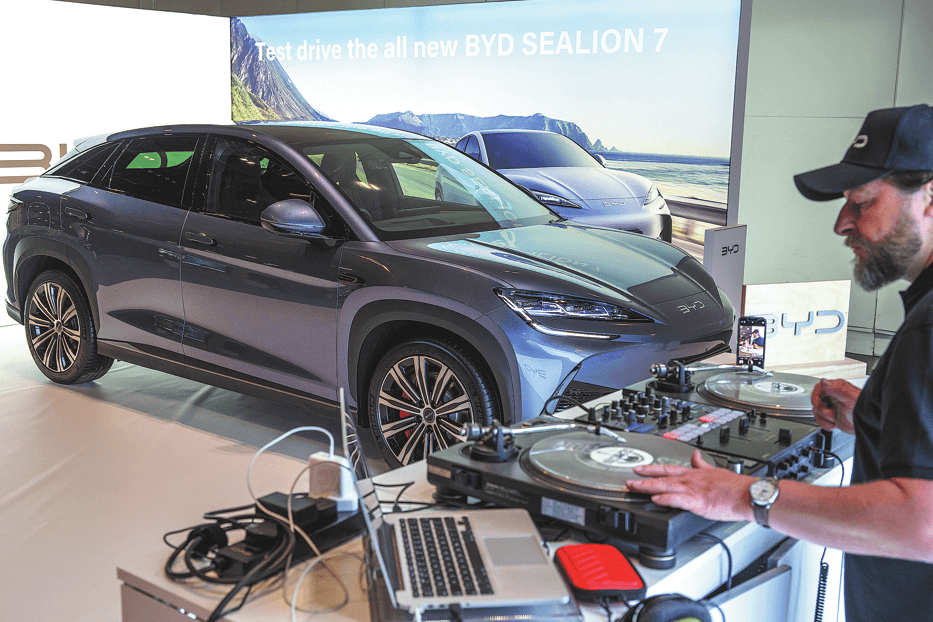
Plug-in hybrids contributed another 11,745 sales, bringing combined BEV and PHEV sales to 36,590 for the month. The Tesla Model Y was the best-selling BEV model with 3,105 units, while BYD was the leading BEV brand with 5,271.
BEV sales for January to October 2026 total about 206,000. The Electric Vehicle Council estimated the national EV fleet at around 650,000 in early August, roughly 3 per cent of all vehicles, and adding about 79,000 BEVs delivered since then suggests the fleet now stands at about 730,000 or more.
Home Battery Installations Pass 600,000
The battery program launched on 1 July 2025 and recorded more than 457,000 installations by its first anniversary, rising to 507,000 in August. Bowen has since said the total has passed 600,000.
Industry outlet energy-storage.news estimates that equates to around 16.8 GWh of storage capacity, although Bowen did not provide a capacity figure himself.
What the Review Means for Buyers and the Industry
For consumers weighing an EV lease or a home battery, the review introduces uncertainty, even if outright abolition appears unlikely based on Bowen's comments. Changes such as tighter eligibility, means testing or a faster phase-out remain possible.
For EV makers, leasing providers and battery installers, the outcome in December could shape demand heading into 2027. Bowen has pointed to benefits beyond fuel savings, including lower emissions, stronger fuel security and better respiratory health, and argued Australia has arguably seen the world's biggest jump in EV uptake. Whether those gains outweigh the fiscal cost is now the question the government must answer.
Source: Zecar