Taiwan is becoming more than a place for space technology startups to source components. A government-backed accelerator program brought 13 international space companies to the island this year, and several are now weighing local offices, production and investment.
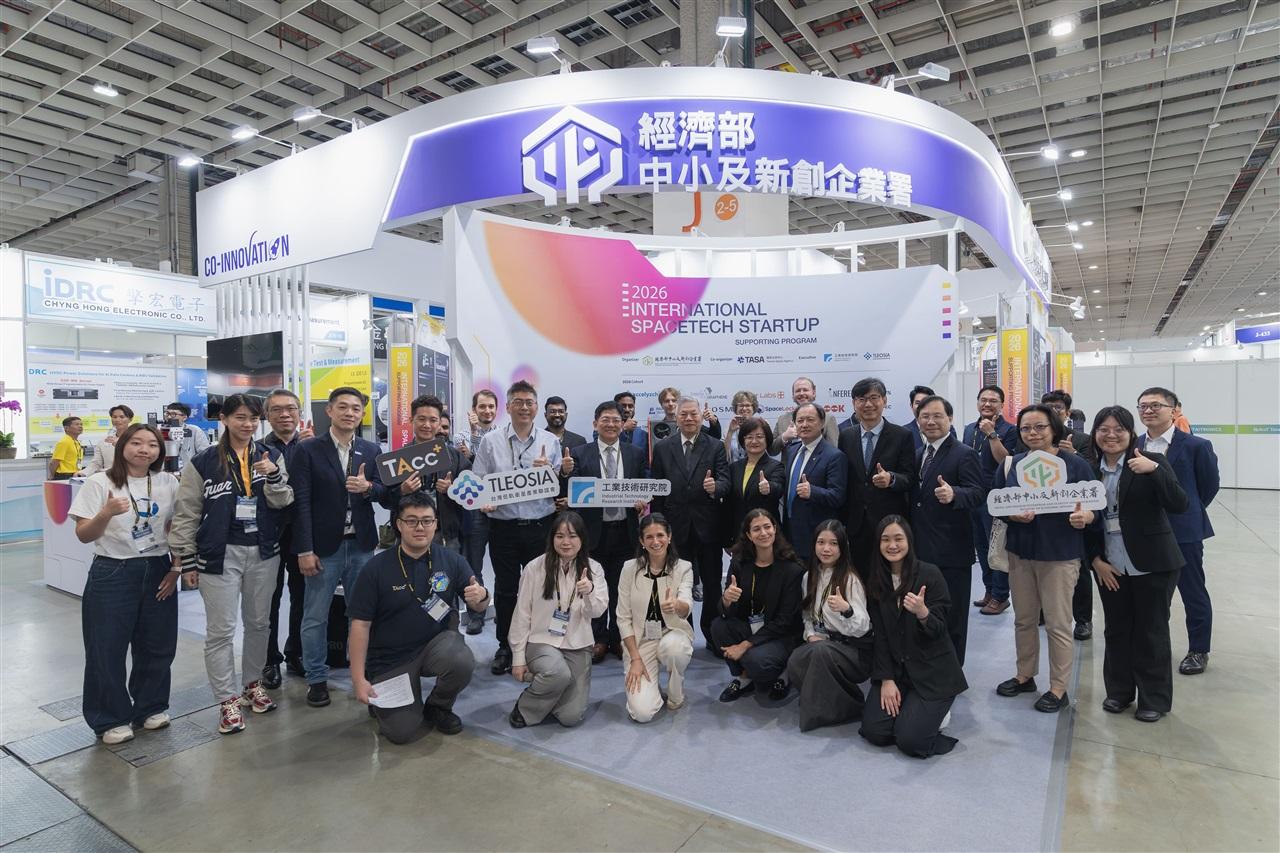
The International SpaceTech Startup Supporting Program, now in its fourth year, is run through the TAcc+ accelerator. According to a report by Digitimes, participants found opportunities that went well beyond the supplier introductions many originally came for.
A Government Push to Link Startups With Taiwanese Industry
The program is organized by the Small and Medium Enterprise and Startup Administration (SMESA) under the Ministry of Economic Affairs, with the Industrial Technology Research Institute (ITRI) designing and running it. Its goal is to pair foreign innovators with Taiwan's industrial base.
Since 2023, it has brought 42 international space startups to Taiwan. By the end of 2025, those companies had signed 37 memoranda of understanding with Taiwanese space industry firms, and two had opened local branches.
SMESA argues that Taiwan's depth in semiconductors, ICT, precision machinery and metal processing gives it a foundation for a larger role in the space economy. The agency also wants domestic manufacturers to learn international requirements and win overseas orders.
A Broader Cohort, Now Including Drones
This year's 13 startups came from countries including the United States, France, Denmark, Singapore, India, Japan and Australia. Their work spans satellite manufacturing, remote sensing, satellite communications, edge AI computing and new space applications.
For the first time, unmanned aerial vehicle systems were included. Between October 13 and November 10, participants went through training, industry visits, business matchmaking and trade shows, meeting the Taiwan Space Agency and companies such as Foxconn, Compal Electronics and Syscom Group.
ULOOK and Danish Graphene Find Suppliers and a Possible Factory Site
ULOOK, founded in Bengaluru in 2024, builds satellites that detect and geolocate radio-frequency emitters such as ships and drones. CEO Siddhesh Naik said the program helped the company find Taiwanese makers of RF components and satellite subsystems, and it has signed two MOUs so far.
ULOOK also spotted a new angle: with its satellites due to launch next year, it could carry Taiwanese components into orbit, letting local suppliers gain flight heritage. It is additionally offering its RF-sensing payloads for testing on drones.
Danish Graphene, an Aarhus University spinout, makes graphene-based thermal management materials for space hardware and other electronics. It signed an MOU with Yttek Technology Corp to explore use in satellite communication payloads and is in talks with two prospective local distributors.
Fresh from a Series A round, the company is scaling up in Denmark first. Founder Andreas Laursen said it hopes to open a Taiwan office and possibly start production there next year, potentially through joint ventures. He rated the accelerator eight or nine out of 10.
Drover Labs Eyes Power Plants and Chip Fabs
US startup Drover Labs, founded by former NASA robotics engineers, is building hybrid flying and driving robots that inspect hard-to-reach industrial sites and turn the data into navigable 3D digital twins.
During the program it signed production MOUs with Unidar Technologies, for customized optical modules, and Let's Com, for SMT and PCBA assembly. Introductions to Taiwan Power Company opened discussions about inspections at nuclear facilities, and the company also sees potential in semiconductor fabs. Commercial deployment will depend on technical validation and customer needs.
Emergentia Finds Research Partners and Potential Investors
Emergentia, a US-Australian company founded in 2022, is developing an analog AI processor that embeds neural networks in hardware and processes signals at the sensor level. One target is analyzing hyperspectral imagery aboard satellites to spot wildfires faster.
Co-founder and CTO Zdenka Kuncic said the team came looking for chip manufacturing partners but also found research collaboration prospects with ITRI and interested Taiwanese investors. The still-bootstrapped company is preparing its first seed round, may form a local investor syndicate, and is considering a Taiwanese entity. Kuncic rated the experience 11 out of 10.
What It Means for Hardware Founders
The four companies followed a similar path: they arrived looking for suppliers and left with leads on co-development, customers, research and capital. For hardware startups, structured access to a dense manufacturing network can shorten the hunt for the right partners.
For Taiwan, the strategy is to extend existing strengths in chips, electronics and precision manufacturing into space and drone applications rather than build a new ecosystem from scratch. SMESA says it plans to deepen industry and research ties and expand support for startups setting up locally.
Source: digitimes