Investment in African startups recovered in October 2026 after a softer September. Investors put $324.42 million into 38 disclosed deals during the month, according to a report by Nairametrics.
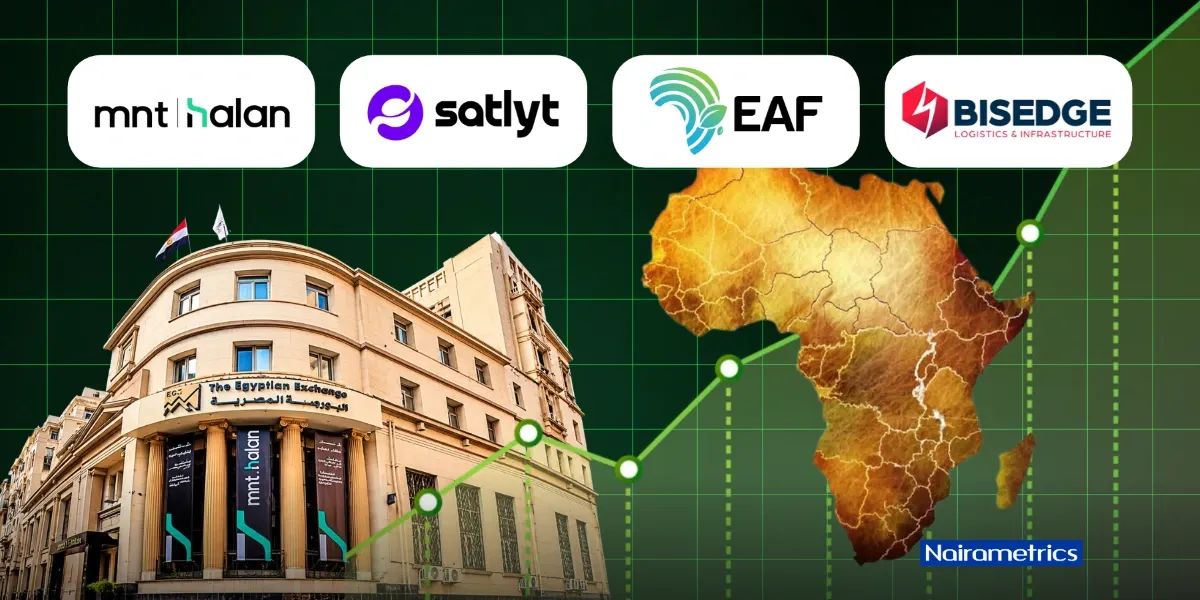
The rebound was driven largely by one transaction: the initial public offering of Egyptian fintech MNT-Halan's operating entity, which raised about $150 million. That single deal made up roughly 46% of all disclosed funding for the month.
The figures also show capital clustering in a small number of large rounds, a pattern that has grown more pronounced over the past year.
A 35 Percent Month-on-Month Recovery
October's total compared with $240.2 million raised in September 2026, an increase of 35.06 percent. The jump suggests activity is picking up after a weaker stretch.
The real figure may be higher. Eight startups, including three involved in mergers and acquisitions, did not disclose how much they raised, so their deals are not reflected in the total.
Capital Concentrated in the Largest Deals
The ten biggest transactions together accounted for $301.5 million, or 92.94 percent of everything raised in October. That share was up from 84.3 percent in September 2026 and 89.29 percent in October 2025.
The trend points to investors favouring larger, more established companies while venture capital conditions remain difficult. Smaller and earlier-stage companies are competing for a shrinking slice of the pie.
Inside the MNT-Halan Listing
MNT-Halan opened subscriptions for the Cairo Stock Exchange listing of MNT Tech Holding, its Egyptian operating company, at EGP 24.5 per share. The base offering covers 320 million existing shares, a 20 percent stake, targeting gross proceeds of about $150 million.
That pricing implies a valuation of around $750 million. More than a third of the base offering was secured through anchor commitments from Commercial International Bank, Egypt's largest listed private bank, and a London-based asset manager, alongside other investors.
The Rest of the Top 10
Two companies raised $40 million each. Morocco's ABA Life secured a round backed by Admaius Capital Partners to support its AI for Sovereign Health programme, pending approval from Morocco's Competition Council. Tanzanian agritech East Africa Foods closed a Series B with investors including InfraCo Africa, Oikocredit and FMO, aiming to reach 100,000 smallholder farmers.
Egyptian fintech ValU completed its 23rd securitized bond issuance, worth EGP 945.8 million, or about $17 million, with EFG Hermes. Several energy and logistics companies raised debt: Senegal's Afreenergy Solar secured about $13.3 million through REPP2 to grow its solar capacity from 2.7 MWp to 14.9 MWp, and Nigerian logistics firm Bisedge raised about $11.2 million from Finnfund for its electric material handling fleet.
The European Bank for Reconstruction and Development approved up to $10 million for Nigeria's Beacon Power Services to expand smart metering across six of the country's 11 distribution companies. Kenyan deeptech startup Satlyt raised an $8 million seed round led by non-sibi Ventures to build virtual AI data centres in space.
Rounding out the list, British International Investment committed a $7 million debt facility to Okra Solar for clean electricity access in Nigeria, and digital lending infrastructure firm Kuunda completed a $5 million secondary share sale led by E4E Africa, giving early backers a return well ahead of any exit.
Egypt and Fintech Dominate the Map
Northern Africa led all regions with $208.93 million across nine deals, or 64.40 percent of the continental total. Egypt alone attracted $168.93 million from eight deals, representing 52.07 percent of all funding.
MNT-Halan's IPO accounted for about 88.8 percent of Egypt's disclosed total. By sector, fintech remained the biggest recipient, drawing $178.45 million across nine deals, or 55.01 percent of the month's capital.
What the October Numbers Signal for Founders
The headline recovery is real but uneven. Strip out one large IPO and the month looks far more modest, underlining how sensitive Africa's monthly funding totals are to individual transactions.
For founders, the mix of deals is instructive. Debt from development finance institutions, securitization and secondary sales played a significant role alongside equity, showing that companies with proven revenue have more financing routes than traditional venture rounds alone.
Source: Nairametrics