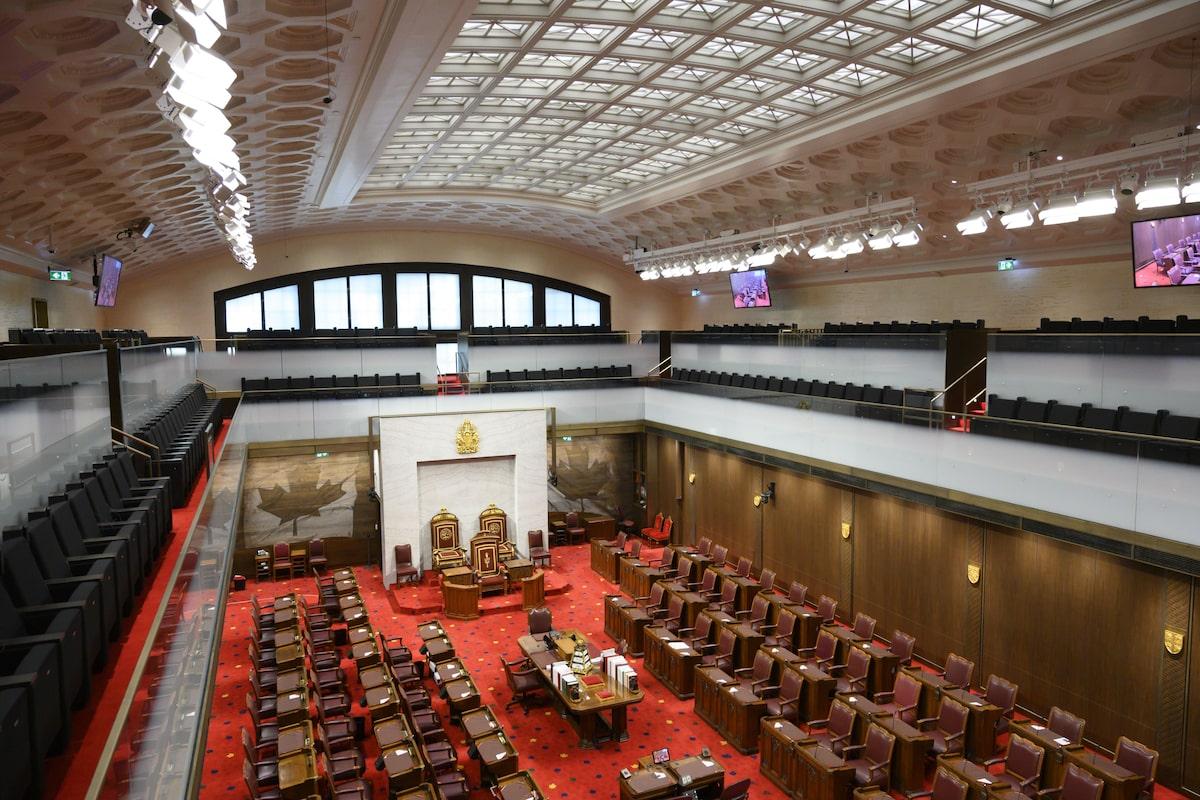
Canada's Senate has reshaped a contentious government bill that would expand police and intelligence access to data held by technology companies. The changes respond to months of warnings from tech firms, business groups and privacy advocates that the legislation could weaken cybersecurity.
The amendments to Bill C-22 were adopted by the Senate National Security committee after a two-day, clause-by-clause review, according to a report by The Globe and Mail. Critics broadly welcomed the revisions, though several said the most troubling provisions remain in place.
What Bill C-22 Would Require
The legislation would oblige electronic service providers to modify their systems so that police services and the Canadian Security Intelligence Service can carry out surveillance and monitoring. It would also allow the Public Safety Minister to issue secret orders to companies operating in Canada.
Another key element would let authorities compel tech companies to collect customer metadata and hold it for up to six months. That data would exclude the content of e-mails, text messages, browsing history and social media activity, but could reveal which phone numbers contacted each other and information capable of pinpointing a person's location.
A Broad Coalition of Critics
Opposition to the bill has come from many directions. Meta, Apple and Google have raised objections, as have Canadian VPN providers, warning that the measures could erode customer privacy and open the door to more cyberattacks, including from hostile state actors.
Civil liberties organizations and cryptographers have also called for the government to narrow the bill's powers. The Canadian Chamber of Commerce joined them, cautioning that the legislation could undermine the country's competitiveness.
The Senate's Targeted Changes
The committee made a series of narrow amendments, building on changes MPs had already introduced. Among the most significant is a ban on Ottawa compelling companies to embed government surveillance tools in their systems.
Several amendments came from Senator Baltej Dhillon, the government's representative guiding the bill through the Senate. One would require the minister, before issuing an order, to weigh whether making it public is more important than keeping it confidential.
Another would give companies the right to request that the minister consult a technical advisory committee within the Public Safety Department. That body could be asked whether complying with an order would create a systemic vulnerability or stop a company from fixing an existing one.
Metadata Retention Remains a Sticking Point
Senator Colin Deacon, a tech entrepreneur, proposed an amendment that would have stopped the government from forcing companies to keep metadata they do not already collect. The committee voted it down.
Some firms, including VPN provider Windscribe and the encrypted messaging app Signal, deliberately avoid collecting metadata and argue that a mandated store of such data would become an attractive target for hackers. Deacon warned that changing domestic firms' data policies could leave them at a disadvantage against rivals in the United States and elsewhere, discouraging investment at a time when Canada wants to build homegrown leaders.
Avery Pennarun, co-founder and CEO of Tailscale, who testified before the committee, said the Senate had made real progress on encryption and on the justification needed for new technical obligations. He was disappointed, however, that companies could still be made to gather data they normally would not, arguing that policy should reward firms that design systems holding less sensitive information.
Mixed Reviews From Advocates and Industry
Tamir Israel of the Canadian Civil Liberties Association noted that Britain's lawful-access regime uses a technical advisory board independent of government. He said "it's disappointing that Canada adopted a mechanism for technical advice but failed to make it independent." The association remains concerned about the bill's power to require large stores of sensitive data on everyone in Canada.
David Pierce of the Canadian Chamber of Commerce called the amendments a constructive move toward legislation that is targeted and workable while protecting encryption and privacy, while acknowledging that not every member concern was addressed. Josh Tabish of the Chamber of Progress, a tech policy group, also said the Senate had improved the bill.
What Comes Next for Tech Companies
The bill now returns to the House of Commons, where the government will decide whether to accept the Senate's version. A spokesperson for Public Safety Minister Gary Anandasangaree said the amendments would be examined in detail at that stage.
For Canadian startups, particularly those building privacy-focused products, the outcome matters. If metadata retention mandates survive, companies that have built their business around collecting minimal data may face new compliance costs and security risks, while the encryption safeguards added by senators could offer some reassurance about the integrity of their systems.
Source: The Globe and Mail