Electric vehicle adoption in Australia is accelerating faster than the public charging network built to support it, and the gap is starting to show up in driver behaviour at the plug.
As more motorists share a limited pool of chargers, disputes over who goes next and how long someone can stay connected have become more common. Researchers say the problem is less about drivers not knowing what is polite and more about turning good intentions into consistent habits.
The issue was explored in a recent analysis published by The Conversation, which drew on sales data and several studies of charging behaviour in the Netherlands.
Sales Are Climbing Faster Than Charger Numbers
Close to 158,000 EVs were sold in Australia during the first six months of 2026. That represented 26% of all new car sales in the period, more than double the 12.1% share recorded a year earlier.
The national fleet has now passed 600,000 electric vehicles. Public charging is growing too, but not at the same rate.
An international comparison of 46 countries placed Australia seventh highest for the number of EVs per public charging point, at roughly 39 vehicles for every charger. That ratio means more queuing and more negotiation, especially during peak holiday travel.
Why Charging Feels Different From Refuelling
Most drivers understand how a petrol station works: cars line up behind a pump and the order is obvious. EV charging takes considerably longer, and the conventions for sharing are still forming.
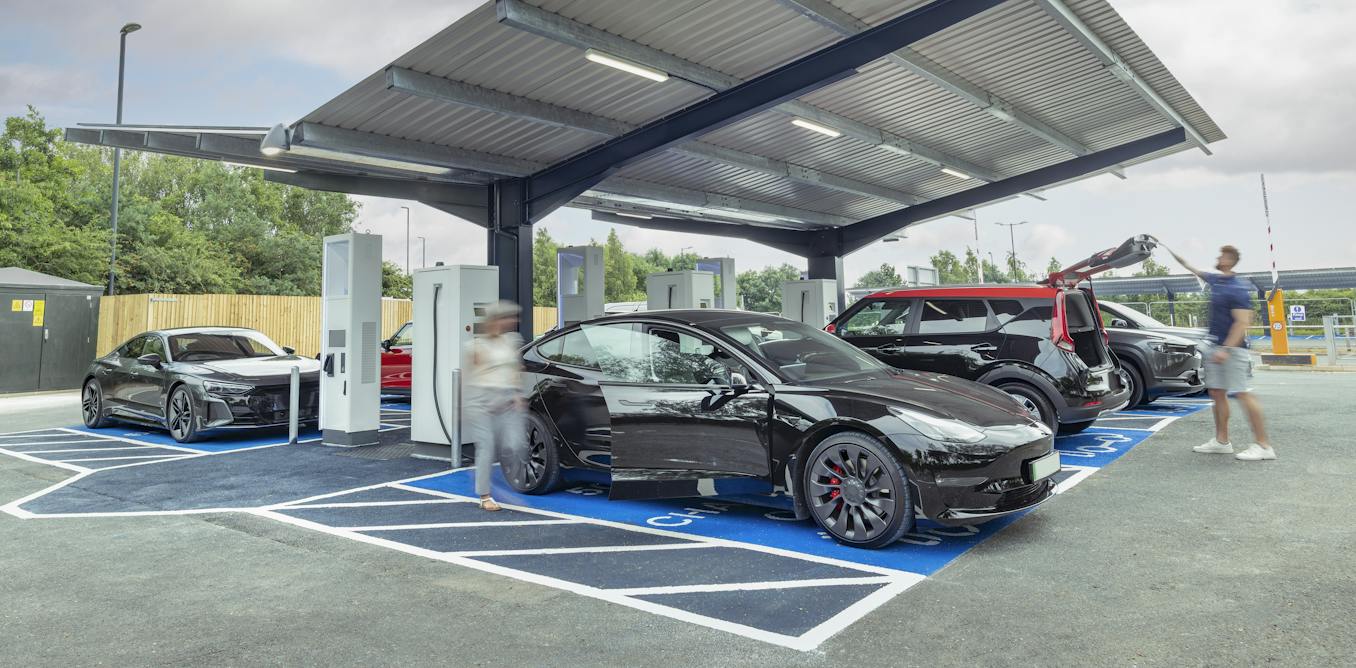
Charging sites often have several bays, with waiting cars parked in scattered spots. That layout makes it harder to tell who arrived first, and frustrations can escalate into what some describe as charger rage.
Practical advice includes working out who is already waiting rather than assuming proximity to a free bay grants priority, and moving a car promptly once it has enough charge. Because charging slows as a battery nears full, drivers are also encouraged to consider whether they really need to reach 100% when others are waiting.
What Drivers Say Versus What They Do
A Dutch study asked 246 EV drivers to describe appropriate behaviour at public chargers. Their answers fell into 11 categories, and one stood out by a wide margin: moving the vehicle once it is sufficiently charged.
Even that expectation came with caveats. Some respondents felt it was acceptable to leave a car plugged in overnight instead of returning in the early hours to move it.
A second Dutch study combined a survey of 313 drivers with data from 2.1 million charging sessions in Amsterdam. Most drivers said they were willing to vacate a charger after finishing, yet among more than 736,000 sessions by frequent local users, only 16.2% disconnected within an hour of charging ending. Evening and overnight sessions were the least likely to end promptly.
Operators Turn to Idle and Congestion Fees
Charging companies are already introducing financial measures to discourage what researchers call charging hogging, where a vehicle occupies a bay longer than necessary.
In Australia, Chargefox applies idle fees at selected sites. Drivers are notified when charging finishes, and a per-minute fee kicks in if the car is not moved after a grace period.
Tesla takes a stricter approach at busy Superchargers. Its congestion fees can apply once a vehicle reaches a set battery level, commonly 80%, discouraging drivers from tying up a charger during the slowest final stage of a session.
Nudges Can Work Without Penalties
Fees are not the only lever available. A 2024 experiment with 703 Dutch EV drivers tested different notifications designed to prompt people to move their cars after charging.
Among fully electric vehicle drivers, offering an alternative reserved parking space raised the predicted likelihood of intending to move by 17%. A message highlighting the social expectation to free up chargers for others lifted it by 16%, while loyalty rewards had a smaller positive effect.
What It Means for Charging Providers and Drivers
For charging operators and EV-focused startups, the findings point to an opportunity beyond simply installing more hardware. App design, notifications, reservation systems and pricing structures can all shape how efficiently existing chargers are used.
The research also suggests that a single rulebook will not fit every setting. Expectations at a busy highway fast charger may reasonably differ from those at an on-street charger used overnight by local residents.
As EV ownership becomes routine in Australia, building out infrastructure remains essential. But helping drivers share that infrastructure fairly is likely to matter just as much in keeping the transition running smoothly.
Source: The Conversation