United Launch Alliance has pushed back the launch of 40 Amazon Leo satellites by a day after a problem at a supplier's facility interrupted the flow of gaseous nitrogen to its Cape Canaveral launch pad.
The delay affects more than a single satellite batch. The mission is the largest group of Leo satellites Amazon has attempted to send up at once, and it is also the first flight of ULA's Vulcan rocket since a booster anomaly in February.
A Supplier Outage Halts the Countdown
According to a report by Startup Fortune, citing Spaceflight Now, ULA announced the scrub at 8:41 a.m. EST on Friday, more than four hours ahead of the planned liftoff. By that point, crews had already begun loading liquid oxygen into the rocket's upper stage.
The cause was a power interruption at an Air Liquide plant that produces gaseous nitrogen, which cut supply to Space Launch Complex 41. Local outlet Talk of Titusville reported that ULA attributed the delay to the plant, noting the pause allowed crews to reset the pipeline correctly.
Saturday Retry With Favorable Weather
The next attempt is scheduled for Saturday, November 14, at 12:32:30 p.m. EST, with the launch window closing at 1:01 p.m. EST. ULA said both the rocket and all 40 satellites remain in good health.
Nothing in the available reporting suggests a problem with Vulcan itself or with the payload. Forecasters at the 45th Weather Squadron expect no rain and winds of 10 to 15 knots for the new launch day.
Vulcan Returns With a New Configuration
The mission carries extra weight for ULA. On February 12, during the USSF-87 mission, one of Vulcan's four solid rocket boosters appeared to suffer a nozzle burn-through roughly 20 seconds after liftoff, though the payloads still reached their planned orbit.
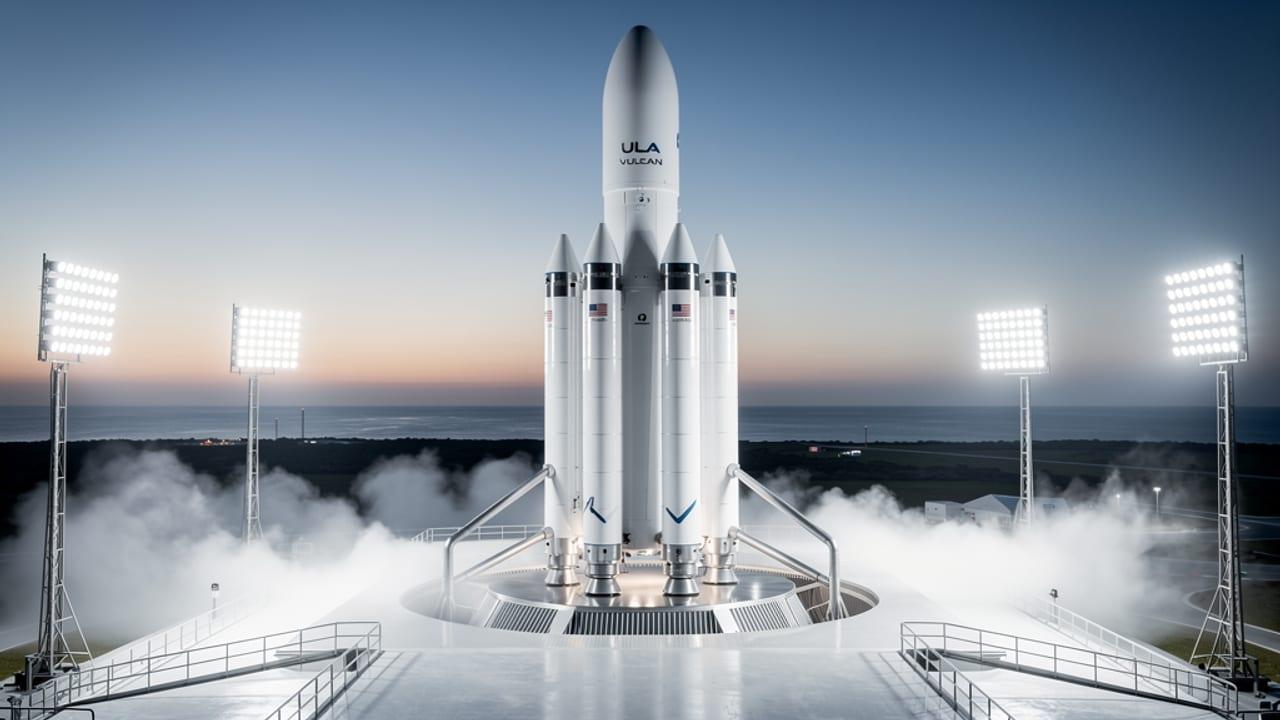
Nine months later, the company is returning to flight with a version of the rocket it has never flown before. The VC6L configuration uses six GEM 63XL boosters and a shorter Centaur V upper stage designed for low Earth orbit.
The rocket is expected to carry more than 50,000 pounds, which would be a record for the Leo program.
Why the Schedule Matters for Amazon
Amazon has placed nearly 400 Leo satellites in orbit across 14 missions since April 2025, all on other launch vehicles. Its goal is to have 3,232 first-generation satellites deployed by July 2029.
Vulcan is central to that plan. Amazon says the rocket will carry more than 1,500 of those satellites over 38 missions, more than any other vehicle in the program. Long pauses between flights would make that target harder to reach.
Amazon has also funded new infrastructure at the Cape for this effort, including a dedicated Vertical Integration Facility known as VIF-A and a new mobile launch platform. This mission, LV-01, is the first to use them, and Amazon says they should allow the next mission, LV-02, to follow within weeks.
Competing in the Shadow of Starlink
The obvious comparison is SpaceX, whose Starlink network is years ahead and launches on the company's own rockets. Amazon, by contrast, buys launches from other providers, which leaves it more exposed to delays it cannot control.
Amazon's ambitions are expanding as well. The company filed with the FCC on July 24 to launch 5,105 satellites intended to provide messaging, voice, data and emergency communications directly to smartphones by 2028, using Globalstar's licensed spectrum.
What Comes Next for the Leo Program
A successful Saturday launch would demonstrate both that Vulcan is flying again and that its six-booster version can carry the loads Amazon requires. That would support the faster launch cadence the new infrastructure was built for.
If the mission runs into trouble, the timeline for LV-02 would likely slip, though neither Amazon nor ULA has said how the schedule would change. For the wider satellite internet market, the outcome is an early indicator of whether Amazon can close the gap with its main rival.
Source: Startup Fortune