Lyra Systems, a San Francisco startup that spent two years developing its product quietly, has come out of stealth with a five-year research agreement with the Air Force Research Laboratory. The deal places the young company inside the system the U.S. Space Force uses to bring commercial technology into its programs.
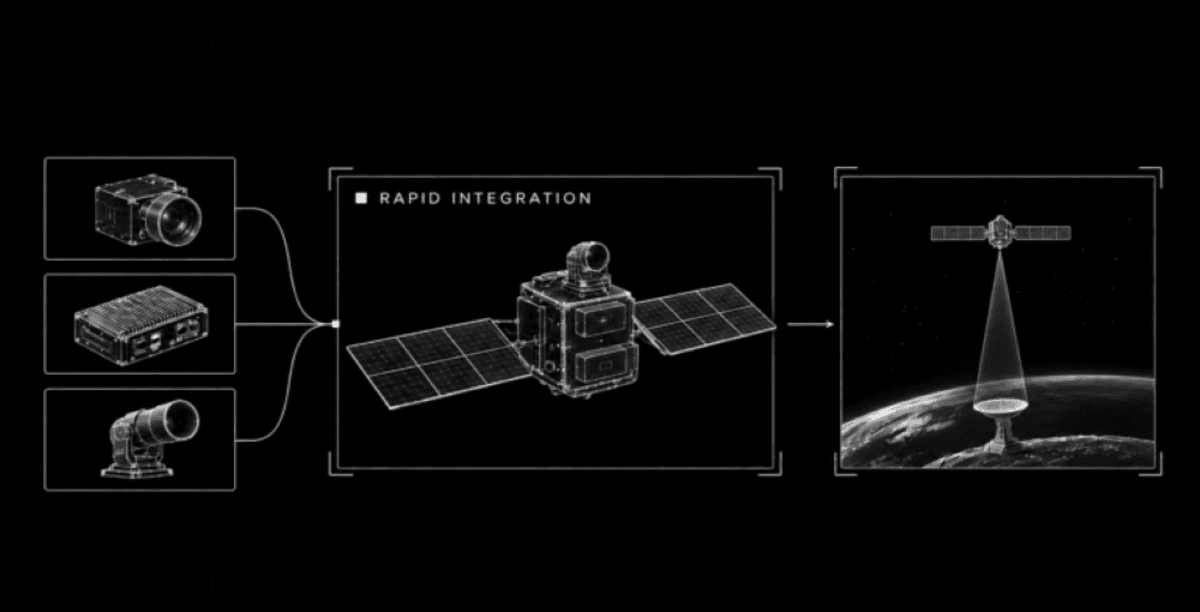
The agreement, a Cooperative Research and Development Agreement with AFRL's SpaceWERX division, covers the development and testing of an AI platform meant to automate a slow, expert-driven task: determining whether a commercial component can physically and electrically fit on a specific military spacecraft, according to a report by Tech Times.
A Different Diagnosis of the Acquisition Problem
For years, the common explanation for why promising commercial technology stalls before reaching defense programs has been the so-called valley of death, the funding gap between a startup's final government research award and a production-scale program of record. SpaceWERX's own STRATFI and TACFI programs exist to help bridge that gap with matched funding.
Lyra founder and CEO Tanmayi Sai argues the core obstacle lies elsewhere. "Funding is not the bottleneck," she said in the company's announcement, pointing instead to the engineering work of integrating new hardware into existing spacecraft.
Even well-funded startups, in her view, struggle to prove their products will respect a spacecraft's mass budget, power consumption, thermal limits, radio frequency environment, structural loads and software interfaces.
How the Lyra Platform Is Meant to Work
Today that compatibility analysis typically depends on senior systems engineers with specific mission knowledge, who work from documents, email threads and institutional memory. The process is slow, costly and reliant on scarce specialists.
Lyra says its platform replaces much of that manual checking with physics-based calculations. It combines structured databases of component specifications and past mission architectures with AI-driven constraint solvers that can determine automatically whether a part meets a spacecraft's integration requirements.
The system is also designed to scan commercial and government marketplaces for technologies that match Department of Defense mission requirements. If it performs as described, that would reverse the usual dynamic, with the platform identifying suitable startups rather than startups trying to get noticed. The company says it also encodes expert knowledge and prior validated work so future missions do not repeat the same analysis from scratch.
Why Timelines Matter to the Space Force
The pressure behind the effort is significant. A Government Accountability Office assessment released in July found that major defense acquisition programs now average more than 12 years to deliver a capability, a figure the watchdog expects to grow. The Space Force has acknowledged that adversaries can field systems with new technology in roughly three to four years.
Concerns about integration have surfaced inside SpaceWERX as well. Marcus Bracey, a senior engineer there and a co-signer of Lyra's agreement, co-authored a 2025 Naval Postgraduate School paper with colleagues from The Aerospace Corporation concluding that companies often leave SBIR Phase II without the integration credibility needed to win programs of record.
Since aligning under AFRL in August 2021, SpaceWERX has awarded more than 1,106 contracts worth over $897 million. It operates on a $457 million annual budget with about 40 staff in Los Angeles.
Breaking the Flight Heritage Loop
Lyra is also targeting a long-standing catch-22 in space procurement known as flight heritage. Components usually need to have flown before to be chosen for a military demonstration mission, yet they cannot gain that record without first being selected.
The company positions its platform as a calculation-based alternative: by showing in advance that a component satisfies every integration constraint for a given mission, it could offer evidence that substitutes for the trust a flight record provides. Whether SpaceWERX and prime contractors will accept that substitute remains an open question.
Next Steps and Open Questions
Lyra plans to start vendor calls in the coming months to find commercial technologies for a first in-space demonstration mission. Under the agreement, it gains access to AFRL facilities, data and personnel without going through the standard SBIR proposal cycle. As is typical for such agreements, no government money flows to the company.
Significant uncertainties remain. The platform has not been proven in production, Lyra has fewer than 10 employees, and it has not disclosed investors or financial backing. Its calculations also rely on manufacturer-supplied specifications, which are a known weak point in the defense supply chain. SpaceWERX has not said whether it will treat the platform's output as a replacement for flight heritage or as one input among several.
What the Deal Signals for Defense Tech Founders
For startups trying to sell into the Space Force, the agreement suggests that the government's own innovation arm sees integration, not just funding, as a key barrier worth addressing over several years.
If Lyra's approach gains acceptance, nontraditional vendors could enter acquisition discussions earlier. If it does not, the effort will still have tested whether AI can take on some of the specialized engineering judgment that currently slows military space procurement.
Source: Tech Times