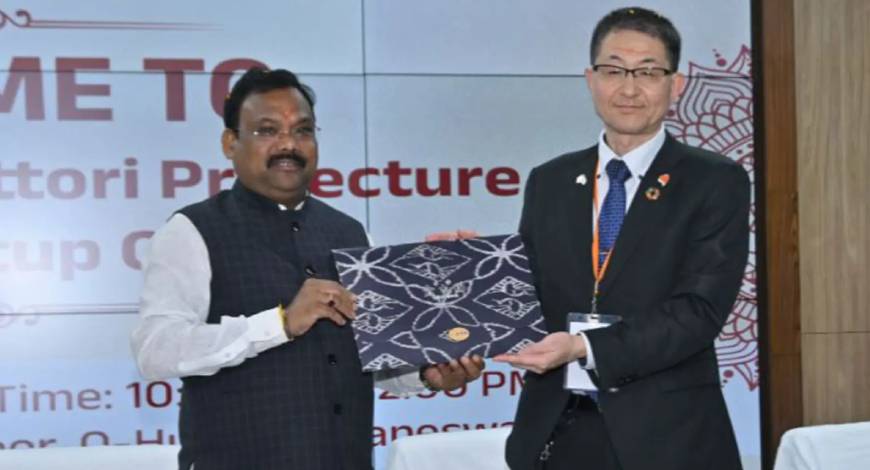
The Indian state of Odisha is building closer startup and business links with Japan after a delegation from Tottori Prefecture visited Startup Odisha's O-Hub facility in Bhubaneswar on November 10.
The visit centred on cross-border collaboration, technology exchange and investment, and it produced a concrete outcome: a Memorandum of Understanding between an Odisha startup and a Japanese business from Tottori, according to a report by Communications Today.
An MoU Between Odisha and Tottori Businesses
The agreement was signed by Sustainability Leaders Odisha Pvt. Ltd., a startup based in the state, and ONESTRUCTION Inc., a business organisation headquartered in Tottori.
The MoU did not come out of nowhere. It builds on early conversations held when the Tottori delegation first visited Odisha on July 30, 2026, followed by further engagements in the months since.
The specific terms of the agreement were not detailed, but its signing marks a step from exploratory talks toward a working relationship between companies in the two regions.
Who Came and What They Saw
The Japanese group brought together senior government officials, banking representatives and industry leaders. Their programme began with a welcome from Startup Odisha CEO Smruti Ranjan Pradhan, followed by direct interactions with local stakeholders.
Delegates also toured a Startup Showcase Stall, where Odisha founders presented their products, technologies and business solutions. Such showcases give early-stage companies a rare chance to pitch directly to foreign investors and potential partners.
State Officials Push for Global Partnerships
Gokulananda Mallik, Odisha's Minister for MSME, Fisheries and Animal Resources Development, used the occasion to stress the government's aim of encouraging entrepreneurship and drawing in international partners to create openings for local startups.
Rashmita Panda, the state's MSME Commissioner-cum-Secretary and chairperson of Startup Odisha, spoke about strengthening the ecosystem and supporting innovation. She described how the Tottori relationship could help founders through technology exchange, business networking, market access and international exposure.
Sectors on the Table
Discussions pointed to cooperation across a broad range of industries, including agriculture, construction, artificial intelligence, manufacturing, sustainability and healthcare.
Software and digital solutions drew particular attention. Jayo Maanu of OICP International, Japan; Toshiya Iwanishi, Executive Managing Director of TOA Software Corporation; and Toru Sasaki of Tottori Prefecture discussed opportunities in technology and innovation, as well as how Japanese tech firms might work with Odisha startups.
The Japanese delegation signalled interest in the state's startup ecosystem, with talks also focused on strengthening bilateral business relations more generally.
Why the Tie-Up Matters for Odisha
Odisha is not among India's best-known startup hubs, which have traditionally clustered around cities such as Bengaluru, Mumbai and Delhi. Regional programmes like Startup Odisha aim to help local companies compete by offering networks and visibility that might otherwise be out of reach.
Links with a Japanese prefecture could give Odisha founders access to technology know-how and a foothold in a major economy. For Japanese businesses, the partnership offers a route into one of India's emerging regional markets.
Startup Odisha has framed the engagement as part of a broader effort to strengthen institutional ties with Japan and give local enterprises greater global reach.
What Founders Should Take From It
For entrepreneurs outside India's major startup centres, the Odisha-Tottori relationship shows how state-backed programmes are increasingly brokering international connections directly, rather than leaving founders to find them alone.
The real test will be whether the MoU and the broader discussions translate into joint projects, investment or market entry for local startups. The repeated visits since July suggest both sides see enough potential to keep the conversation going.
Source: Communications Today