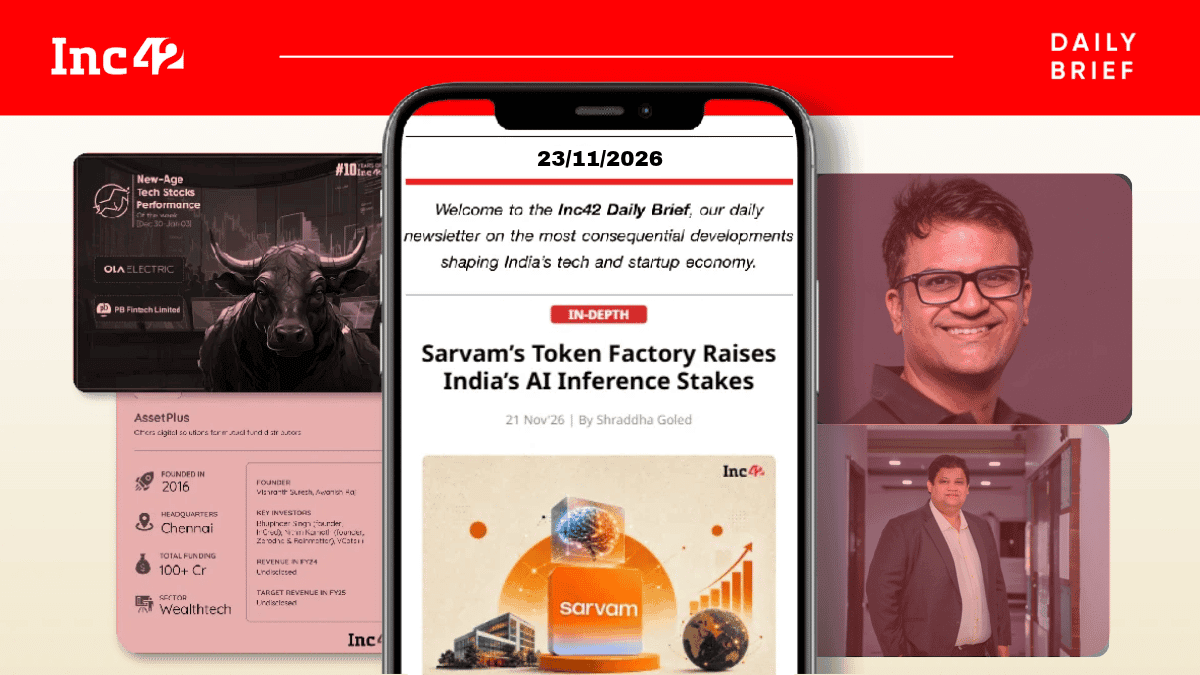
Sarvam, the Indian AI unicorn, has moved into a more commercial phase with the launch of Token Factory. The inference service runs global AI models on GPUs based in India and charges customers in rupees.
The launch signals that Sarvam now wants revenue tied to how much developers actually use its infrastructure. It has also drawn criticism over its economics and its decision to host Chinese models, according to a report by Inc42.
What Token Factory Offers Developers
Token Factory gives developers a single API through which they can switch between Sarvam's own 105B model and several open-weight models. These include models from DeepSeek and Kimi, along with Gemma 4 31B.
Inference is the stage where trained AI models answer queries and generate output, and it is typically billed by the token. Serving it locally with rupee pricing is meant to appeal to Indian developers and businesses that want domestic infrastructure and predictable billing.
Chinese Models Spark a Sovereignty Debate
The inclusion of Chinese models has attracted scrutiny. Critics questioned whether GPUs subsidised under the government's IndiaAI Mission were being used to power the service.
Sarvam has said that Token Factory runs on its own hardware. That clarification addressed the subsidy concern, but it has not settled wider questions about whether the business model holds up.
Why Utilisation Will Decide Profitability
Because Sarvam operates the service on GPUs it owns, it bears the cost of any capacity that sits idle. That makes utilisation, rather than headline usage volume, the key factor in whether Token Factory earns money.
Pricing adds another test. Sarvam's promotional rate of ₹0.25 per million tokens is set to expire by the end of 2026. Once it does, the company will learn whether developers drawn in by cheap access to open models are willing to stay and adopt its proprietary stack.
Data Retention Policy Raises Enterprise Concerns
Sarvam's data policy may also slow adoption. Zero data retention is available only when customers ask for it.
By default, user data can be used to fine-tune the company's models unless a client switches the feature off. For enterprises working with sensitive or proprietary information, that default setting could be enough to rule the service out.
A Growing Field of Inference Competitors
Sarvam is far from the only company trying to build India's inference layer. Engineering and construction major L&T is scaling its Vyoma.AI token factory, while E2E Networks is expanding through Jarvislabs.
Utho Cloud plans to enter the market in 2027, and Mirror Security is focusing on encrypted inference. Global players such as OpenAI and Anthropic are also localising workloads in the country.
With so many providers competing for the same developers, price, speed and reliability are likely to become the deciding factors.
What It Means for Builders and the Market
For Indian developers and startups, more local inference options should mean more choice and pressure on pricing. Buyers, however, will need to read data policies closely and plan for promotional rates ending.
For Sarvam, Token Factory is a test of whether a homegrown model maker can also run a viable infrastructure business. Its ability to keep GPUs busy and convert early users into paying customers will shape how competitive it remains as the market fills up.
Source: Inc42