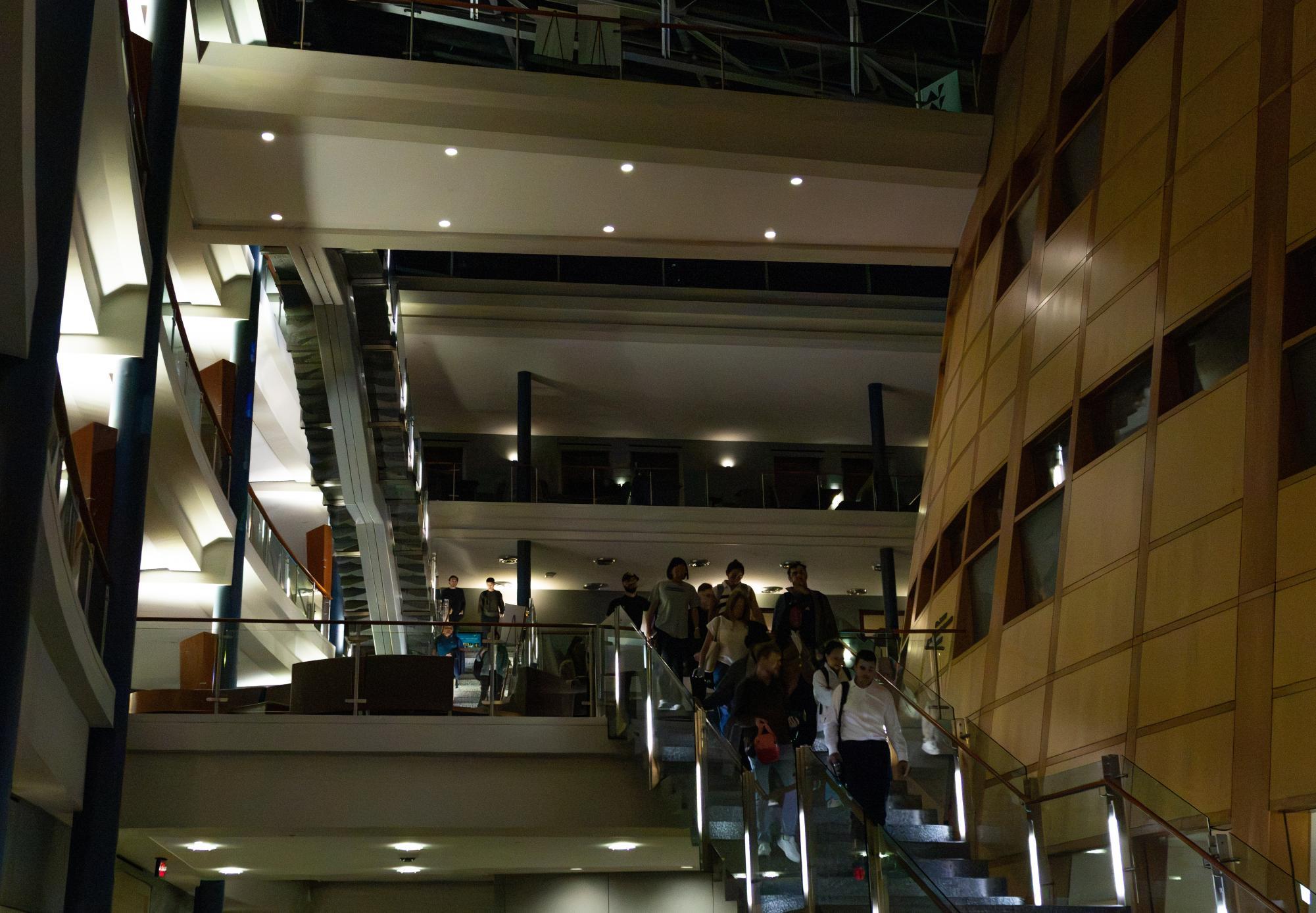
Georgetown University's student pitch competition, Bark Tank, handed out a combined $150,000 to eight startups founded by nine current students and graduates at its annual event on Nov. 10.
The ventures span childcare, reproductive health, medical devices, data center infrastructure, hospitality staffing and legal technology, according to a report by The Hoya, Georgetown's student newspaper. This year's group marked the 10th set of finalists to come through the competition.
A Larger Prize Pool for the Anniversary Edition
Bark Tank was created in 2016 by Ted Leonsis, CEO of Monumental Sports and Entertainment and a Georgetown alumnus, along with his family. The goal was to fund entrepreneurship among students.
Each year, eight finalist teams pitch a panel of judges for a share of the Leonsis Family Entrepreneurship Prize. To mark the competition's 10th anniversary, the family raised the pool by $50,000, bringing it from $100,000 to $150,000.
Novinway Takes First Place
Graduate student Jeff Moeller won the top prize of $30,000 for Novinway, a childcare company offering specialized care for families with neurodivergent children.
Moeller described the win as surreal and said he was especially grateful that the judges understood the problem his company is addressing. He noted that the money is non-dilutive, meaning it does not require giving up equity in the business.
He said the funds are being put toward expanding the company's reach. As he recalled telling the judges, "this funding would help us help more families faster."
Health Ventures Earn Second and Fourth Place
Two ventures tied for second place. One was Don't Worry Willy Studios, a nonprofit focused on children's entertainment and education, founded by Elizabeth Unaeze. The other was Periodology, a reproductive healthcare startup from medical students Tiyam Assadpour and Sarah Moshrefi that tests menstrual blood.
The Periodology founders said the award meant more than money, describing it as validation of both the problem they are working on and their approach to solving it.
Fourth place and $20,000 went to Helping Hands Mobility, founded by medical student Grace Witt. The startup is building mobility aids for children with cerebral palsy and scissoring gait, and Witt said the funds will go first toward a pilot study, a patent and prototype development.
Data Center Noise and Restaurant Staffing
Phase LF and GigShift each received $15,000. Phase LF uses noise-cancelling technology to reduce the low-frequency hum produced by data centers, an issue that has grown more visible as facilities expand to support cloud computing and AI workloads. The audience also gave Phase LF the People's Choice Award.
Founder Sam Andrzejewski said data centers already want the product installed, and that the main barrier is the capital needed to buy materials, assemble units and ship them. He said the prize should help cover that cost for what he hopes will be his first customer.
GigShift connects understaffed restaurants with local food service workers. Founder John Elko said he plans to spend his share on outreach, targeting independent restaurants and multi-unit franchise operators as the most natural early customers.
Deepfake Detection and Legal Citation Tools
Two technology startups each received $10,000. AuthenIQ, founded by Anthony Motley, aims to mitigate digital deepfakes.
CiteMatch helps lawyers verify that their legal citations are accurate. Founder Alexander Powell, a law student, said the prize will pay for setup and support at legal aid organizations, law school clinics and pro bono programs.
What the Competition Signals for Early-Stage Founders
For student founders, prizes like Bark Tank offer something scarce at the earliest stage: capital that comes without giving up ownership. Several winners said the money will go directly toward concrete milestones such as pilots, patents, first deliveries and customer outreach.
The mix of winners also reflects where young founders see opportunity, from care for neurodivergent children to infrastructure for data centers and tools for legal professionals. Elko summed up the mood among finalists, saying everyone on stage had an idea for improving the world.
Source: The Hoya