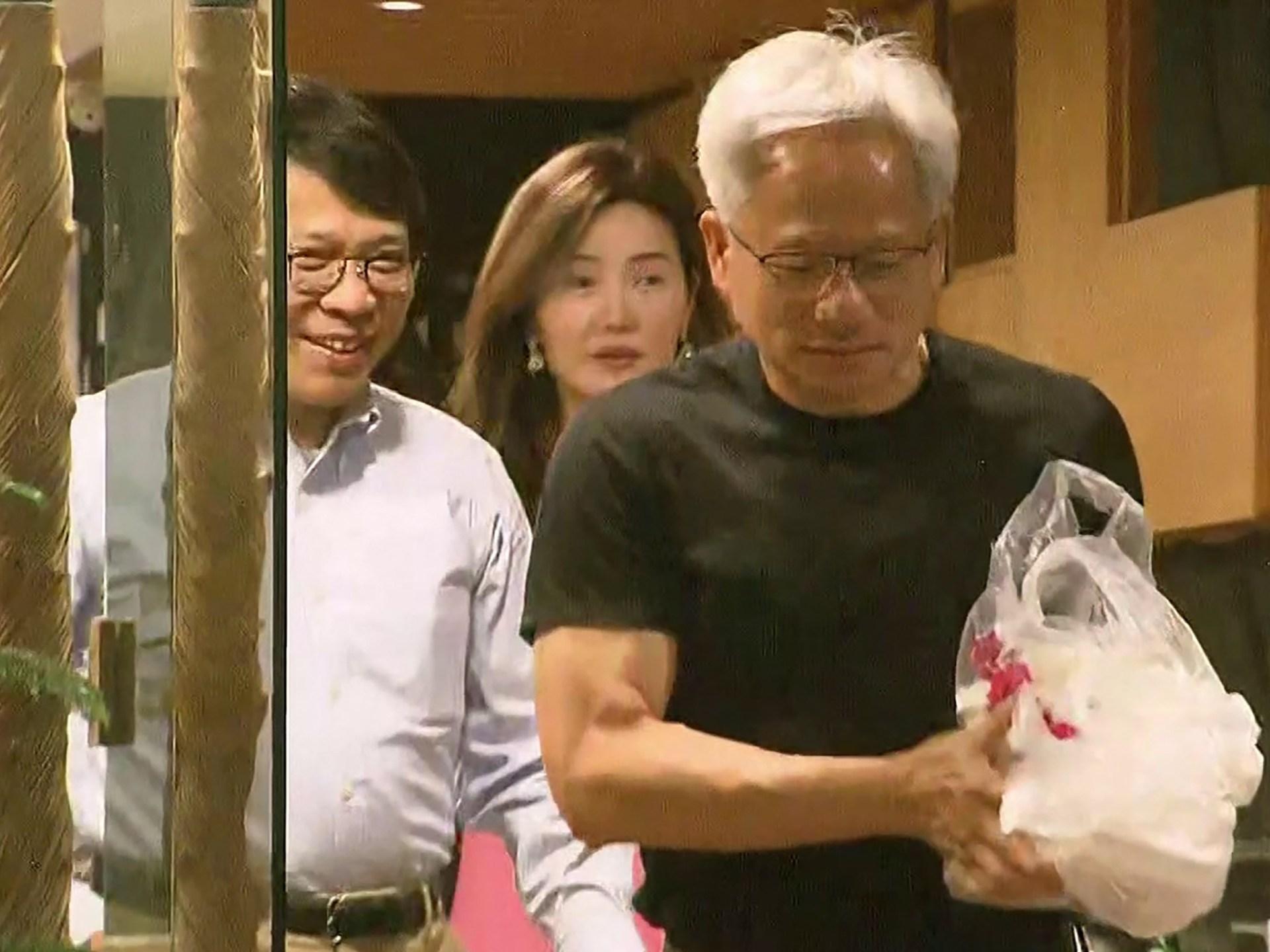
Nvidia chief executive Jensen Huang is facing intense scrutiny in Washington after acknowledging an extramarital relationship with a woman whom US intelligence officials reportedly suspect of working on behalf of China.
The episode has pulled one of the most influential figures in artificial intelligence into a national security debate, with lawmakers demanding testimony and security analysts asking what the relationship might have revealed about Nvidia's technology, customers and contacts with policymakers.
Nvidia maintains that no company or national secrets were compromised. But according to a report by Al Jazeera, specialists in Chinese intelligence activity say the questions raised by the affair go well beyond personal conduct.
Lawmakers Demand a Closed-Door Briefing
Huang, 63, has admitted to having an affair while leading the chipmaker he co-founded more than three decades ago. Media reports have identified the woman as Alice Huang, a former executive at Megaspeed, a technology company based in Singapore.
Republican leaders of three House committees have asked the Nvidia CEO to appear at a private briefing about the relationship. Brian Mast, who chairs the House Foreign Affairs Committee, said he was ready to issue a subpoena if Huang did not respond by the end of Wednesday.
Huang apologised to his family and Nvidia employees in a statement on Sunday. Nvidia has also opened an independent investigation into the matter.
Mixed Signals From Washington
President Donald Trump confirmed on Monday that the FBI is examining the situation, though he has continued to back Huang publicly and described him as an honourable person.
Not everyone in his party agrees. On Tuesday, Republican Senator Kevin Cramer called for Huang to step down, telling Politico that the risk of extortion was too great given how sensitive Nvidia's chips are.
Huang has given no indication he intends to resign. However, media reports on Wednesday suggested Nvidia was preparing to separate from its longtime leader over the controversy.
Why Nvidia Matters in the US-China Contest
Nvidia's advanced processors power much of the current artificial intelligence boom, placing the company at the heart of the technology rivalry between Washington and Beijing. Since 2022, the US has limited sales of its most capable chips to China, citing concerns about military and intelligence use.
The New York Times, citing US intelligence officials, reported that Alice Huang was believed to have been recruited to collect information on the Nvidia CEO and to encourage him to argue for looser export controls.
Jensen Huang had already been advocating for eased restrictions, contending that limiting access to American chips would only strengthen China's domestic semiconductor industry.
Questions Around Megaspeed
Some analysts are focusing on Nvidia's dealings with Megaspeed itself. The company purchased more than $4.8bn worth of Nvidia chips over roughly two years and has been investigated over claims it helped Chinese firms obtain restricted hardware, which Megaspeed denies.
Ryan Fedasiuk, a fellow at the Foundation for American Innovation, cited reports from Bloomberg and The New York Times that Nvidia had contacted the Commerce Department about the Megaspeed probe. He also noted that Nvidia's government disclosures appeared to significantly understate the value of chips sold to the firm.
"The question at hand is whether Nvidia took specific actions with respect to Megaspeed," Fedasiuk said, adding that the personal relationship may have played a role.
What Information Could Have Been Exposed
Jessica Brandt, a senior fellow at the Council on Foreign Relations, wrote that details of how Nvidia designs chips tailored for the Chinese market could be valuable. She added that knowledge of the company's discussions with policymakers might help anticipate the direction of export controls, and that disagreements between Nvidia and the government could reveal weaknesses to exploit.
Fedasiuk raised similar concerns about Nvidia's internal operations, future product plans and its roster of American and international customers. He also pointed to Huang's close ties with Trump and senior White House officials as another potential source of sensitive insight.
No public evidence has emerged that Alice Huang obtained confidential information or shaped Jensen Huang's decisions, and US intelligence has not released proof that she worked for Chinese intelligence. China's Foreign Ministry spokesperson Guo Jiakun dismissed the espionage claims as groundless and a smear against the country.
What the Case Signals for the Tech Industry
Whatever the outcome of the FBI inquiry and Nvidia's own review, the case highlights how leaders of strategically important technology companies are increasingly treated as national security assets in their own right.
For founders and executives in sectors such as semiconductors and AI, the episode is a reminder that personal relationships, disclosure practices and contacts with foreign partners can draw government scrutiny, particularly where export controls and geopolitical competition are involved.
Source: Al Jazeera