India's young robotics sector took centre stage at this year's Bengaluru Tech Summit, where startups demonstrated humanoids, four-legged robots and other machines as the country tries to carve out a place in a global market led by the United States and China.
The three-day event, which wrapped up on Thursday, November 19, put homegrown robotics and physical AI at the heart of its programme. Founders on the ground, however, were candid that moving from prototypes to production will require more capital and a less import-dependent supply chain.
A Robot Race and a Hometown Winner
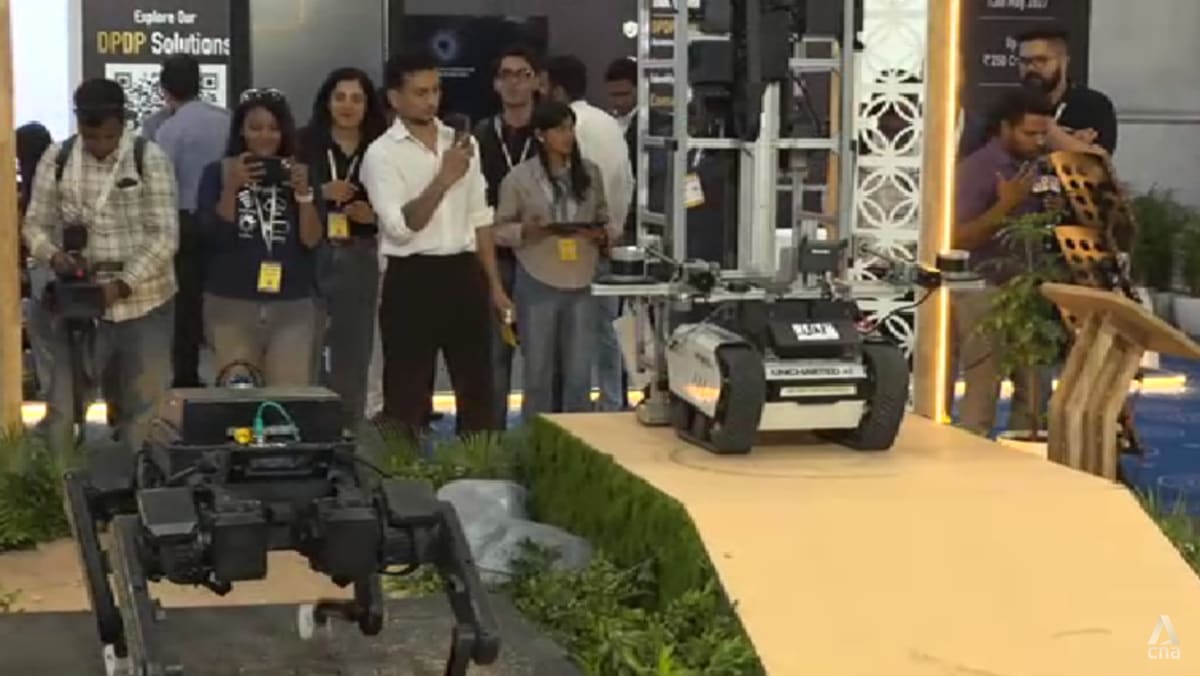
One of the more visible moments of the summit was a race between quadruped robots. According to a report by CNA, the contest was won by PARAM, a robot dog built by Bengaluru-based startup General Autonomy.
PARAM is designed to move across uneven and rough ground, making it suited to inspection work and to hauling equipment in places where wheeled machines struggle.
General Autonomy Bets on Humanoids for Industry
The same startup also showed TAARA, a humanoid robot meant to carry out general tasks in spaces built for people. The company says it can use tools and climb stairs.
General Autonomy sees India's manufacturing sector as a key opportunity. Co-founder and CEO Farid Ahsan said the country is on track to become a major manufacturing hub, but could run into shortages of skilled workers because training them takes years.
Robots, in his view, could help close that gap. "Humanoids can really act as a force multiplier in skilled labour," Ahsan said.
Physical AI Takes Over the Show Floor
Physical AI, the idea of embedding intelligence directly into robots and autonomous machines rather than keeping it inside software on a screen, was a central theme of the summit.
Organisers said the dedicated AI and robotics pavilion hosted roughly 100 showcases, covering everything from full humanoids to robotic hands.
Funding and Supply Chains Remain the Hard Part
Despite the demonstrations, scaling up is proving difficult. General Autonomy said that raising money is still a challenge as it tries to take its machines out of the lab and into full production.
Indian robotics companies also rely heavily on imported components, a dependence that adds cost and complexity for hardware startups trying to compete internationally.
Armatrix Argues for a Niche Strategy
Rather than competing head-on with established robotics powers, some founders believe India should focus on specialised machines. Vishrant Dave, founder and CEO of Armatrix, said the country's strength lies in highly targeted robotics built for specific uses.
He pointed to sectors such as nuclear energy, where only a small number of robots are needed but reliability and quality are critical. Dave argued that India could come to dominate such segments, citing the country's track record of producing quality products.
What the Summit Signals for Founders and Investors
The showcase suggests Indian robotics startups are technically ambitious and increasingly visible, with clear use cases in manufacturing, inspection and specialised industries.
Whether that translates into globally competitive companies will depend on access to patient capital and on building more of the component supply chain locally. For founders, the niche-first approach outlined by Armatrix may offer a more realistic path than trying to match the scale of rivals in the United States and China.
Source: CNA