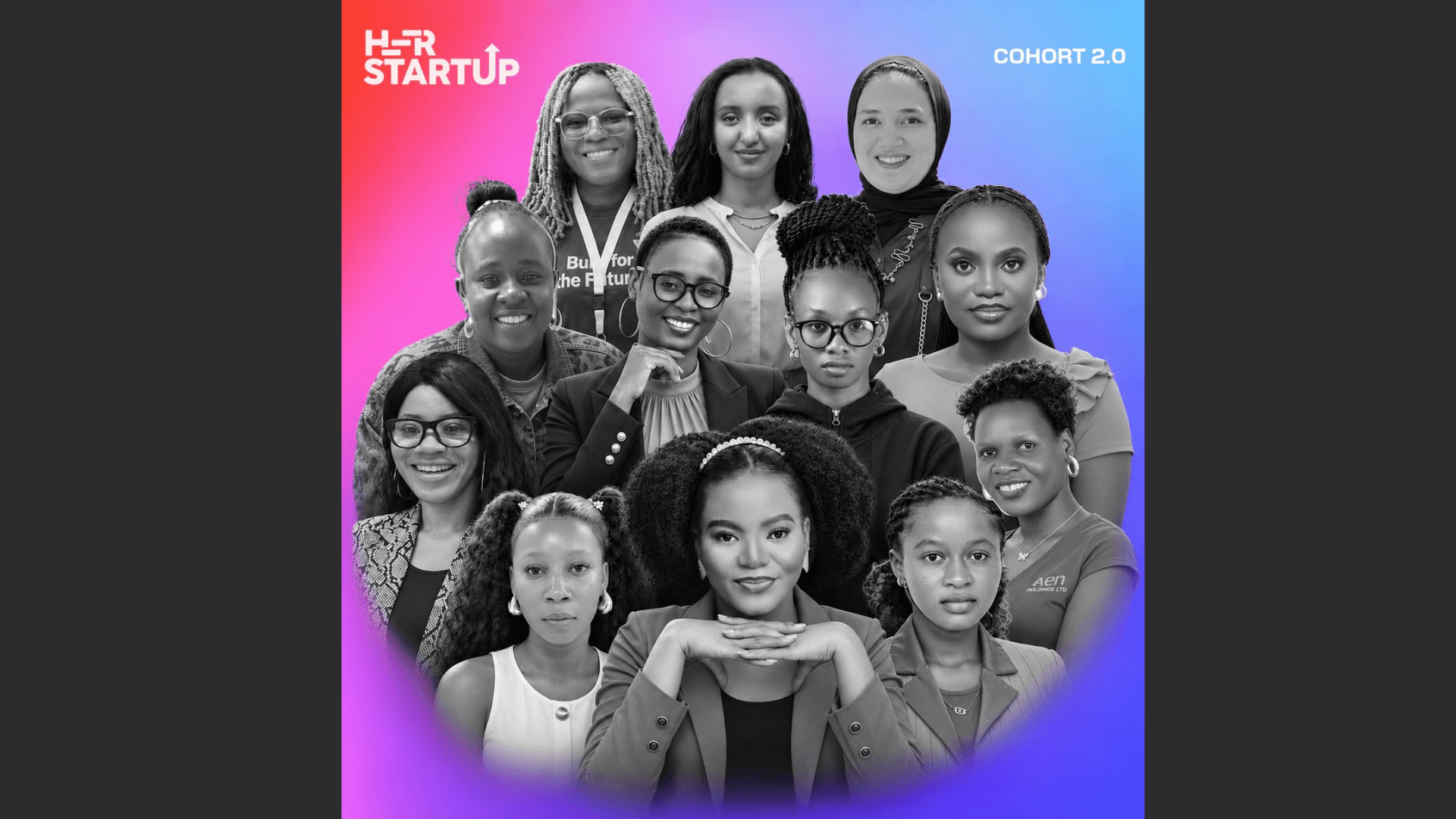
Her Startup, an accelerator that backs women-led, technology-enabled companies across Africa, has named 12 founders to its second cohort. The selected entrepreneurs come from Egypt, Ethiopia, Malawi, Nigeria, South Africa, Tanzania and Uganda.
The programme drew 468 applications from 33 African countries this year. Organisers responded by raising the cohort size from 10 to 12, according to a report by Tech Build Africa.
For this edition, Her Startup is working with the Moroccan chapter of the Founder Institute, a global pre-seed accelerator network, to add mentorship and ecosystem connections to the programme.
Application Numbers More Than Doubled
Demand for the programme rose sharply in its second year. The inaugural edition attracted just over 200 applications from 18 countries, so this year's pool reflects both more applicants and wider geographic reach.
Selection happened in stages. Reviewers narrowed the 468 submissions to a shortlist of 20 founders for deeper assessment, and 12 of those were admitted.
The growth points to strong appetite among African women entrepreneurs for structured support covering skills, funding readiness, networks and scaling advice.
Founder Institute Morocco Joins the Programme
The collaboration with Founder Institute Morocco is the main structural change for the second cohort. The chapter is led by Youssef Koun and Hicham Sentissi, who said the founders can expect an intensive programme built around mentorship, practical guidance and access to an entrepreneurial network.
"We are thrilled to partner with Her Startup on this initiative," the two leaders said in a joint statement. They added that the shared goal is to help participants turn early ideas into strong, scalable companies.
Agriculture and Food Systems Lead the Lineup
Several companies in the cohort focus on farming and food. Tanzania's SAB Biomanufactures, founded by Grace Bosco Mwakinga, turns underused brown seaweed into products for agriculture, livestock, aquaculture and food preservation.
Malawi's Uptech Africa, co-founded by Sarah Chiundiza, runs Yanga, a B2B marketplace linking farmers with buyers, alongside digital products for finance and transport.
From Nigeria, Kadosh Mechatronics, co-founded by Oghenemine Owhatuemuhor, offers KD FarmMate, which pairs solar-powered sensors with a mobile app to track greenhouse conditions such as humidity, soil moisture and pH. Glory Okere's Glorious Farmgate builds solar-powered automated poultry systems aimed at women and smaller farmers, while Olawale Rukayat Abisola's Odnaworld combines fresh-produce delivery with dehydration and processing to cut food loss.
Clean Energy, Recycling and Mobility Ventures
Circular economy businesses are also well represented. Uganda's AEN Holdings, co-founded by Gloria Esther Arinaitwe, tests discarded lithium batteries and repurposes them into low-cost solar storage units managed by an AI-powered battery management system.
In Addis Ababa, Blen Fekade's EON Plastic Recycling and Manufacturing converts used PET bottles into recycled polyester fibre, offering a local substitute for imported virgin material, with plans to move into yarn. South Africa's UNTUM Recycling, founded by Nomuntu Ennie Ndhlovu, buys waste from reclaimers, supplies major industrial buyers and has built an app to digitise collection, inventory and payments.
Egypt's Dosy, co-founded by Nouran Farouk, is a micromobility platform offering scooter transport designed for women, while also creating jobs for women in ride-hailing and delivery.
Health, Education and Media Complete the Group
Chinenye Eruchie's FriendnPal is an AI-driven behavioural health platform that uses multilingual AI, screening tools and remote monitoring to help people get earlier mental health support.
Fuse Varsity, co-founded by Husseinah Abubakar, provides digital skills training through expert-led cohorts and a self-paced learning platform called FUSELearn. Adeleke Esther Opemipo's TESA Global Solutions helps tech and corporate clients grow through marketing, business development, media production and talent services.
What the Cohort Signals for Women-Led Startups in Africa
Nigeria accounts for half of the selected founders, but the inclusion of six other countries shows the programme widening its reach. The heavy tilt toward agritech, recycling and energy also mirrors where many African founders see practical, locally rooted opportunities.
For women entrepreneurs, the doubling of applications underlines both rising ambition and a continued shortage of dedicated support. Partnerships like the one with Founder Institute Morocco suggest accelerators are pooling networks to stretch limited resources further.
Source: Tech Build Africa