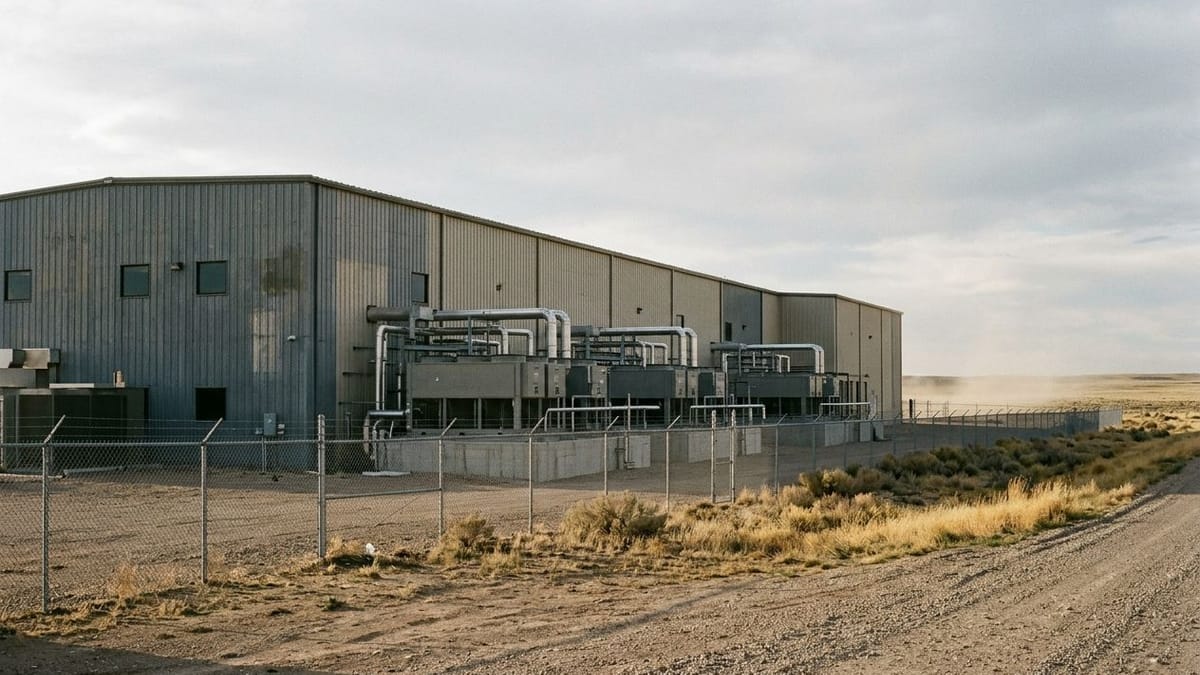
Google has bought a Wyoming data center project from Crusoe, the Denver-based AI infrastructure startup, after the development ran into difficulties the smaller company could not resolve on its own. Financial terms of the deal were not made public.
The transaction stands out because distressed sales have been uncommon during the current surge in AI infrastructure spending. According to a report by The Tech Buzz, it reflects a widening gap between hyperscalers with enormous budgets and startups attempting to build large, AI-ready facilities as costs climb and local pushback intensifies.
What Google Is Taking On
Crusoe had been building the Wyoming site to handle AI workloads, but the project hit trouble that led the company to look for a better-capitalized buyer. Google agreed to take it over and fold it into its network of data centers.
Those facilities support a wide range of Google services, from its core search product to the Gemini family of AI models. Adding a partially developed site gives the company another route to new computing capacity without starting from bare ground.
Why Wyoming Appeals to Data Center Builders
Wyoming has drawn interest from data center developers thanks to comparatively cheap energy, favorable tax policies and plenty of available land. Those conditions make it attractive for facilities that consume large amounts of power.
Location advantages, however, do not remove the practical hurdles of large-scale construction. Securing permits, locking in utility agreements and managing a build of this size require experience and capital that Google, after decades of running hyperscale data centers, has in abundance.
Rising Resistance and Rising Costs
The deal follows the 2026 midterm elections, in which voters in several AI hubs rejected proposed data centers. Communities in states ranging from Virginia to Arizona turned down projects, citing worries about water consumption, electricity demand and environmental effects.
That opposition adds time and expense to bringing new facilities online. Large technology companies can absorb those costs and bring political influence to bear, while smaller developers often cannot.
Larger AI players have signaled they intend to keep building regardless. OpenAI's chief financial officer recently reaffirmed the company's commitment to data center construction despite the voter backlash.
A Market Splitting Into Two Tiers
The Crusoe sale fits a broader pattern of consolidation in AI infrastructure. In Australia, shares of operator NextDC jumped 43 percent after Goodman and Digital Realty took stakes in the company, while independent developers without such backing are finding capital harder to secure.
Other companies are also spending heavily to build AI capabilities. Dropbox recently paid 350 million dollars to acquire Tigris Data as part of its own infrastructure push.
Meanwhile, Google, Microsoft and Amazon continue to expand aggressively. Buying troubled projects and applying their operational know-how can be quicker than building from scratch, and it also takes a potential rival developer off the board.
Google's Capacity Strategy and Crusoe's Next Move
For Google, the acquisition is a small line item in an annual capital budget measured in tens of billions of dollars. It aligns with the company's effort to secure AI computing capacity wherever it can while improving efficiency, an effort reflected in its recent 30 percent price cut for Gemini video generation, which was partly enabled by infrastructure cost optimization.
Crusoe's path forward is less clear. The startup has promoted itself as a more sustainable option, powering computing with stranded or otherwise wasted energy sources. Offloading the Wyoming project could free up money to concentrate on that niche, though it also shows the difficulty of competing directly with hyperscalers on conventional AI facilities.
What the Deal Signals for Founders and the Industry
For infrastructure startups, the lesson is that technical expertise and strong funding may not be enough to carry a large data center project through permitting, financing and community scrutiny. Partnerships, specialization or exits to larger buyers may become more common outcomes.
For the industry, the sale points toward a future in which a handful of very large companies control a growing share of AI computing capacity. If more distressed projects change hands, regulators already focused on Big Tech's influence in AI may begin paying closer attention to who owns the infrastructure underneath it.
Source: The Tech Buzz