Healthcare is steadily moving out of clinics and into homes — and fertility startup Inito is helping lead that shift.
The company has raised $29 million in Series B funding to expand its at-home diagnostics platform and develop AI-designed antibodies that could unlock an entirely new generation of health tests.
From fertility tracking to broader hormone monitoring, Inito is aiming to redefine how people understand their bodies.
How Inito Changed At-Home Fertility Testing
When Inito launched in 2021, its mission was clear: make quantitative fertility hormone testing possible at home.
Most traditional ovulation kits track only:
- Estrogen
- Luteinizing hormone (LH)
But they miss a crucial hormone — progesterone metabolite (PdG) — which confirms whether ovulation actually happened.
Inito solved this gap.
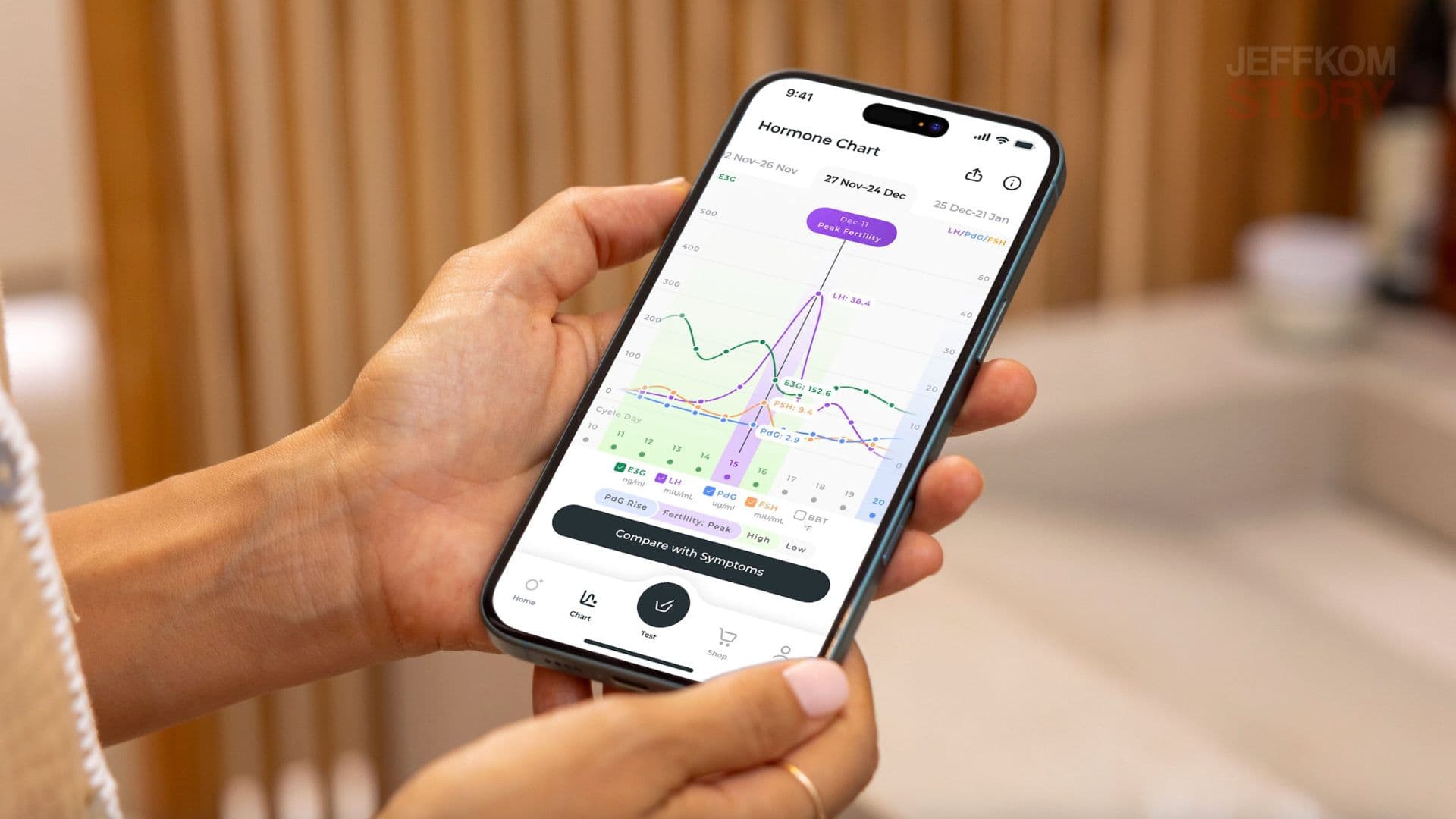
Using a single test strip, users can measure:
- Estrogen
- LH
- Progesterone (PdG)
- FSH (follicle-stimulating hormone)
Inito’s AI then interprets these hormone levels to:
- Identify fertile days
- Track hormone patterns
- Confirm ovulation with lab-grade accuracy
Since launch, Inito has analyzed over 30 million fertility hormone data points, making it a trusted option for women tracking their reproductive health.
Beyond Fertility: A Broader At-Home Diagnostics Vision
Now, Inito is thinking much bigger.
The company wants to evolve from a fertility tracker into a full-scale hormone and at-home health diagnostics platform.
The belief driving this shift is simple:
Healthcare should start at home.
With its new funding, Inito plans to support testing across multiple life stages — not just for those trying to conceive.
Upcoming focus areas include:
- Pregnancy monitoring
- Menopause tracking
- Broader hormone health insights
- Endocrine markers like testosterone
Why AI-Designed Antibodies Matter
At the heart of Inito’s next phase is a breakthrough approach: AI-engineered antibodies.
Antibodies are the core of any diagnostic test. They bind to target molecules like estrogen or testosterone to generate a measurable signal.
Traditionally:
- Antibodies are grown inside animals
- Screening is slow and expensive
- Sensitivity is often limited
- Many biomarkers are hard to test at home
Inito believes AI changes everything.
By using artificial intelligence, the team can:
- Predict protein folding in 3D
- Design synthetic antibodies digitally
- Test millions of variants virtually
- Build only the best candidates in the lab
According to co-founder and CTO Varun Venkatesan, this approach produces antibodies that are:
- More sensitive
- More consistent
- More stable than conventional ones
This could dramatically expand the number of biomarkers that can be accurately tested at home.
Redefining Diagnostics from the Living Room
Inito’s leadership sees this as more than just better test kits.
CEO Aayush Rai describes the long-term goal as a complete rethink of diagnostics.
Instead of relying on clinic visits and lab schedules, users should be able to:
- Measure health markers from home
- Track changes over time
- Receive AI-driven insights
- Trust results with lab-grade confidence
The company’s reader and app will soon support tests well beyond fertility, creating a single platform for hormone-driven health insights across a lifetime.
Funding, Growth, and Global Expansion
Inito’s Series B round was led by:
- Bertelsmann India Investments
- Fireside Ventures
This brings the company’s total funding to around $45 million.
Earlier investors include:
- Y Combinator
- Former Nurx CEO Varsha Rao
- Multiple physicians and family offices
The new capital will be used to:
- Scale manufacturing
- Strengthen R&D for AI antibodies
- Expand across the United States
- Enter new international markets
The Bigger Picture
Inito’s journey reflects a larger shift in healthcare.
As AI, diagnostics, and consumer technology converge, the future of health monitoring is becoming:
- More personal
- More continuous
- More accessible
By combining AI-designed antibodies, hormone science, and at-home testing, Inito is positioning itself at the center of that transformation.
And if its vision succeeds, understanding what’s happening inside your body may soon be as simple as testing from home — no lab appointment required.