A young startup called Cyclon is betting that the next major phone will be organised around AI agents rather than a grid of apps. The Y Combinator-backed company is developing an operating system that lets users describe what they want and have software agents carry it out.
Cyclon was founded in 2026 by Thomas Kiefer, who previously worked as an Android engineer, and Adam Zinebi, who studied electronics and miniaturised hardware at EPFL. According to a report by The Indian Express, the company is now taking pre-orders for its first device.
Talking to the Phone Instead of Tapping Through It
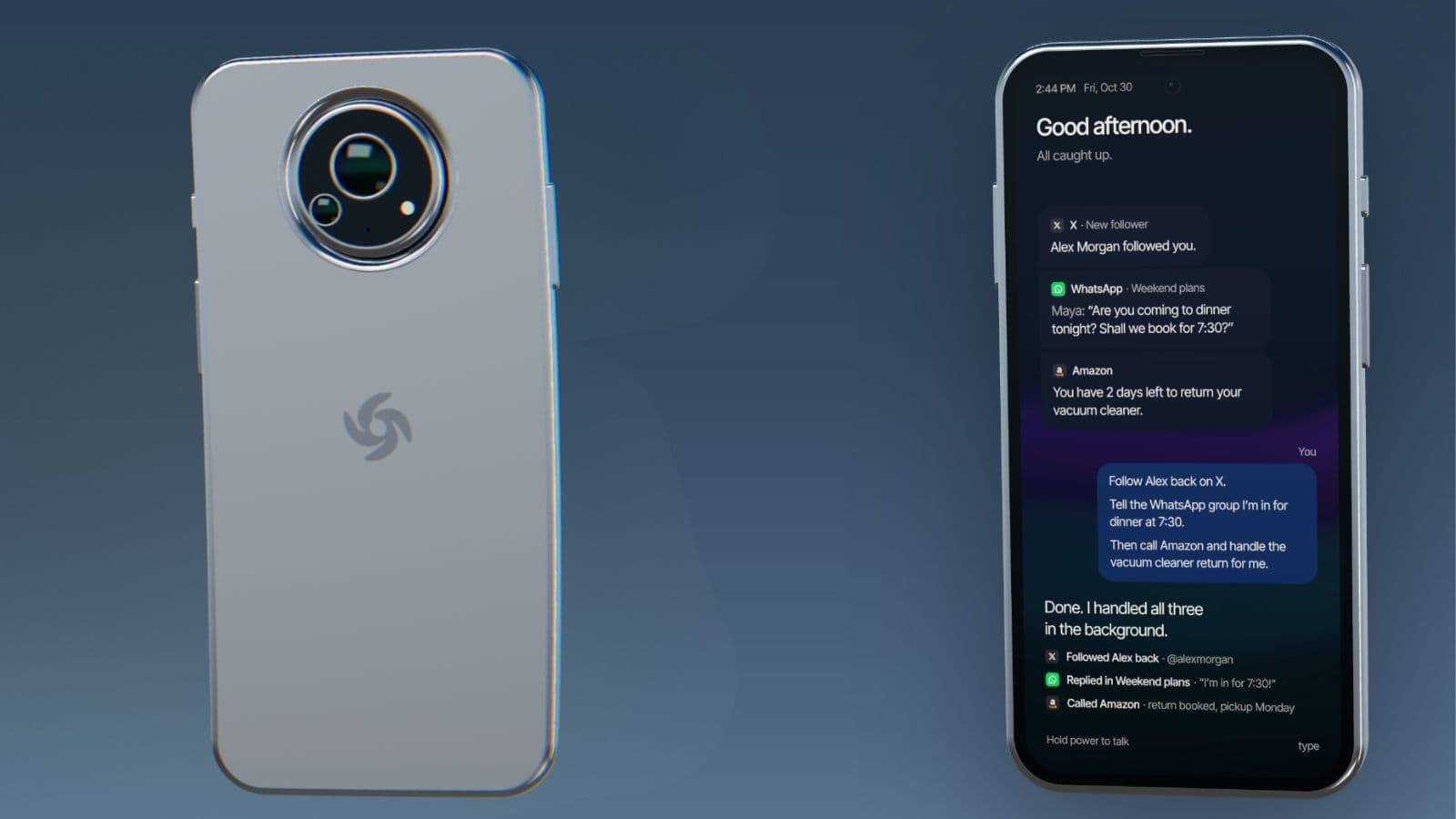
The core idea is that anything a person can do on a phone should be something they can simply ask the phone to do. With a single touch, users can launch agents that work through apps already installed and signed in on the device.
If a needed app does not exist, the agent can build one. Zinebi described the approach in a post on X on November 2, noting that tasks are handled in the background.
A demo video shows a user asking the phone to locate a contract in Google Drive, send the link to a friend on WhatsApp and then call that friend. When information is missing, the agent pauses to ask, then resumes and finishes the job.
Pixel Prototypes First, Shipping in 2027
Cyclon is not starting with custom hardware. Its early-access devices are Google Pixel 8a units running the company's own software.
The Cyclon phone is available to pre-order for $699 for eligible US buyers, who also receive the Pixel 8a prototype at no additional cost. The company expects to ship the AI-native phone in the second quarter of 2027.
How the Agents Work Across Apps
Cyclon OS is designed to let agents move information between apps, send messages, place calls and keep working in the background. Users may still need to step in for identity checks and certain approvals.
The system is compatible with most Android apps, but banking and payment apps, along with apps that require a Google-certified phone, will not work. On phone calls, the agent identifies itself as an AI, and the company acknowledges it can sometimes make mistakes.
Users can describe a service they want connected, and the agent will build a corresponding app in a separate cloud sandbox before adding it to the phone. It will request any account or API key it needs, and users can switch off agent access to specific apps.
Cloud Processing and Privacy Controls
The phone does not run its AI entirely on the device. Requests, messages, location data and on-screen content are sent to cloud-based AI providers, according to the company's website, while the agent's memory stays on the phone and only relevant portions are shared.
Settings allow users to restrict what goes to the cloud by data type and by app. Cyclon says user data will not be used for training and will be kept only briefly for safety monitoring before deletion, adding that it is pursuing zero data retention with its providers.
A Crowded Race Toward Agent-Driven Devices
Cyclon joins a wider push by startups and large companies to define the hardware through which people interact with AI agents. Honor's Robot Phone points in a similar direction, and Nothing CEO Carl Pei has argued that apps will eventually disappear.
Google introduced Gemini Intelligence this year, an agent-based layer that reads the screen and moves across apps to complete tasks. Chipmakers are also adapting, with Qualcomm unveiling the Snapdragon 8 Elite Gen 6 and Snapdragon 8 Elite Extreme Gen 6 in September 2026.
Qualcomm executive Durga Malladi has cautioned that the transition is not complete. "We are not there yet. The apps are still going to coexist," he said.
What Cyclon's Bet Signals for Builders
Cyclon's approach of layering agents over existing apps, rather than replacing them outright, reflects a pragmatic path while the ecosystem catches up. Its limits on banking apps and reliance on cloud models show how much remains unresolved.
For founders whose products live inside apps, the trend suggests preparing for a world where an agent, not a person, may be the one opening them.
Source: The Indian Express