Amazon has never been bigger. It now sits at the top of the Fortune 500, and its cloud business is growing at its fastest pace in years. Yet a remark its founder made to staff in 2018, that the company would eventually fail, is drawing fresh attention.
The renewed interest comes as Amazon pours money into artificial intelligence, turning its trailing free cash flow sharply negative. According to a report by The Economic Times, nothing in the latest figures points to imminent trouble, but the scale of the spending raises questions about how a company this large stays nimble.
The All-Hands Meeting Where Bezos Predicted Failure
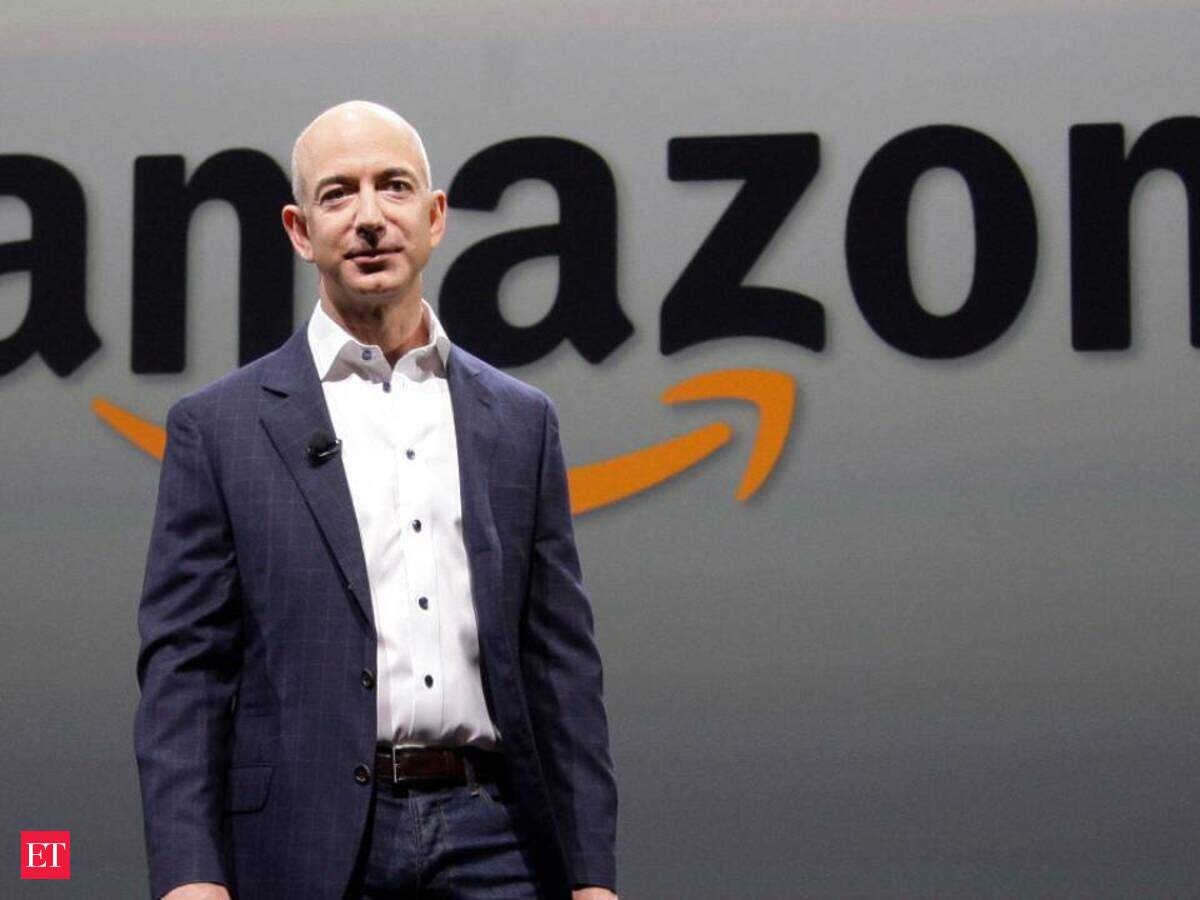
The comment came during an all-hands meeting in Seattle in November 2018, when Amazon was 24 years old. An employee asked what lessons the company could draw from the struggles of large retailers such as Sears.
"Amazon is not too big to fail," Bezos said, according to a recording of the meeting heard by CNBC. He went on to predict that Amazon would one day go bankrupt, noting that large companies tend to last a little over 30 years rather than a century or more.
The context mattered. Sears had filed for Chapter 11 protection a month earlier after 132 years in operation, and Toys R Us had shut its remaining US stores that June. Amazon, by contrast, had been founded in 1994 and opened its online bookstore in July 1995.
Corporate Lifespans Are Getting Shorter
Bezos's point echoes research from strategy firm Innosight. It found that companies in the S&P 500 stayed in the index for an average of 30 to 35 years in the late 1970s.
Its 2021 Corporate Longevity Forecast projected that figure would drop to between 15 and 20 years during the 2020s. These numbers track time spent in the index, not survival as a business, since companies can exit through falling valuations or acquisitions.
Customer Focus as the Defense Against Decline
Bezos did not frame his prediction as a reason for alarm. Instead, he told staff that turning inward rather than serving customers would mark the start of the decline, and that the goal was to push that moment as far into the future as possible.
The idea tied into his long-running Day 1 philosophy, laid out in his 2016 shareholder letter published in April 2017. There, he described Day 2 as a slide from stagnation into irrelevance and eventual death. He pointed to Prime as an example of inventing something customers had never requested but clearly wanted.
Jassy's Push to Strip Out Layers
Bezos announced in February 2021 that he would step back to become executive chair, and former Amazon Web Services chief Andy Jassy became CEO in July of that year. With the role came the task of keeping a sprawling organization from slowing down.
In October 2025, Amazon said it would cut roughly 14,000 corporate jobs. On an earnings call that month, Jassy said the move was mainly about culture rather than finances or AI, arguing that years of rapid growth had added too many people and management layers, as reported by Axios.
Strong Growth, Heavy Spending
Amazon's third-quarter 2026 results, released October 29, showed net sales up 12% year over year to $201.9 billion. AWS revenue climbed 39% to $46 billion, its quickest growth in nearly five years, while operating income rose to $28.1 billion from $17.4 billion.
The cost of that expansion showed up in cash flow. Free cash flow for the 12 months ended September 30, 2026, was an outflow of $42.4 billion, compared with an inflow of $14.8 billion a year earlier. Amazon attributed this mainly to a $94.8 billion increase in net purchases of property and equipment, largely tied to AI.
Net income dipped to $20.7 billion from $21.2 billion, which the company said reflected $9.5 billion in pretax gains from its Anthropic investments in the prior-year period. Jassy, meanwhile, said Amazon could have two trillion-dollar revenue businesses within five to ten years.
What Amazon's Position Signals for the Industry
On June 3, 2026, Amazon took the No. 1 spot on the Fortune 500 for the first time, overtaking Walmart after its 13-year run. The ranking was based on Amazon's 2025 revenue of about $716.9 billion, a long way from its No. 492 debut on the list in 2002.
For founders and executives, the story is a reminder that scale does not guarantee longevity. Amazon's revenue and profits are rising, but its bet on AI and its effort to cut bureaucracy show how even the largest companies must keep reinventing themselves to avoid the slow decline Bezos warned about.
Source: The Economic Times