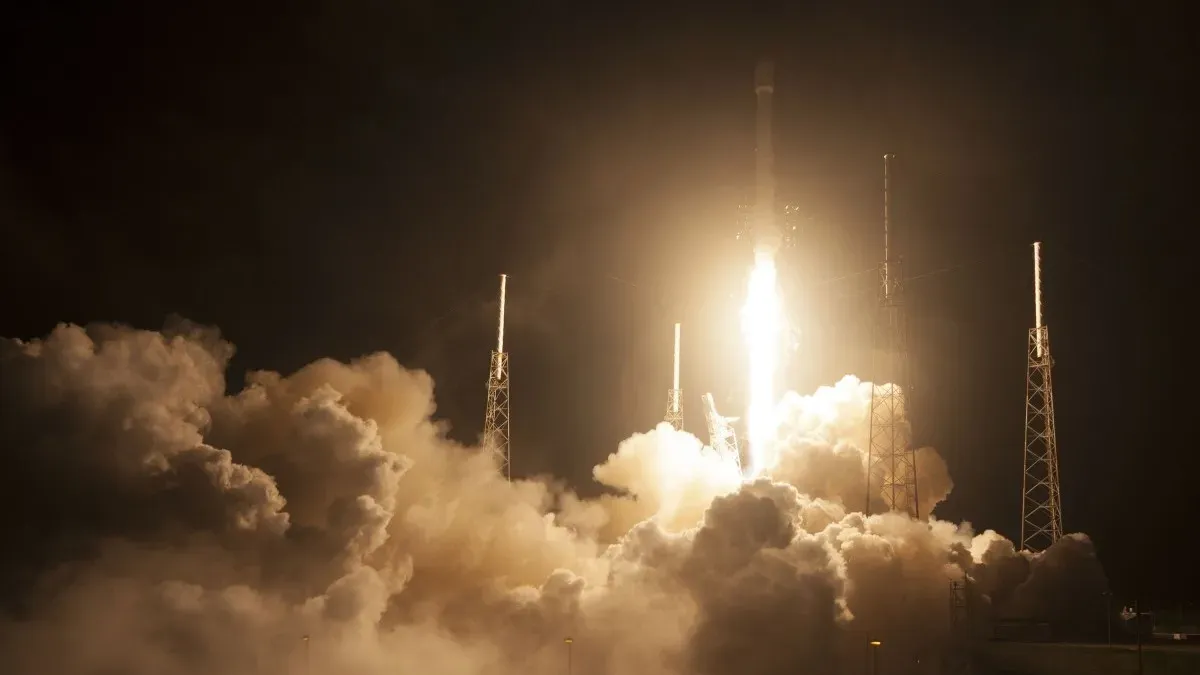
Amazon is accelerating its reliance on a rival's rockets. The company has rescheduled its next SpaceX Falcon 9 launch for its Leo satellite internet network, moving the mission from 2027 into December of this year.
The shift is a response to problems at two of Amazon's other launch providers, both of which are currently unable to fly. An Amazon official confirmed the new timing to Ars Technica, according to Business Upturn, which also reported that additional Falcon 9 missions are expected to follow soon after.
A Schedule Change, Not a New Contract
The December flight is not the result of a fresh deal. Amazon had previously purchased extra Falcon 9 launches, and what has changed is when the next one will take place.
No exact launch date in December has been disclosed. The plan also remains just that, a plan, since rocket availability and mission preparations still need to come together before any satellites reach orbit.
Launch Partners and Broadband Competitors
The arrangement highlights an unusual dynamic in the satellite internet industry. SpaceX operates Starlink, the most established low Earth orbit broadband service and the network Amazon Leo is built to compete with.
Even so, Falcon 9 is capable of carrying Leo satellites, and SpaceX has one of the most reliable launch cadences in the business. That allows the two companies to cooperate on getting hardware into space while still competing for customers on the ground.
Setbacks at Vulcan and New Glenn
The rescheduling follows a costly failure on 15 November, when 40 Leo satellites were lost during a United Launch Alliance Vulcan mission. Vulcan is expected to stay grounded for months, according to the Ars report.
Amazon is also waiting on Blue Origin's New Glenn rocket, which has not flown since a launch-pad explosion in May. With two of its suppliers sidelined, Falcon 9 offers Amazon one of the few immediate paths to orbit.
Europe Keeps Deliveries Moving
News of the revised SpaceX timeline came shortly after a successful European launch on Tuesday. Arianespace confirmed that an Ariane 64 rocket carried 36 Amazon Leo satellites into orbit from Kourou in French Guiana.
The rocket lifted off at 11:14 UTC, and the last satellite separated a little more than two hours later at an altitude of around 460 kilometres. It was Arianespace's fourth mission for Amazon this year, bringing the number of Leo satellites it has delivered to 136.
Ars put Amazon's overall fleet at 432 satellites after the flight. Neither figure means all of those spacecraft are currently delivering commercial internet service.
Satellites Ready, Rockets in Short Supply
Amazon deliberately spread its launch orders across multiple providers, a strategy meant to reduce dependence on any single rocket. The current situation shows that diversification does not fully protect against simultaneous delays.
According to Ars, Amazon has hundreds of finished satellites waiting for a ride. Building a large constellation in low Earth orbit requires a steady stream of launches, so manufacturing capacity alone does not determine how quickly the network can grow.
Bringing the Falcon 9 flights forward helps work through that backlog. It does not, however, set a new date for customer access or answer questions about pricing and availability in specific markets such as India.
What the Shift Means for the Satellite Internet Race
For Amazon, the immediate priority is volume: getting more Leo satellites into orbit while its preferred launch vehicles are unavailable. Turning to SpaceX, even as a competitor, reflects how limited heavy launch capacity remains.
For the wider industry, the episode underlines that launch access is a strategic bottleneck for any company building a satellite constellation. Founders and investors watching the space sector may see it as a reminder that owning or securing reliable rides to orbit can matter as much as the technology being launched.
Source: Business Upturn