- By JeffkomStory Team
- Published on
Nuclear Startups Are Back in Vogue: Small Reactors, Big Ambitions, Bigger Challenges
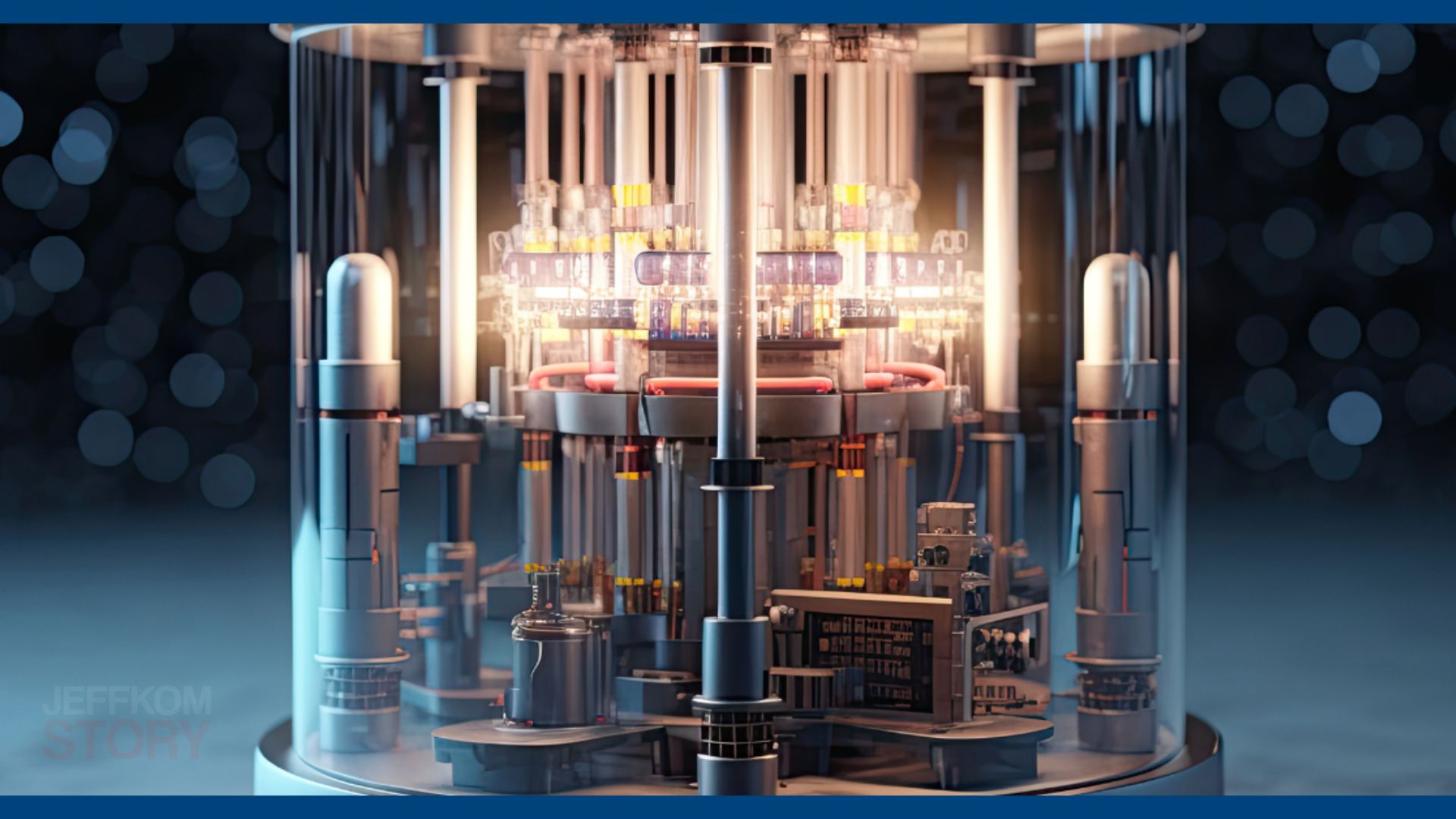
The nuclear industry is quietly entering a new renaissance. After decades of stagnation, aging plants are being refurbished, public sentiment is shifting, and investors are once again placing major bets on atomic energy. In just the final weeks of 2025, nuclear startups raised $1.1 billion, driven largely by optimism around small modular reactors (SMRs)—a new approach designed to fix what went wrong with traditional nuclear power.
But while the opportunity is real, the challenges ahead remain significant.
Why Traditional Nuclear Power Struggled
Conventional nuclear reactors are engineering marvels—but they are also notorious for cost overruns and delays. The most recent U.S. nuclear projects, Vogtle Units 3 and 4 in Georgia, highlight this reality. Each reactor produces more than 1 gigawatt of electricity, relies on massive fuel assemblies nearly 14 feet tall, and required tens of thousands of tons of concrete.
Despite their scale, both projects were completed eight years late and exceeded budgets by more than $20 billion.
These large reactors depend on custom-built infrastructure, long timelines, and complex regulatory processes. Even minor miscalculations can balloon into multi-billion-dollar setbacks, making traditional nuclear projects risky for utilities and investors alike.
The Rise of Small Modular Reactors
Nuclear startups believe the future lies in going smaller.
Instead of building massive, one-off plants, startups are designing compact, standardized reactors that can be manufactured in factories and deployed incrementally. If more power is needed, additional modules can be added.
The promise is compelling:
-
Factory-based production
-
Standardized designs
-
Faster deployment
-
Lower long-term costs through repetition
By applying mass-manufacturing principles, startups aim to make nuclear energy more predictable, scalable, and financially viable.
Manufacturing Is the Real Test
While the theory behind small reactors is sound, manufacturing them at scale is a formidable challenge.
Even experienced companies struggle with mass production. Tesla’s early difficulties scaling electric vehicle manufacturing show how hard it is to move from prototype to profitable production—even in an industry with established infrastructure.
For nuclear startups, the challenge is even greater.
Many critical nuclear materials and components are no longer produced in the United States. After decades of offshoring, domestic supply chains have weakened, forcing startups to rely on overseas suppliers. This increases costs, delays timelines, and introduces geopolitical risks.
Capital Is Plentiful—Talent Is Not
Unlike many early-stage industries, nuclear startups are not short on funding. Investor interest has poured capital into the sector, making factory construction and research financially feasible.
The real bottleneck is human capital.
The U.S. has not built large-scale industrial facilities consistently for more than four decades. As a result, much of the institutional knowledge required to design, build, and operate factories has faded.
The shortage extends beyond machine operators. It includes:
-
Factory supervisors
-
Manufacturing executives
-
Supply chain leaders
-
Financial officers and board members with industrial experience
Without this depth of expertise, scaling safely and efficiently becomes far more difficult.
Rebuilding Industrial “Muscle Memory”
Rebuilding manufacturing capability is not impossible—but it takes time.
One positive trend is that many nuclear startups are choosing to build early manufacturing operations close to their engineering teams. This proximity allows for faster iteration, better feedback loops, and continuous improvement.
By starting small and producing early versions domestically, startups can:
-
Refine designs faster
-
Improve production processes
-
Train a new generation of manufacturing talent
Over time, this approach helps restore the industrial muscle memory the U.S. once had.
Why Modularity Matters to Investors
From an investor’s perspective, modularity is not just a technical advantage, it’s a risk-management strategy.
Producing reactors in smaller volumes allows companies to:
-
Collect real manufacturing data early
-
Prove learning curves exist
-
Demonstrate gradual cost reductions
This evidence is critical for building long-term investor confidence.
However, expectations must remain realistic.
Cost Reductions Take Time
One common mistake among hardware startups is underestimating how long manufacturing efficiencies take to materialize.
While projections often assume rapid cost declines, real-world experience shows that meaningful savings may take years—or even a decade to achieve. Learning curves are real, but they are gradual.
For nuclear startups, patience and disciplined execution will be just as important as innovation.
The Bottom Line
Nuclear startups are back in vogue for good reason. As the global demand for reliable, carbon-free energy grows, small modular reactors offer a promising alternative to the oversized, over-budget nuclear projects of the past.
But smaller reactors do not eliminate complexity.
Manufacturing constraints, supply chain gaps, and a shortage of experienced industrial talent remain major hurdles. The startups that succeed will be those that invest in people, respect the realities of manufacturing, and scale thoughtfully one reactor module at a time.
The nuclear renaissance is real. Whether it becomes a lasting transformation depends on execution, not just ambition.
Here are some related articles you may find interesting:
Lucra Raises $20M Without the AI Hype: A Startup Success Story Worth Watching
In today’s startup ecosystem, adding “AI” to a pitch deck often feels like a requirement for attracting...
Patina Startup Is Reinventing the Fragrance Industry With AI-Powered Scent Technology
The fragrance industry has remained largely unchanged for decades. Traditional perfume and scent creation...
Waymo Expands Robotaxi Service Pause Amid Flooding and Safety Concerns
Waymo has expanded its robotaxi service pause to four major U.S. cities after several self-driving vehicles...
Quartermaster Raises $43M to Build a “Hive Mind” for Ships
Oceans are vast, and tracking activity on them has always been a challenge for governments, shipping...
How Google’s New AI Agents Are Transforming Search in 2026
Google is redefining the future of online search with the launch of its new AI agents, announced during...
Why Trust Is Becoming the Biggest Question in the Elon Musk vs OpenAI Trial
The ongoing legal battle between Elon Musk and Sam Altman has become more than just a courtroom dispute....
Malware Data Archives Are Bigger Than You Think: Comparing Cyber Threat Databases to the Eiffel Tower
The world of cybersecurity is growing faster than ever, and so are the massive databases used to track...
Parker Startup Files for Bankruptcy: What Went Wrong for the Fintech Company?
The fintech startup world continues to face major challenges in 2026, and one of the latest names making...
Tesla Model Y Becomes First Vehicle to Meet New US Driver Assistance Safety Benchmark
The 2026 Tesla Model Y has achieved a major milestone in automotive safety by becoming the first vehicle...
Nuro Secures Driverless Permit for Lucid Robotaxis Ahead of Uber’s 2026 Launch
The race toward fully autonomous transportation is accelerating. Nuro has taken a major step forward...
Popular Posts
Lucra Raises $20M Without the AI Hype: A Startup Success Story Worth Watching
JeffkomStory Team
In today’s startup ecosystem, adding

Patina Startup Is Reinventing the Fragrance Industry With AI-Powered Scent Technology
JeffkomStory Team
The fragrance industry has remained

Waymo Expands Robotaxi Service Pause Amid Flooding and Safety Concerns
JeffkomStory Team
Waymo has expanded its robotaxi

Quartermaster Raises $43M to Build a “Hive Mind” for Ships
JeffkomStory Team
Oceans are vast, and tracking
Join Our Newsletter
Start your day with impactful startup stories and concise news! All delivered in a quick five-minute read in your inbox.