Artificial intelligence is transforming weather forecasting, and WindBorne Systems is emerging as an important player in this rapidly evolving industry. The California-based startup has secured a major contract with the U.S. Air Force to provide atmospheric data collected by its fleet of autonomous weather balloons. The agreement could be worth up to $49 million, marking a significant milestone in the company's growth and its work with the U.S. government.
The contract highlights the growing importance of real-time atmospheric observations, autonomous technology, and AI-powered weather prediction for military operations and weather research.
WindBorne Systems Secures a Major US Air Force Contract
WindBorne Systems has received a contract from the U.S. Air Force to supply weather data gathered by its autonomous balloon network. According to reporting by TechCrunch, the agreement could be worth nearly $50 million, making it the largest contract the company has participated in to date.
However, the contract does not guarantee that WindBorne will receive the full amount. The Air Force pays for data as needed and can place orders for specific geographic regions at particular times. The service had placed orders worth approximately $1.7 million at the time of the report, with WindBorne executives expecting additional orders in the future.
The agreement was awarded without competitive bidding. WindBorne's leadership said the decision reflected the company's ability to provide the required global atmospheric data for the government's operational needs.
For the startup, the contract represents an opportunity to expand its technology, strengthen its government partnerships, and support further research and development.
How WindBorne's Autonomous Weather Balloons Work
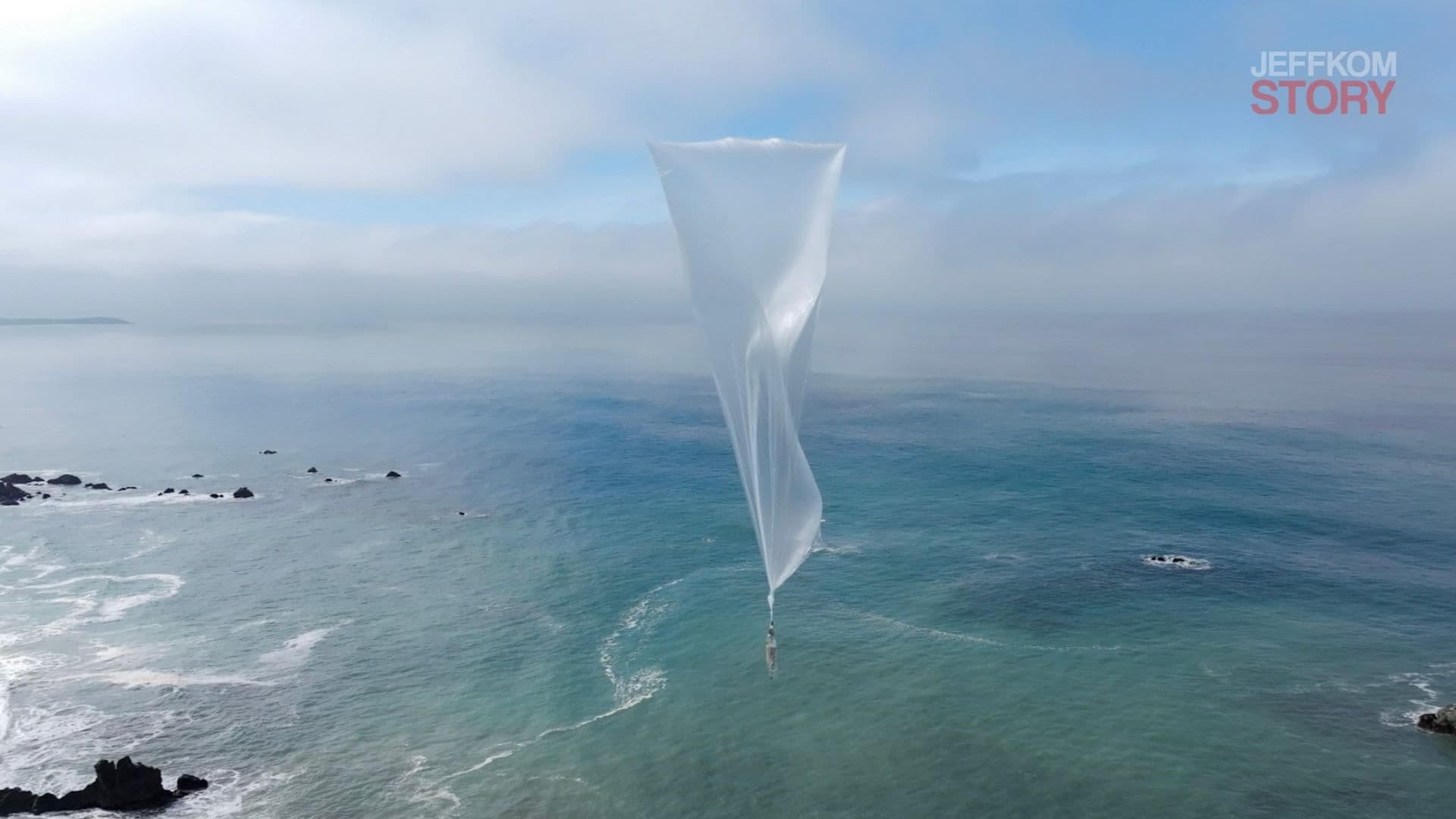
WindBorne Systems operates a fleet of autonomous weather balloons designed to collect atmospheric measurements across the globe. According to the company information reported by TechCrunch, its network includes approximately 700 balloons.
These balloons gather atmospheric sensor readings that help scientists and forecasting systems understand changing weather conditions. WindBorne sells the collected data to customers and also uses it to improve its own artificial intelligence weather forecasting models.
Unlike conventional weather observation systems that may depend on fixed locations, a network of autonomous balloons can collect measurements across different regions and atmospheric conditions.
The company uses changes in altitude to navigate the balloons. By adjusting their height, the balloons can access different wind currents and move toward desired locations. They can also release air or drop sand carried as ballast to support flight control.
This approach allows WindBorne to gather valuable observations from parts of the atmosphere that may be difficult to monitor using traditional methods.
Why Atmospheric Data Matters for AI Weather Forecasting
Accurate weather forecasting depends on reliable information about the atmosphere. Temperature, air pressure, humidity, wind speed, and other measurements help forecasting systems identify weather patterns and predict how conditions may change.
Traditional numerical weather prediction relies on complex mathematical equations that simulate atmospheric behavior. These systems have historically required significant computing resources, including powerful supercomputers.
AI weather forecasting introduces a different approach. Deep-learning models can learn patterns from large historical weather datasets and use those patterns to generate predictions more efficiently.
However, the accuracy of AI forecasts depends partly on the quality and coverage of the data used to train and improve the models.
This is where WindBorne's autonomous balloon network becomes important. By collecting new atmospheric observations, the company can provide additional information that may help improve weather models, particularly in areas where measurements are limited.
Combining real-world sensor data with AI forecasting technology could help researchers better understand complex weather systems and improve predictions.
WindBorne's WeatherMesh 6 AI Forecasting Model
WindBorne has also been developing its own AI-powered weather forecasting technology.
Earlier in the year described in the original report, the company introduced WeatherMesh 6, the latest version of its forecasting model at that time. WindBorne said the model delivered more accurate forecasts than the traditional forecasting system operated by the European Centre for Medium-Range Weather Forecasts (ECMWF).
The ECMWF is widely recognized for its numerical weather prediction capabilities, which use physics-based simulations to model the atmosphere.
AI forecasting models take a different approach by learning relationships and patterns from weather data. These models can generate predictions quickly and may offer advantages for certain forecasting tasks.
Nevertheless, comparing forecasting systems requires careful evaluation across different weather conditions, geographic regions, and prediction time frames. AI models and traditional numerical systems can complement each other, with each offering different strengths.
WindBorne's strategy connects these approaches by combining atmospheric observations from its balloon network with its own AI forecasting technology.
WindBorne's Breakthrough in Typhoon Data Collection
WindBorne has also demonstrated the potential of its balloon technology in extreme weather conditions.
In August, the company reportedly became the first organization to send an unpowered flight system into the eye of a typhoon to collect data. An unpowered system does not rely on an engine for propulsion, making navigation through changing wind conditions especially challenging.
WindBorne's balloons use atmospheric winds to travel. By adjusting their altitude, they can move between wind currents and influence their direction.
Successful navigation requires an understanding of wind patterns and the ability to make decisions based on changing weather conditions. It also depends on having enough balloons in the network to ensure that some are positioned in useful locations.
According to WindBorne co-founder and CTO Andrey Sushko, the combination of advanced weather models and a sufficiently large balloon network made this achievement possible.
The development demonstrates how AI weather prediction can support practical operational decisions, rather than serving only as a tool for generating forecasts.
How AI Is Transforming Weather Forecasting
AI weather forecasting has become one of the promising applications of deep-learning technology.
The development of transformer-based architectures and the availability of large weather datasets have helped researchers build models capable of learning complex atmospheric patterns.
Technology companies, research organizations, and government agencies are investing in this field. Google DeepMind, for example, has developed AI-based weather forecasting capabilities, including tools designed to improve cyclone predictions.
These advances could support faster forecasts and help decision-makers prepare for severe weather events.
However, AI forecasting is not a complete replacement for traditional meteorological systems. Physics-based models remain valuable for understanding atmospheric processes, while AI models can offer speed and strong performance across particular forecasting tasks.
Combining AI predictions with conventional weather models, satellite observations, ground sensors, and balloon-collected measurements can provide a more comprehensive picture of changing weather conditions.
For governments and emergency management organizations, better forecasts could improve planning for storms, hurricanes, typhoons, and other potentially dangerous weather events.
WindBorne's $37 Million Series B Funding Supports Expansion
The U.S. Air Force contract follows WindBorne's earlier fundraising activity.
According to TechCrunch, CEO John Dean said in August that the company had raised a $37 million Series B funding round to continue scaling its business.
The additional capital and government contract could support the company's plans to expand its balloon network, improve its hardware, and invest in research and development.
Growing the network is important because a larger constellation of balloons increases the likelihood of collecting observations from strategically useful locations.
The company also needs to improve its navigation systems and forecasting technology to make its operations more effective.
As demand for reliable weather information grows, WindBorne's combination of autonomous hardware, atmospheric data collection, and AI forecasting could help it establish a stronger position in the weather technology market.
What the US Air Force Contract Means for WindBorne
The contract offers WindBorne a significant opportunity to demonstrate the practical value of its technology.
For the U.S. Air Force, access to atmospheric data from different parts of the world could support weather intelligence, operational planning, and other activities that depend on accurate environmental information.
For WindBorne, the agreement could provide a source of revenue as the Air Force places additional data orders. It could also support the expansion of the company's balloon network and the development of more advanced forecasting capabilities.
However, the potential $49 million value should not be confused with guaranteed revenue. Payments depend on the Air Force's actual data requirements and orders.
The company's long-term growth will depend on its ability to deliver useful data consistently, maintain its balloon network, improve forecasting performance, and secure additional customers.
The Future of Autonomous Weather Balloons and AI
WindBorne Systems illustrates how combining autonomous technology with artificial intelligence can create new opportunities in weather forecasting.
Its balloon network collects atmospheric observations, while its AI models use weather data to generate predictions. Together, these capabilities could help address gaps in atmospheric monitoring and support more informed decisions.
The U.S. Air Force contract adds momentum to the company's development and reflects the strategic importance of reliable weather information.
As AI forecasting technology continues to evolve, companies that combine high-quality real-world data with advanced predictive models may play an increasingly important role in meteorology, disaster preparedness, aviation, and national security.
Conclusion
WindBorne Systems' potential $49 million U.S. Air Force contract marks a major development for the AI weather forecasting startup. Its fleet of autonomous weather balloons provides atmospheric data that supports both commercial customers and the company's WeatherMesh forecasting models.
With a reported $37 million Series B funding round, a growing global balloon network, and ongoing research into AI-powered weather prediction, WindBorne is working to advance how atmospheric information is collected and used.
Although the full contract value depends on future orders, the agreement highlights the growing demand for innovative weather data solutions. As AI and autonomous systems continue to develop, WindBorne could become an increasingly important contributor to the future of weather intelligence and forecasting technology.