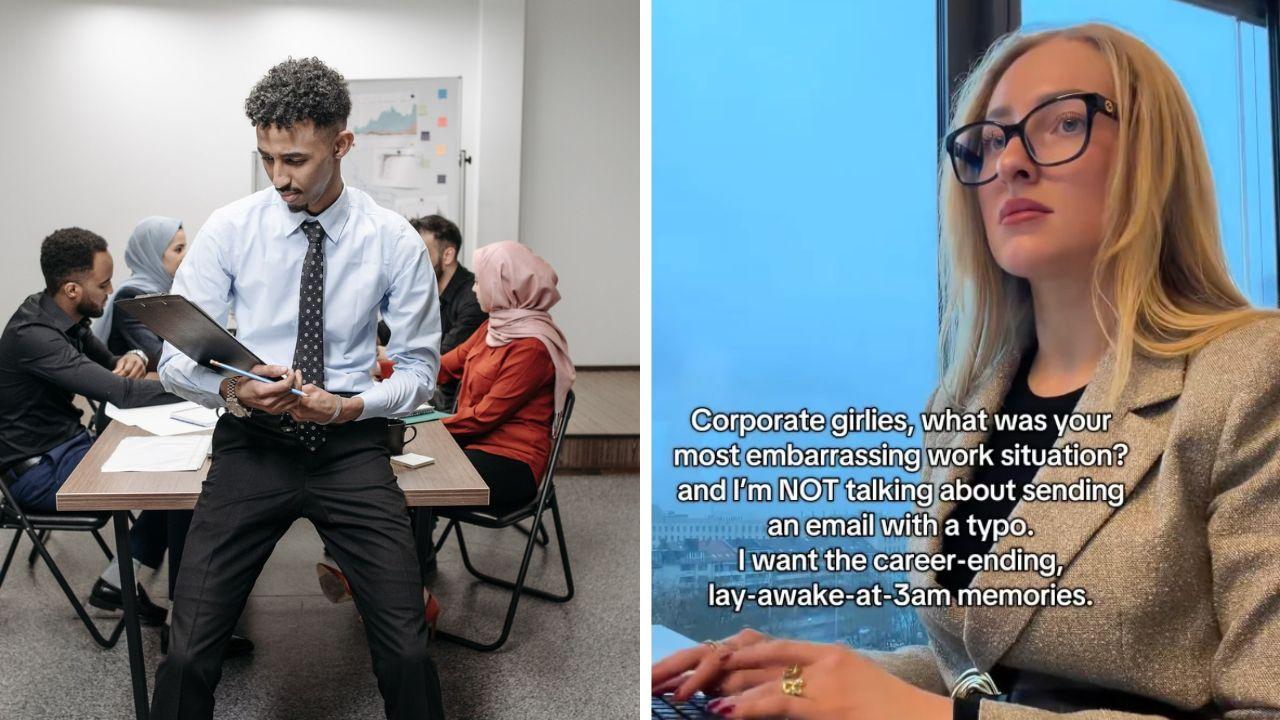
A TikTok video asking office workers to recount their most humiliating moments at work has turned into a sprawling collection of confessions, many of them tied to the realities of remote meetings and shared digital tools.
The clip, posted by creator @spreadsheetsandgloss on February 10, had reached 1 million views and gathered 1,421 comments, according to a report by The Daily Dot. The replies range from minor wardrobe disasters to accidental data leaks that would make any HR department wince.
A Prompt That Raised the Bar
The video itself is simple: it shows a corporate employee typing on a laptop while on-screen text invites viewers to share their worst work memories.
The creator was explicit that small slip-ups would not qualify. Typos in emails were ruled out from the start, with the text asking instead for stories that genuinely haunt people.
"I want the career-ending, lay-awake-at-3 am memories," the on-screen caption from @spreadsheetsandgloss reads. That framing appears to have encouraged commenters to dig deep.
Shared Tools, Shared Mistakes
Several of the most striking replies involve workplace software doing exactly what it was told, just not what the user intended. One commenter described a colleague who unintentionally synced a personal calendar with the whole company, meaning staff received alerts about her ovulation cycle.
Another person said they had mistakenly circulated a file containing every employee's performance review to an entire department. It is the kind of error that turns a routine click into a lasting office memory.
These stories reflect a broader reality of modern work, where calendars, documents and inboxes are increasingly connected and a single setting can expose private information to dozens or hundreds of people.
Video Calls Remain a Minefield
Remote and hybrid meetings supplied a large share of the confessions. One commenter recalled an email notification popping up while they were sharing their full screen with colleagues across their district, revealing an awkwardly worded product review request from Amazon.
Another described carrying a laptop toward the bathroom during a call, believing the microphone was muted, and loudly announcing an urgent need to use the toilet. The meeting reportedly fell silent before they managed to mute themselves.
Perhaps the most uncomfortable account involved a Zoom meeting of roughly 30 or more participants, in which a co-worker showered without realizing her camera was still on. Because attendees were muted and the presenter was not watching participant screens, the commenter said no one could alert her for about five minutes.
Old-Fashioned Embarrassment Still Happens
Not every story involved technology. One commenter said that on their very first day, the long flared hem of a pantsuit caught under their shoe on a staircase and pulled the trousers down entirely.
Another recalled delivering a final sales pitch to the board of a law firm when a sneeze triggered an audible bout of flatulence. Nobody in the room acknowledged it, the commenter said, but everyone clearly noticed.
Why These Videos Keep Spreading
Workplace humor has become a reliable genre on TikTok, where creators focused on office life build audiences around relatable frustrations and rituals of corporate culture. Prompts that invite viewers to contribute their own stories tend to perform especially well because the comment section becomes part of the content.
The Daily Dot noted that it could not independently verify any of the incidents described, and the accounts should be read as personal anecdotes shared by users on the platform.
What the Thread Says About Modern Work
Beyond the laughs, the responses highlight how much professional risk now sits inside everyday software settings: a default sharing permission, an unmuted microphone or a live camera.
For founders and managers building or adopting workplace tools, the thread is an informal reminder that privacy defaults, clear mute indicators and simple controls for presenters can spare employees real embarrassment. For everyone else, it offers some reassurance that a typo in an email is rarely the worst thing that can happen at work.
Source: The Daily Dot