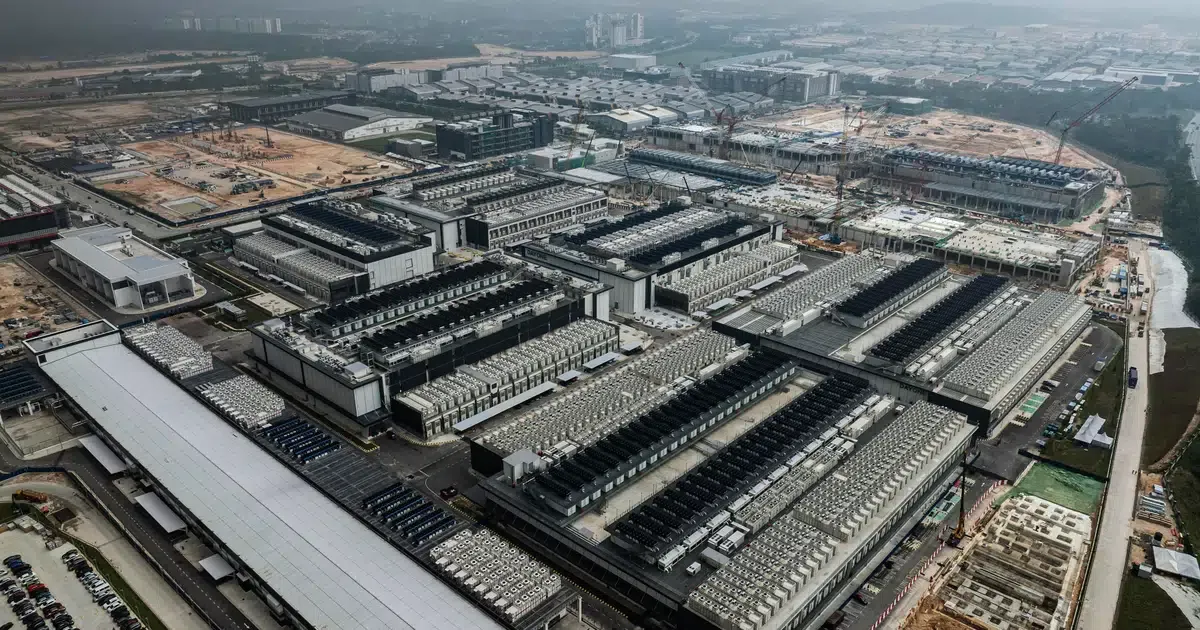
Samsung Electronics is preparing to replace a professional football training ground with offices for its semiconductor business, a sign of how quickly the company's chip workforce is expanding during the current boom in artificial intelligence hardware.
The planned complex will sit on land at the company's Hwaseong campus in Gyeonggi Province that is now used by Suwon Samsung Bluewings, the football club affiliated with the group. According to a report by Maeil Business Newspaper citing industry sources, Samsung has filed a request with Hwaseong City to amend the land-use plan for the site.
From Football Pitches to Chip Division Offices
The site lies directly across from DSR Tower, the building that holds offices and research facilities for Samsung's Device Solutions (DS) division, which runs its semiconductor operations. Placing new workspace next to the existing hub would keep the division's teams physically close together.
The land covers an estimated 20,000 square meters. It currently includes two football pitches, a futsal court, a clubhouse and parking areas used by the Bluewings.
Bluewings Move and a 2028 Start Date
Before construction can begin, the football club will move its training operations from Hwaseong to Suwon, where a new training ground is being built for it. Samsung intends to start work on the office complex in 2028, once the replacement facilities are ready.
The company has not yet decided which departments will occupy the building or what roles it will serve. Those choices will be made nearer to completion, based on development plans and business conditions at that point.
Making Room for a Growing Workforce
The rationale is straightforward: Samsung is worried that its current office space for the DS division will not keep up as headcount rises. The new complex is meant to secure workspace in advance rather than scrambling once capacity runs out.
The project forms part of a broader 1.7 trillion won (about $1.28 billion) investment plan in Hwaseong. In September, Samsung and Hwaseong City signed a memorandum of understanding pledging cooperation on expanding investment, supporting stable operations, strengthening research and office functions and lifting the local economy.
Wider Push Into Chip Capacity
The Hwaseong plan is one of several moves Samsung is making to capitalize on demand for AI chips. At its Giheung campus, also in Gyeonggi Province, the company is pursuing a foundry fab for 2-nanometer and 4-nanometer process chips on the former site of the Samsung Advanced Institute of Technology.
That Giheung project replaces an earlier plan to put a research and development center on the same land, underscoring how the company is reprioritizing toward manufacturing capacity.
Record Earnings Driven by Semiconductors
The expansion follows a remarkable quarter. Samsung Electronics reported third-quarter revenue of 195.25 trillion won and operating profit of 107.44 trillion won, increases of 126.9 percent and 783.1 percent respectively from a year earlier.
The DS division accounted for most of that result, posting revenue of 147.1 trillion won, up 344.4 percent year on year, and operating profit of 106.5 trillion won. That means nearly all of the company's operating profit in the quarter came from chips.
Samsung also said revenue from its HBM4 high-bandwidth memory more than tripled from the previous quarter, and that its entire HBM supply for 2027 is already fully booked.
What the Move Signals for the Chip Industry
Converting a sports facility into offices is a modest project by semiconductor standards, but it shows how far the AI-driven memory cycle has reshaped planning at the world's largest memory maker. Samsung is committing land and capital years ahead of need on the expectation that demand will hold.
For suppliers, partners and competitors, the combination of sold-out HBM capacity, new fab plans and expanded office space points to a company preparing for sustained growth. Whether that bet pays off will depend on how long the current wave of AI infrastructure spending lasts.
Source: 매일경제