South Korean fintech startups are turning to Singapore as a launchpad for growth across Southeast Asia, using the region's biggest industry gathering to meet banks, venture investors and potential partners.
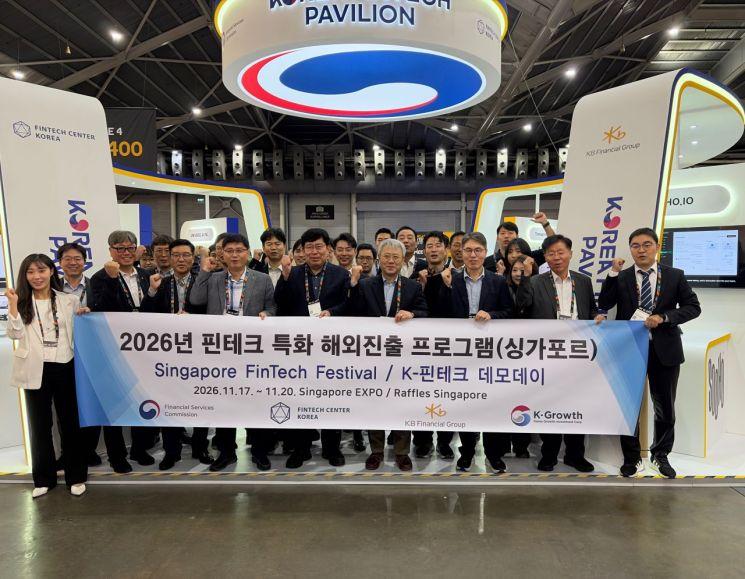
The Korea Fintech Center brought 10 domestic companies to the Singapore FinTech Festival 2026, held from November 18 to 20, where it operated a dedicated national pavilion and hosted an investor demo day. The effort is part of an overseas expansion support program run under South Korea's Financial Services Commission, according to a report by The Asia Business Daily.
A National Pavilion at Singapore EXPO
The center set up a 90-square-meter K-Fintech Pavilion at Singapore EXPO, the festival venue, to give Korean firms a physical base for engaging with the Singaporean and wider ASEAN markets.
During the three-day event, the participating startups held consultations with local financial companies, venture capital firms and investors who visited the booth. Several companies signed memorandums of understanding with local businesses, which the center described as concrete signs of progress toward market entry.
Senior figures from Korea's financial sector also stopped by, including Koscom president Yoon Chang-hyun, Korea Growth Investment Corporation CEO Jang Sang-ik, Park Hyung-joo of KB Financial Group's AI and digital transformation division, and The Asia Business Daily CEO Jang Beomsik.
Ten Startups Spanning Payments, AI and Identity
The delegation covered a broad slice of financial technology. Bankware Global offers banking SaaS and core banking systems, while Switchwon runs an overseas remittance and foreign exchange investment platform, and Currency United provides AI-driven mobile currency exchange.
Several firms focus on artificial intelligence: Bering Lab specializes in AI translation for finance and law, OneLineAI automates regulatory capital verification, and Common Computer builds sovereign AI tools for enterprises.
Rounding out the group were VeryWords, a carbon credit finance platform based on measurement, reporting and verification; Suho.io, which builds payment and settlement infrastructure for regulated assets; Universe AI, focused on biometric identity verification and payments; and TOMOROW, which provides eKYC for foreign nationals and payment fraud prevention.
Preparation, Demo Day and Institutional Meetings
Before leaving Korea, the companies went through three mentoring sessions with specialists in the Singaporean and ASEAN markets to sharpen their English investor materials and pitches.
On November 19, the center partnered with KB Financial Group and Korea Growth Investment Corporation to host the K-Fintech Singapore Demo Day at Raffles Singapore. Local venture firms, investment houses and financial institutions attended to hear pitches, ask questions and network with founders about funding and partnerships.
Two days earlier, center representatives visited the innovation lab of DBS Bank, Southeast Asia's largest lender, and the Singapore office of the International Finance Corporation, part of the World Bank Group. The discussions explored proof-of-concept projects, business partnerships and joint entry into emerging markets.
Lessons on Turning Exhibits Into Deals
Kim Geon, chairman of the Korea Fintech Center, said the biggest gain was direct access to senior people at major local institutions, contacts that participants would normally struggle to reach.
He noted that investors at the demo day did not make on-the-spot commitments but probed deeply into the companies' technology. Drawing on two and a half years of running the program, Kim said Singapore tends to convert outreach into actual investments and contracts at a higher rate than other regions, provided companies follow up steadily and understand local business culture.
Kim identified three requirements for success: competitive core technology suited to the local market, the ability to explain it convincingly, and active relationship building with local partners. He also argued that founders must show up themselves, saying a company's chief executive, "who has the authority to make decisions, needs to attend in person."
Earlier Recruitment Planned for Next Year
This year the center supported 20 companies across three overseas destinations: the United States, Hong Kong and Singapore. It plans to refine how it selects and prepares participants going forward.
Kim said recruitment for next year could begin as early as March, giving companies more time for training before they travel. The center also intends to use data gathered from its domestic support programs to identify firms best matched to each target market. Application details will be posted on the center's website early next year.
What It Means for Founders Eyeing Southeast Asia
The Singapore program highlights how government-backed support can open doors to banks and investors that early-stage startups would find hard to approach alone.
For founders, the takeaway from Kim's comments is that trade show visibility is only a starting point. Sustained follow-up, local market knowledge and direct involvement from decision-makers appear to matter most in converting interest into pilots, partnerships and capital in the ASEAN region.
Source: 아시아경제