- By JeffkomStory Team
- Published on
How Luminar’s Volvo Deal Went Wrong and Pulled the Lidar Startup Into Bankruptcy
In early 2023, Luminar looked unstoppable.
The lidar startup had gone public, signed a massive deal with Volvo, and added big names like Mercedes-Benz and Polestar as customers. Founder and CEO Austin Russell called it a turning point the moment Luminar’s “lifesaving” lidar sensors would finally reach mass-market cars.
Just three years later, Luminar is in bankruptcy.
So what happened?
At the center of the collapse is a single deal that once defined Luminar’s future: Volvo.
The Volvo Bet That Defined Luminar
Volvo wasn’t just another customer.
It was the customer.
Known globally for safety-first cars, Volvo embraced lidar early. In 2020, it signed a deal for 39,500 sensors. That number jumped to 673,000 in 2021—and then to 1.1 million sensors in 2022.
For Luminar, this was validation.
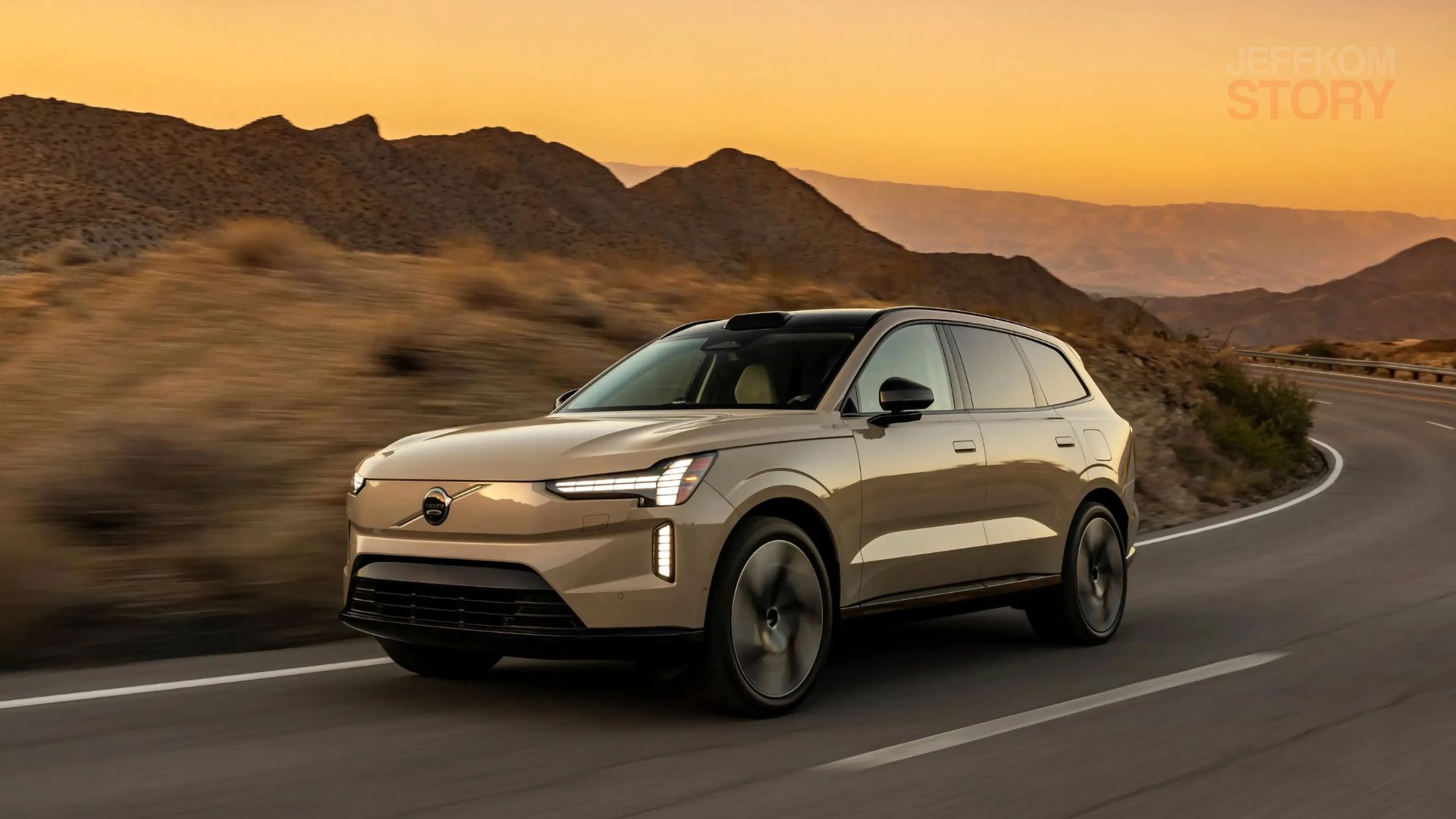
To meet Volvo’s demand, the company spent nearly $200 million. It built a manufacturing facility in Monterrey, Mexico, expanded its workforce, and ramped up production for its Iris lidar sensors—primarily for Volvo’s upcoming EX90 SUV.
Volvo was supposed to be the launchpad that pushed Luminar into every major automaker’s supply chain.
Instead, it became the anchor that dragged the company down.
Delays, Cuts, and Broken Expectations
Trouble started quietly.
Volvo delayed the EX90 launch in 2023, citing software development issues. Then, in early 2024, Luminar received devastating news: Volvo was cutting expected sensor volumes by 75%.
Other partnerships began to unravel too.
-
Polestar, Volvo’s EV subsidiary, dropped Luminar’s lidar because its software couldn’t fully use the features.
-
Mercedes-Benz terminated its Iris lidar deal in late 2024, saying Luminar failed to meet demanding requirements.
Suddenly, Volvo was Luminar’s only flagship customer.
And that made the company dangerously exposed.
A 90% Volume Collapse
Despite the warning signs, Volvo continued to reassure Luminar that the full 1.1 million-unit lifetime order would still be met.
Luminar believed them.
Then came September 2024.
Volvo decided lidar would become an optional feature on the EX90 instead of standard. Even worse, the automaker said it was shelving lidar entirely on future models as part of cost-cutting efforts.
The impact was brutal.
Volvo’s estimated lifetime order dropped by around 90%.
Luminar called it a breach of contract and halted sensor shipments in October. Two weeks later, Volvo officially terminated the agreement.
The public dispute rattled investors and customers alike.
Layoffs, Resignations, and Too Little Diversification
As revenue collapsed, Luminar cut costs aggressively.
-
20% of staff laid off in May 2024
-
More layoffs in September 2024
-
Another round in May 2025
The company also outsourced manufacturing and tried to sell excess sensors into adjacent markets. But it wasn’t enough.
For years, Luminar had focused almost exclusively on automotive lidar, avoiding defense, robotics, or industrial markets. That single-industry bet left no cushion when automakers pulled back.
In May 2025, founder Austin Russell resigned following an ethics inquiry by the board another blow to confidence.
Bankruptcy and What Comes Next
This week, Luminar filed for Chapter 11 bankruptcy.
The company plans to:
-
Sell its semiconductor subsidiary for $110 million
-
Auction off its core lidar business
-
Negotiate with multiple interested buyers including one backed by Russell himself
Once seen as a cornerstone of autonomous driving, Luminar is now fighting for survival under court supervision.
The Bigger Lesson for Startups
Luminar’s story isn’t just about lidar.
It’s about concentration risk.
Betting big on one customer—even a world-class brand like Volvo—can be fatal. When timelines slip, priorities change, or costs rise, suppliers often take the hit.
For hardware startups especially, massive upfront investments and long automotive cycles leave little room for error.
Luminar aimed to power the future of safer cars.
Instead, its biggest partnership became the deal that pushed it into bankruptcy.
And for the startup world, it’s a reminder: marquee customers don’t guarantee stability diversification does.
Here are some related articles you may find interesting:
Google Trends Explore Gets Gemini AI Upgrade: Smarter Trend Discovery for Creators
Google has introduced a major upgrade to its Trends Explore page, adding powerful Gemini AI capabilities...
Robotaxis Get Green Light in New York, Except in New York City
New York is taking a major step toward the future of transportation. Governor Kathy Hochul has announced...
Hands-On With Bee: Amazon’s New AI Wearable That Records, Remembers, and Reflects Your Day
Amazon is stepping into the AI wearable space with Bee, a compact device designed to record conversations,...
Nuclear Startups Are Back in Vogue: Small Reactors, Big Ambitions, Bigger Challenges
The nuclear industry is quietly entering a new renaissance. After decades of stagnation, aging plants...
Anthropic Expands Enterprise AI Footprint With Allianz Partnership
Anthropic is rapidly strengthening its position in the enterprise AI market. The latest proof is a new...
Where VCs Think AI Startups Can Win Even With OpenAI in the Game
In recent years, AI startups have lived under a looming question: How do you compete when OpenAI, Meta,...
Meta’s $2B Manus Acquisition Sparks Regulatory Divide Between Washington and Beijing
Meta’s $2 billion acquisition of AI assistant platform Manus has quickly turned into a geopolitical case...
Narwal Adds AI to Robot Vacuums to Monitor Pets, Find Jewelry, and Clean Smarter
At CES 2026, robot vacuum maker Narwal introduced a new generation of smart vacuum cleaners powered by...
Nvidia’s AI Empire: The Biggest Startup Bets of 2026 and the Game Behind the Game
Nvidia is no longer just a chip company. In 2026, it is rapidly becoming the backbone of the global AI...
A Beginner’s Guide to Mastodon: The Open-Source Twitter Alternative
When Elon Musk acquired Twitter and rebranded it as X, many users began looking for alternatives. One...
Popular Posts

Google Trends Explore Gets Gemini AI Upgrade: Smarter Trend Discovery for Creators
JeffkomStory Team
Google has introduced a major

Robotaxis Get Green Light in New York, Except in New York City
JeffkomStory Team
New York is taking a

Hands-On With Bee: Amazon’s New AI Wearable That Records, Remembers, and Reflects Your Day
JeffkomStory Team
Amazon is stepping into the

Nuclear Startups Are Back in Vogue: Small Reactors, Big Ambitions, Bigger Challenges
JeffkomStory Team
The nuclear industry is quietly
Join Our Newsletter
Start your day with impactful startup stories and concise news! All delivered in a quick five-minute read in your inbox.