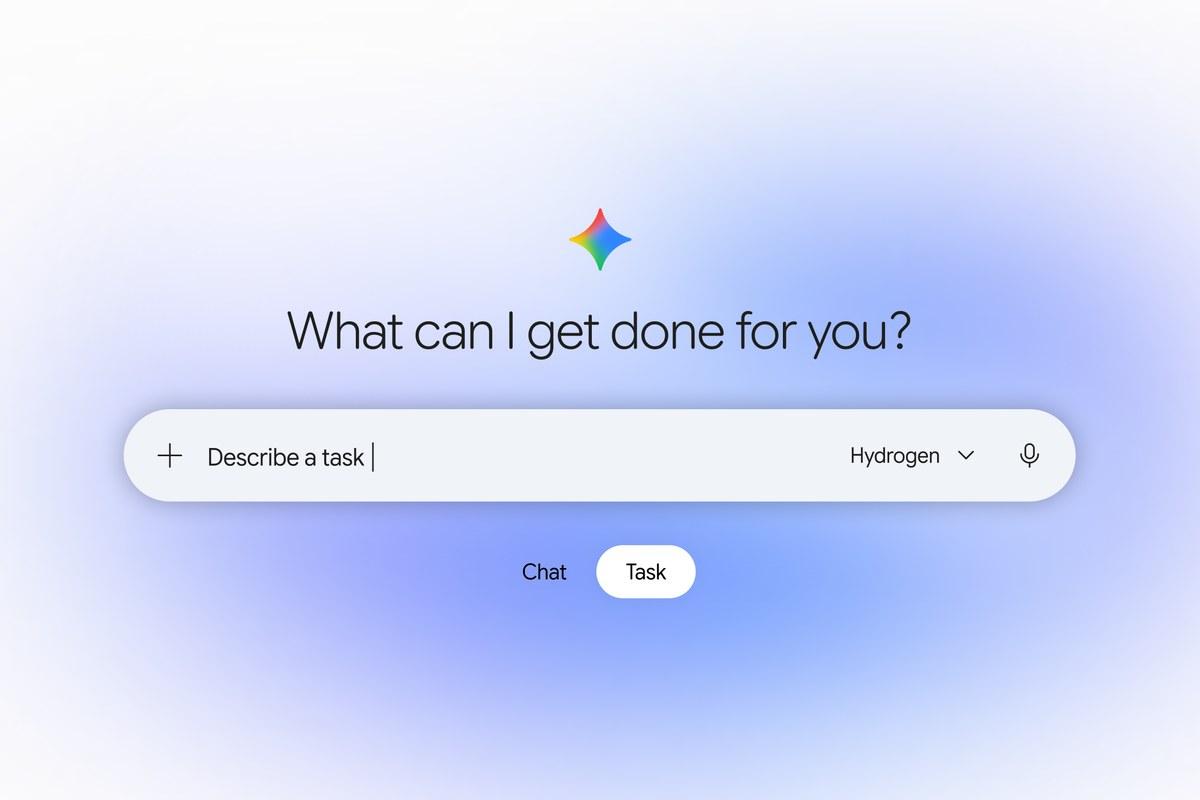
Google has added a new member to its Gemini 4 family of AI models. Called Gemini 4 Hydrogen, the model is built with speed as its main priority and is aimed at quickly carrying out practical, everyday tasks rather than tackling the hardest reasoning problems.
The model is now the engine behind the AI features in Google Search and is rolling out to users worldwide, according to a report by Mashable. It also becomes a selectable option inside the Gemini app.
A Faster Sibling to Carbon and Argon
Hydrogen was adapted from Gemini 4 Carbon, one of Google's frontier models. Google says that at its default thinking level, Hydrogen outperforms Gemini 4 Argon, its other frontier model.
Koray Kavukcuoglu, senior vice president at Google DeepMind, laid out the division of labor in Thursday's announcement. Carbon and Argon are positioned for deep, long-running reasoning on difficult problems, while Hydrogen is meant for quick execution across a range of agentic workflows.
In practice, that means Hydrogen is designed for jobs like writing code, running tests and handling routine work. Heavier assignments, such as designing systems or fixing complex bugs, remain better suited to the larger models.
Adjustable Thinking Levels
Hydrogen runs at a high thinking level by default, but users can dial it down to low or medium, or up to a newly introduced xhigh tier.
Each setting trades off differently between output quality, response latency and cost. That flexibility gives developers and businesses a way to match the model's effort to the task at hand.
Google also expects Hydrogen to work alongside its bigger models. Kavukcuoglu described it as able to stand alone for everyday tasks or serve as a high-efficiency execution engine within multi-model workflows that also use Carbon and Argon.
What Changes in Google Search
Before this update, the AI features in Google Search ran on Gemini 3.8 Flash, which launched in September. Hydrogen now takes over that role for all Search users.
According to Kavukcuoglu, Hydrogen will deliver more visual answers and surface a broader mix of relevant links. It is also designed to better interpret conversational queries, follow a user's line of thinking and cope with typos.
For a product used at Search's scale, these improvements in handling natural, imperfect language could matter as much as raw benchmark gains.
Changes Inside the Gemini App
In the Gemini app, Hydrogen will appear in the model selection dropdown. Google says it sticks more closely to instructions across conversations with multiple turns.
Kavukcuoglu said the model is better at following guidance, calling the right tools and reaching a reliable result. In his words, it gets users there "with less back-and-forth."
Safety Claims and Known Limits
Google says Hydrogen is half as likely as Gemini 3.8 Flash to circumvent permission boundaries, an important measure for models that take actions on a user's behalf.
The company added that it is still working on safety and security areas such as resistance to jailbreak attempts. It also acknowledged that Hydrogen, like other generative AI systems, can still hallucinate.
What the Launch Signals for Builders and Users
Hydrogen reflects a broader industry pattern of pairing large reasoning models with faster, cheaper models that handle execution. For founders building agentic products, configurable thinking levels offer a practical lever for controlling cost and latency.
For everyday users, the most visible change will be in Search, where the new model now shapes AI answers. As Google itself notes, though, the output still deserves a careful check given the persistent risk of hallucinations.
Source: Mashable