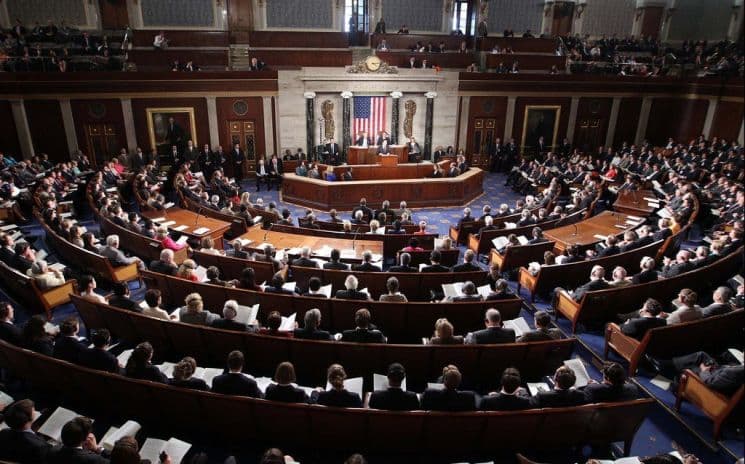
Democrats have won control of both the Senate and the House of Representatives in the US midterm elections. Korean industry groups and trade analysts say the policy foundation for building semiconductor plants in Texas and other states is unlikely to be dismantled as a result.
The shift does introduce new uncertainties for Korean chipmakers with American investments. These include tighter congressional scrutiny of federal subsidies and a looming deadline on a key investment tax credit that only lawmakers can extend, according to a report by Asia Economy.
Bipartisan Interest in Domestic Chip Manufacturing
Ahn Ki-hyun, an executive vice president at the Korea Semiconductor Industry Association, said the core goal of attracting chip production to the United States is shared by federal and local governments regardless of which party holds power.
Speaking about advanced manufacturing tax incentives offered by the Texas state government, Ahn argued that incentives already introduced to lure factories would be hard to reverse. That makes existing support measures likely to stay in place.
Experts also expect Washington to keep pushing companies to expand local investment rather than add new tariffs on semiconductors. Without enough domestic production capacity, chip tariffs could raise production costs and prices across the economy.
CHIPS Act Funding Faces Closer Scrutiny
Payments under the CHIPS Act are expected to continue through the existing system. A Democratic Congress, however, may examine the program more closely.
Areas likely to draw attention include how manufacturing support agreements are carried out, how subsidies are disbursed, the legal basis for restructuring research and development programs, and how that R&D funding is managed.
The Washington office of the Korea Trade-Investment Promotion Agency (KOTRA) said in a report on the midterm results that restoring programs and providing further support would require securing separate funding.
The Tax Credit Deadline as the Key Variable
For companies planning new projects, the most important question is whether the start-of-construction deadline for the semiconductor investment tax credit will be pushed back. Under current rules, assets on which construction begins after December 31 this year do not qualify.
Even if Democrats want to extend the deadline or broaden eligibility, doing so would require amending the tax code. That makes upcoming legislative debates a critical point to monitor for chipmakers weighing US expansion.
Friction Over AI, Data Centers and Tariffs
Clashes between Congress and the administration are expected on artificial intelligence and data center policy. Democrats are prioritizing AI safety, consumer protection and oversight of infrastructure support programs, while the administration favors expanding data center and power investment and speeding up permitting.
On trade, analysts expect tariff pressure to continue but become more targeted by country and industry. Broad, across-the-board escalation has grown harder with Democrats in control of Congress and voters feeling the effects of rising prices.
Kim Tae-hwang, an international trade professor at Myongji University, said the basic direction of the Trump administration's tariff policy is unlikely to change, even if its momentum softens. He suggested Washington could lean more heavily on Section 301 tariffs aimed at specific countries and sectors.
Limits on Congress's Power Over Tariffs
In March, the Office of the United States Trade Representative opened Section 301 investigations into manufacturing overcapacity in 16 economies, including South Korea. No follow-up measures, such as additional tariffs, have been finalized.
An official at the Korea International Trade Association (KITA) noted that bills to curb presidential tariff authority have been introduced since Trump's first term but rarely advance. Democrats lack the two-thirds majority in both chambers needed to override a veto, making it difficult to restrict that authority outright.
What It Means for Korean Chipmakers and Investors
The broad message from Korean experts is that the US incentive environment for chip manufacturing remains intact, but the path to influencing it now runs through Congress as well as the White House. "The situation now requires us to deal not only with the White House but also with Congress," Kim said.
Analysts recommend that the Korean government and industry share information and prepare negotiating positions and alternatives for possible product- and sector-specific tariffs.
The KITA official advised companies to identify the Democratic lawmakers representing districts where their plants are located, track committee assignments, and build targeted outreach plans in advance. For any firm considering new US fabs, the year-end tax credit deadline adds urgency to that engagement.
Source: 아시아경제