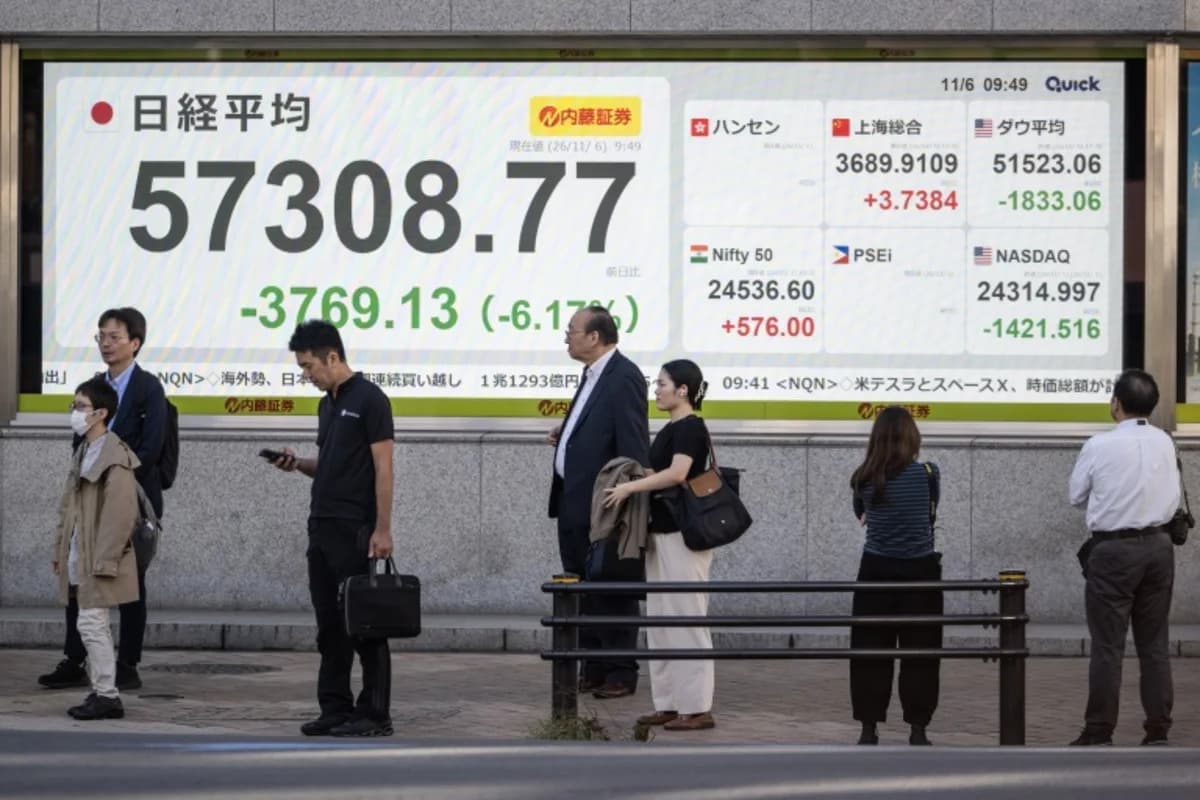
Technology stocks across Asia sold off heavily on Friday, following a steep decline on Wall Street as investors weighed what a sweeping Democratic win in the US midterm elections could mean for the artificial intelligence industry.
Markets in Seoul and Tokyo were hit hardest, with major chipmakers and AI-linked companies posting double-digit losses at points during the session, according to an AFP report published by Yahoo Finance.
The selling reflects a growing concern that political momentum in Washington could turn against the massive data centre projects underpinning the AI boom, a sector that had lifted equity markets to record highs only months earlier.
Why the Midterm Results Rattled Investors
The Democratic gains in Tuesday's vote were initially greeted with some optimism, as traders hoped a shift in Congress might push President Donald Trump to wind down the US conflict with Iran.
That mood shifted quickly as attention turned to AI. Data centres have drawn opposition from voters across the political spectrum, and a number of newly elected officials campaigned on slowing or halting such projects.
Analysts also pointed to a call from Senator Bernie Sanders for a nationwide moratorium on building data centres as a factor that unsettled the market.
Wall Street Sets the Tone
The sell-off began in New York, where the Nasdaq dropped 5.5 percent, its worst single-day percentage decline since April of the previous year, when Trump announced sweeping global tariffs.
The S&P 500 fell more than 4 percent and the Dow lost more than 3 percent. Bloomberg reported that the Philadelphia Semiconductor Index had slid roughly 16 percent over the week, heading for its weakest stretch since that same April period.
Trump placed the blame on Democrats in a post on Truth Social, telling them they had only themselves to blame for the market drop.
Chipmakers in Seoul, Tokyo and Taipei Take the Hardest Hit
South Korea's market fell almost 9 percent at one point. SK hynix declined 10 percent and Samsung dropped 8 percent. The Kospi had more than doubled between late December and mid-June, when it reached a record, but has since given up nearly half its value.
In Tokyo, the market slid 7 percent, with memory maker Kioxia and investment group SoftBank each falling more than 10 percent and chip testing equipment firm Advantest losing over 8 percent.
Taiwan's Taiex dropped around 8 percent, weighed down by a 7 percent decline in TSMC. Hong Kong, Shanghai, Sydney and Singapore each fell more than 1 percent.
Deeper Worries About AI Spending and Valuations
The election outcome landed on top of existing anxiety about the hundreds of billions of dollars companies have poured into AI infrastructure, and how long it will take for that spending to generate returns.
A recent rise in borrowing costs has added pressure, raising questions about the financial health of firms funding the buildout. Many traders had also grown uneasy about how far valuations had climbed during the rally.
Michael Hewson of MCH Market Insights said investors were concerned about broader resistance to AI expansion, and noted that election results in Texas raised the possibility that state politicians could target Elon Musk's Tesla and SpaceX over his support for Trump.
Some Analysts See an Overreaction
Not every observer believes the scale of the decline is justified. "The blood is in the streets, folks," said Neil Wilson of Saxo Markets, describing the turmoil as a broad unwinding of momentum trades.
Wilson argued the move looked excessive, but said the indiscriminate nature of the selling meant investors would likely wait for signs of stability before stepping back in.
Other factors also weighed on sentiment. Oil prices rose again after falling on the election results, while traders watched for updates on the Iran conflict and awaited fresh US jobs data.
What It Means for the AI Industry and Its Backers
The episode highlights how closely the AI trade now depends on physical infrastructure, and how exposed that infrastructure is to local and national politics. Power-hungry data centres have become a visible target for voters and lawmakers alike.
For founders and investors in AI, the message is that regulatory and community opposition can move markets as quickly as earnings or interest rates. Companies building or relying on large-scale compute may need clearer plans for engaging with policymakers and local communities as the political landscape shifts.
Source: Yahoo Finance