Amazon Web Services is already larger than most of corporate America. Measured on its own, the cloud unit's trailing 12-month revenue of $161.4 billion would rank it above 476 companies in the S&P 500.
Amazon CEO Andy Jassy believes that is only a starting point. Speaking on the company's third-quarter earnings call, he said AWS could become a trillion-dollar revenue business within five to 10 years, according to an analysis by The Motley Fool published on Yahoo Finance.
Reaching that target would require years of sustained, rapid growth. The numbers behind Amazon's spending, backlog and recent performance offer a sense of whether the goal is realistic.
Growth Has Picked Up Five Quarters in a Row
AWS revenue growth has accelerated in each of the past five quarters, reaching 39% year over year in the third quarter. That is a notable pace for a business of its size.
Jassy expects the momentum to continue. He has said he anticipates revenue growth above 40% in both 2027 and 2028.
Capital Spending Takes Time to Pay Off
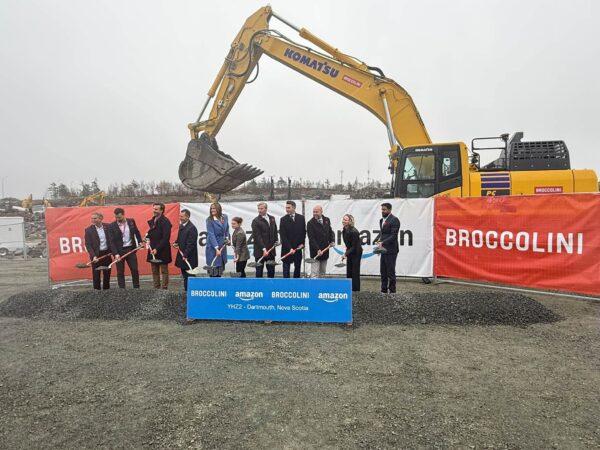
Much of the current growth reflects data center investments Amazon made earlier. According to the analysis, roughly two years pass between financing new construction and selling the resulting AWS services.
Amazon's capital expenditures fell in 2023, then rose about 57% in 2024 and another 58% in 2025. Management's outlook calls for capex to grow 67% this year, which suggests more capacity will come online in the years ahead.
Jassy said the company continues to speed up its capex payback and has growing conviction that its AWS investment will produce a much larger revenue and free cash flow business than expected a couple of years ago.
The Math Behind a $1 Trillion Target
AWS is on pace to generate about $176 billion in revenue this year. Hitting $1 trillion in five years would require compound annual growth of about 41.5%.
Stretching the timeline to 10 years lowers the required rate to about 19%. Given Jassy's forecast of growth above 40% for the next two years, a path somewhere between those two figures appears plausible to the analysis.
Another factor could help. As a larger share of capital spending goes to revenue-generating servers rather than physical data center buildings, Amazon's return on invested capital should improve, allowing revenue to keep growing even if capex growth slows.
A Backlog Built on More Than the AI Boom
Demand for computing power has outstripped supply during the surge in AI development, and that shortage has supported Amazon's expansion. But the company points to broader drivers as well.
AWS reports a backlog of $578 billion in remaining performance obligations. It also continues to benefit from the long-running migration of businesses away from on-premises servers to the cloud.
"This is a different model than primarily hosting GPUs or renting short-term data center capacity," Jassy told analysts, describing AWS as a long-term platform with attractive economics regardless of supply scarcity.
Twenty Years of Reshaping IT Infrastructure
Launched in 2006, AWS changed how companies of all sizes handle computing. Developers gained on-demand access to enterprise-grade processing and storage, scaling up or down as needed.
That flexibility has become especially valuable in the AI era, when workloads and demand can spike quickly and few companies want to build that capacity themselves.
What It Means for Customers and the Cloud Market
For startups and enterprises that rely on AWS, Amazon's aggressive spending signals a commitment to expanding capacity at a time when compute remains scarce. More supply could ease access to the resources AI products depend on.
For competitors and investors, Jassy's $1 trillion ambition sets a high bar. Whether AWS gets there in five years or 10 will likely hinge on how long cloud migration and AI demand continue, and how efficiently Amazon converts its heavy investment into revenue.
Source: Yahoo Finance